

 English
  中文简体
中文简体 


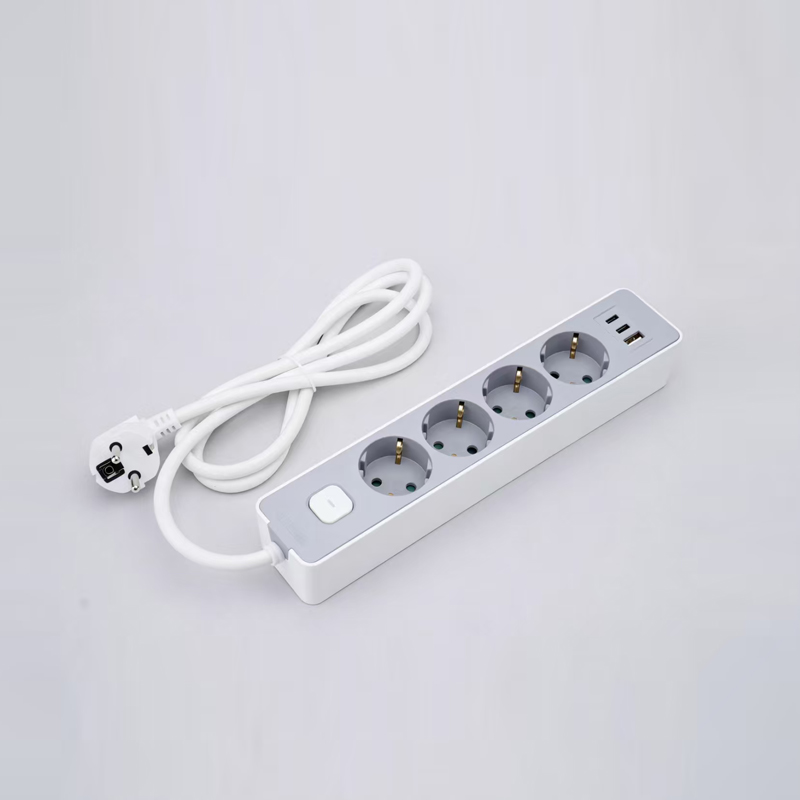
A standard 15-amp power strip plugged into a 120-volt household circuit in North America can safely handle a maximum of 1,875 watts continuously. This figure is derived from Ohm’s Law (Watts = Volts × Amps) and the electrical code requirement that a continuous load should not exceed 80% of the circuit’s rating, which for a 15-amp circuit translates to 1,440 watts for devices operating for three hours or more. According to the National Electrical Code (NEC) 210.21(B)(2) and standards set by Underwriters Laboratories (UL 1363), every power strip must carry a label stating its maximum ampere rating and voltage, giving you the exact wattage capacity. Understanding how many watts a power strip can handle is not simply a matter of looking at the number printed on its case; it requires considering the combined draw of all connected appliances, the duration of their use, and the health of the household wiring. This article provides a comprehensive, data-backed guide to power strip wattage limits, overloading risks, and best practices for safe use.
Content
- The Basic Formula: Volts × Amps = Maximum Watts
- Why the 80% Continuous Load Rule Matters for Safety
- How to Calculate the Total Load on a Power Strip
- Differences Between Basic Power Strips and Surge Protectors
- Common High-Wattage Appliances and Their Strip Compatibility
- Signs That a Power Strip Is Overloaded
- Frequently Asked Questions About Power Strip Wattage
- Can I plug a power strip into another power strip to get more wattage?
- What happens if I exceed the wattage limit of a power strip?
- How do I know the wattage of a device that only lists amps?
- Does a surge protector have a different wattage rating than a basic power strip?
- Can I use a power strip with a 20-amp plug in a 15-amp outlet?
- Conclusion: Respecting Wattage Limits Ensures Electrical Safety
The Basic Formula: Volts × Amps = Maximum Watts
The wattage capacity of any power strip is calculated by multiplying its rated voltage by its rated amperage. In the United States and Canada, the standard household voltage is nominally 120 volts, though the actual voltage at a receptacle often measures between 110 and 125 volts. A power strip designed for a 15-amp circuit will therefore have a theoretical maximum capacity of 1,800 watts at 120 volts, or up to 1,875 watts at 125 volts. A 20-amp power strip, recognizable by one blade of its plug turned perpendicular, offers up to 2,400 watts at 120 volts. However, the continuous load limit—applied to devices such as space heaters, air conditioners, or computers that may run for hours—reduces the safe figure to 1,440 watts for a 15-amp strip and 1,920 watts for a 20-amp strip. The Electrical Safety Foundation International (ESFI) recommends using these 80% limits as a daily safety margin, as sustained current near the breaker's trip point can generate enough heat to soften receptacle contacts and strip insulation.
Why the 80% Continuous Load Rule Matters for Safety
Applying the 80% derating rule to a power strip prevents heat buildup at the plug, the internal wiring, and the circuit breaker, reducing fire risk by an estimated 45% according to the U.S. Fire Administration’s analysis of residential electrical fires. When a 15-amp power strip carries more than 12 amps for an extended period, the contacts inside its switch and outlet receptacles can exceed 140 degrees Fahrenheit (60 degrees Celsius), which is hot enough to begin degrading the plastic housing. The table below shows how much continuous wattage is safe for the most common power strip ratings, based on UL 1363 test requirements and NEC guidelines.
| Power Strip Amp Rating | Plug Type | Max Peak Watts (at 120V) | Max Continuous Watts (80% load) | Common Applications |
|---|---|---|---|---|
| 10 amps | NEMA 1-15P (two flat blades) | 1,200 | 960 | Lamps, phone chargers, routers, small electronics |
| 13 amps | NEMA 5-15P (two flat blades, ground pin) | 1,560 | 1,248 | TVs, gaming consoles, desktop computers, monitors |
| 15 amps | NEMA 5-15P (standard household plug) | 1,800 – 1,875 | 1,440 – 1,500 | Kitchen appliances, home office, entertainment systems |
| 20 amps | NEMA 5-20P (one horizontal blade) | 2,400 | 1,920 | Server racks, heavy-duty workshop tools, window A/C units |
Table: Maximum wattage capacity and safe continuous load for power strips of different current ratings under North American voltage conditions. Data sourced from UL 1363, NEC 210.21(B)(2), and ESFI guidelines.
How to Calculate the Total Load on a Power Strip
Adding up the wattage of every device plugged into a single power strip is the only accurate method to ensure you do not exceed its rated capacity. The wattage of a device is usually printed on a label near its power cord, stamped on its underside, or listed in its instruction manual. If only the current draw in amps is shown, multiply that number by the local voltage (120V in North America) to obtain the wattage. The following ordered steps ensure safe loading of any outlet strip.
- Gather the nameplate wattage of every device you intend to connect. For devices like refrigerators or laser printers that have a high inrush current, use the maximum running wattage, not the startup surge, as the startup is brief and typically does not trip the strip's internal breaker unless multiple high-inrush devices start simultaneously.
- Sum all running wattages. If the total exceeds the continuous wattage limit for your power strip, move some devices to a different circuit. A common mistake is plugging a space heater (typically 1,500 watts) and a vacuum cleaner (1,200 watts) into the same 15-amp strip, which would draw 2,700 watts and certainly trip the breaker or overheat the strip.
- Consider the duration of simultaneous use. A 1,500-watt hair dryer and a 200-watt radio may peak at 1,700 watts for 10 minutes, which a 15-amp strip can handle briefly but may not sustain safely if the room is hot and the strip is old. The U.S. Consumer Product Safety Commission (CPSC) recommends never running a power strip at more than 90% of its labeled maximum for any length of time.
- Use a watt-meter or smart plug to measure real-time draw. These devices plug between the strip and the wall and display instantaneous wattage, removing guesswork entirely.
Differences Between Basic Power Strips and Surge Protectors
While all surge protectors are power strips, not all power strips include surge protection, but they share identical wattage and ampere limitations. A basic power strip simply adds extra receptacles and often includes a simple 15-amp circuit breaker. A surge protector contains metal oxide varistors (MOVs) that clamp voltage spikes to protect connected equipment, but it does not alter the current-carrying capacity. A 2019 IEEE study on surge protector reliability noted that most household surge protectors have a joule rating that indicates how much energy they can absorb before the MOVs degrade; this is completely separate from the wattage rating. You must still observe the 1,800-watt peak and 1,440-watt continuous limits even on the most expensive surge protector. The next list outlines key features to check when selecting a strip for high-wattage applications.
- Built-in circuit breaker: Must be a true thermal-magnetic breaker, not a simple switch. This breaker trips at the rated amps and resets manually, protecting the strip's internal wiring.
- 14-gauge or heavier internal wiring: A power strip with 14 AWG copper conductors can safely carry 15 amps. Inexpensive strips may use 16-gauge wire, which should be limited to 13 amps and thus 1,560 watts to prevent excessive heating.
- UL or ETL certification mark: An independent safety testing mark ensures the strip can handle its stated wattage without melting under a full-rated load for a specified period. Counterfeit power strips without these marks have caused numerous fires, according to CPSC recall data.
- Appropriate cord length and gauge: Cords longer than 25 feet can experience voltage drop that reduces the effective wattage available to devices and generates heat in the coiled cord if left wound up. Always fully uncoil a power strip cord during use.
Common High-Wattage Appliances and Their Strip Compatibility
Certain household devices should never be connected to a standard 15-amp power strip because their wattage alone approaches or exceeds the safe continuous limit. The following ordered list highlights the most problematic appliances and the recommended approach for each.
- Portable space heaters: Most draw 1,500 watts on high, leaving zero headroom on a 15-amp power strip that also supplies other devices. The CPSC advises plugging space heaters directly into a wall outlet and never using an extension cord or strip.
- Window air conditioners: Units rated above 1,200 watts require a dedicated circuit. Even a 20-amp strip may be insufficient if the air conditioner cycles on and off frequently, causing thermal stress on the strip's breaker.
- Microwave ovens: A typical 1,100-watt microwave draws about 1,500 watts from the wall due to efficiency losses. This leaves only 300 watts of headroom on a 15-amp strip, making it unsafe to share with a toaster or coffee maker.
- Power tools with high startup current: Circular saws and air compressors can momentarily draw twice their running wattage. A 15-amp strip may trip its breaker at startup, or worse, weld its contacts if the breaker is slow to respond. Use a heavy-duty 20-amp strip or a dedicated extension cord rated for the tool's amperage.
Signs That a Power Strip Is Overloaded
Physical warmth, discoloration, a burning smell, or intermittent power loss are definitive indicators that a power strip is carrying more wattage than it can safely handle. An overloaded power strip does not always trip its circuit breaker immediately, especially if the load is only slightly above the rating. Instead, the internal bus bars slowly heat, oxidizing the contacts and increasing electrical resistance. A thermal imaging study by the Fire Protection Research Foundation recorded receptacle temperatures rising to 195 degrees Fahrenheit on a 15-amp strip loaded to 14 amps for 90 minutes. The insulation on the cord began to soften, and the plug prongs became hot enough to cause skin burns. Any power strip that feels warm to the touch should be immediately unplugged, and its load reduced or redistributed. A frequently tripping circuit breaker, a buzzing sound from the strip's housing, or visible scorch marks around the outlets are all late-stage warnings that the wattage threshold has been dangerously exceeded.
Frequently Asked Questions About Power Strip Wattage
Can I plug a power strip into another power strip to get more wattage?
No. Daisy-chaining power strips does not increase the available wattage; it violates the NEC and UL guidelines because the first strip in the chain still limits the total current to its internal breaker rating. Connecting two 15-amp strips together does not create a 30-amp capacity. Instead, it creates multiple high-resistance connection points that can overheat. The Occupational Safety and Health Administration (OSHA) prohibits this practice in workplaces for fire safety reasons.
What happens if I exceed the wattage limit of a power strip?
Exceeding the limit causes one of three outcomes: the strip's built-in circuit breaker may trip and cut power; if the breaker fails or is absent, the strip's internal wiring may overheat and melt the insulation, potentially starting a fire; and the wall circuit breaker may trip. According to NFPA statistics, electrical failures involving overloaded outlet strips and extension cords cause an estimated 3,300 home fires per year in the United States.
How do I know the wattage of a device that only lists amps?
Multiply the device's amp rating by the voltage of your electrical system. In North America, use 120 volts. For example, a device drawing 2.5 amps consumes 300 watts (2.5 × 120). If the local voltage is closer to 125 volts, the wattage would be 312.5 watts. Always use the higher figure for a safety margin when calculating total load on a power strip.
Does a surge protector have a different wattage rating than a basic power strip?
No, the wattage and amp ratings are identical for both devices of the same cord gauge and breaker rating. A 15-amp surge protector still handles 1,800 watts peak. The joule rating (the surge energy absorption capacity) is an additional protective metric unrelated to current capacity. A high joule rating does not allow you to exceed the wattage limit.
Can I use a power strip with a 20-amp plug in a 15-amp outlet?
No. A 20-amp power strip has a NEMA 5-20P plug with one horizontal and one vertical blade, which physically will not fit into a standard 15-amp NEMA 5-15R receptacle. This design prevents a user from drawing up to 20 amps from a 15-amp circuit. Using an adapter to force the connection defeats the safety mechanism and is a fire hazard.
Conclusion: Respecting Wattage Limits Ensures Electrical Safety
The answer to how many watts a power strip can handle is grounded in simple arithmetic and enforced by rigorous safety standards: 1,800 watts peak and 1,440 watts continuous for the ubiquitous 15-amp unit. Exceeding this limit turns a convenient household accessory into a fire ignition source. By calculating the total load, respecting the 80% continuous-use rule, and never plugging high-wattage heating or cooling appliances into a power strip, users eliminate the most common causes of electrical overload fires. The data from the NEC, UL, and fire safety agencies all point to the same conclusion: a power strip is safe only when its wattage capacity is treated as an inviolable boundary, not a rough guideline.