English
  中文简体
中文简体 
Appliance Power Strip Analysis: The Ultimate Guide to Safety, Selection, and Application
 2025.09.11
 Industry News
1.What are the Core Safety Certifications for an Appliance Power Strip?
Connecting an Appliance Power Strip to the electrical grid means it becomes an integral part of a home or office electrical system. Its safety directly impacts the user's life, property, and the normal operation of all connected appliances. Therefore, authoritative, mandatory safety certifications are the primary standard for measuring whether a power strip is qualified. These certifications ensure the product complies with strict safety regulations from design and materials to the production process.
The core safety certification systems include:
UL Certification (Underwriters Laboratories Certification):
Standards: In the US market, the most relevant standards are UL 1363 (for general relocatable power taps) and UL 1449 (for surge protection performance). UL is an independent, non-profit testing organization. Its mark indicates the product has undergone a series of rigorous safety tests, including but not limited to: heat and flame resistance, electrical insulation strength, mechanical strength, abnormal operation tests, etc. A product with the UL mark effectively prevents the risk of electric shock, fire, and personal injury during use.
CE Marking (Conformité Européenne):
Standards: Power strips entering the European Economic Area (EEA) market must bear the CE mark. It indicates the product conforms to EU relevant safety, health, and environmental protection legislation. For power strips, the core directives include the Low Voltage Directive (LVD - 2014/35/EU) and the Electromagnetic Compatibility Directive (EMC - 2014/30/EU). The LVD ensures basic electrical safety, while the EMC ensures the product operates correctly in its electromagnetic environment and does not generate electromagnetic interference affecting other equipment.
CCC Certification (China Compulsory Certification):
Standards: All power strips sold in the Chinese mainland market must obtain CCC certification. It is based on standards such as GB 2099.3 and GB 1002. This certification is a statutory mandatory safety certification aimed at protecting consumer personal safety and national security, and strengthening product quality management. The CCC certification has detailed regulations on product structure, materials, craftsmanship, and performance. Products without this certification cannot be sold or used in the market.
In addition to the three major regional mandatory certifications above, there are other important international certifications and standards, such as:
CSA Certification (Canadian Standards Association Certification): Similar to UL, it is an important certification for entering the Canadian market.
PSE Mark (Product Safety of Electrical Appliance & Materials): A mandatory certification for the Japanese market.
IEC Standards (International Electrotechnical Commission Standards): Such as IEC 60884-1, which serves as the foundational international reference for many countries developing their own national standards.
Choosing an Appliance Power Strip with the aforementioned authoritative safety certifications is the first and most important line of defense for safe use. These certifications mean the product has passed scientific testing by a third-party organization, its design can effectively handle risks like overload, short circuits, and abnormal temperature rise, and the materials used (such as flame-retardant PC material) can inhibit the spread of flames. When purchasing, consumers should carefully check if these certification marks are clearly printed on the product body and packaging, and must avoid buying "three-no" products (no production date, no quality certificate, no production license) without any certifications or using fake certifications.
2.What is Surge Protection? Why is it Important?
A surge (Surge), also known as a transient overvoltage (Transient Voltage), refers to a brief voltage spike lasting from microseconds to hundredths of a second. This peak voltage is far higher than the grid's standard operating voltage (e.g., a standard voltage of 220V, a surge could reach hundreds or even thousands of volts).
Surges primarily originate from two sources:
External Surges: Mainly originate from lightning activity. Even if lightning does not directly strike the power lines, a nearby strike can induce a massive energy surge on the transmission and distribution lines, which is then conducted through the grid to the user's end.
Internal Surges: More common, accounting for about 80% of all surge events. Caused by the switching on/off, operational mode changes, or faults of high-power electrical equipment. Examples: The startup and shutdown of air conditioner compressors, elevators, welding machines, large industrial motors, even the thermostat cycling of refrigerators and washing machines, can generate smaller instantaneous surges in the power grid.
Surge Protection is a technology designed to divert such unexpected overvoltage transients to the ground (Ground), rather than letting them pass through connected electronic devices, thereby protecting the equipment from damage.
How Surge Protection Works:
An Appliance Power Strip with surge protection functionality integrates one or more MOVs (Metal Oxide Varistors) internally. An MOV is a special semiconductor component whose resistance value is highly sensitive to voltage. Under normal voltage, the MOV exhibits a high resistance state, effectively acting like an open circuit, not affecting normal power supply. When a surge occurs in the line and the voltage exceeds the MOV's rated "Clamping Voltage (Vc)", the MOV's resistance instantly drops sharply, approaching a short circuit state, thereby providing a low-impedance path for the surge current to divert it to the ground through the PE (Protective Earth) wire, instead of flowing to the sensitive equipment downstream. Once the surge disappears and the line voltage returns to normal, the MOV returns to its high resistance state.
Key Parameters Measuring Surge Protection Performance:
Clamping Voltage (Vc): Indicates the threshold voltage at which the MOV starts to act and diverts the voltage. A lower value indicates a higher level of protection, leaving a lower residual voltage for the equipment. Common levels are 330V, 400V, 500V, etc.
Energy Absorption Capacity / Peak Surge Current (Ip or kA): Measured in kiloamperes (kA), it indicates the maximum surge current a single MOV can absorb. A higher value indicates a stronger ability to handle large surges and usually a longer lifespan. For example, a surge protector rated at "35kA" can withstand more intense impacts than one rated at "10kA".
Response Time: Refers to the time required from detecting the surge to starting action, usually in nanoseconds (ns). A shorter response time means better protection.
Why is Surge Protection Important?
The damage caused by surges to electronic equipment is both cumulative and catastrophic. A single severe surge (like a lightning strike) can immediately destroy equipment completely. More commonly, numerous small, imperceptible internal surges gradually degrade components on circuit boards, leading to reduced performance, data errors, frequent crashes, or premature failure. This "frog boiled in warm water" type of damage is often only discovered when the equipment fails completely. Therefore, equipping expensive, sensitive electronic equipment (such as computers, TVs, audio systems, smart home hubs, medical devices, etc.) with an Appliance Power Strip featuring surge protection is a necessary investment. It effectively extends equipment lifespan, protects data security, and avoids unnecessary economic losses.
3.How to Choose a Suitable Anti-Overload Appliance Power Strip Based on Appliance Power?
Overload refers to the situation where the total power of all appliances connected to a power strip exceeds its designed load capacity, causing excessive current, a sharp temperature rise, and potentially leading to tripping of protective devices, melting of insulation, or even fire. Therefore, correctly selecting and using an Anti-Overload power strip based on appliance power is crucial.
Core Concepts: Power (W), Voltage (V), Current (A) and Their Relationship
The basic formula for electrical power is: Power (P, Watts W) = Voltage (U, Volts V) × Current (I, Amperes A).
In China, the standard mains voltage is 220V. A power strip marked "10A MAX 2500W" indicates its maximum allowable current is 10 Amperes, and its maximum load power is 2500 Watts (220V × 10A ≈ 2200W; manufacturers often calculate based on 250V to get 2500W, leaving a margin).
Selection Steps:
Calculate Total Load Power: List all appliances planned to be plugged into the power strip simultaneously. Check the Rated Power label on each appliance's body or manual (unit: Watts W or kilowatts kW, 1kW=1000W). Add up the power of all appliances to get the total power (ΣP).
*Example: Desktop computer (300W) + Monitor (50W) + Speakers (30W) + Desk lamp (15W) + Phone charger (10W) ≈ 405W.*
Confirm the Power Strip's Rated Capacity: Check the Maximum Current (Max Current, e.g., 10A) and Maximum Power (Max Power, e.g., 2500W) labeled on the power strip itself. This is the safe upper limit of the strip.
Apply the Safety Margin Principle (80% Rule):
For safety reasons, electrical codes generally recommend not operating circuits at full load for extended periods. A widely followed practice is the "80% Rule": For continuous operation, the actual load power should not exceed 80% of the power strip's maximum rated power.
*Calculation: For a strip rated at 2500W, its recommended continuous safe load is 2500W × 0.8 = 2000W.*
Referring to the example, 405W is far below 2000W, so using this strip for these devices is safe and has margin.
Identify High-Power Appliances and Handle Them Separately:
Exercise extreme caution with some high-power appliances, such as electric kettles (1500W-1800W), hair dryers (1200W-2000W), space heaters (1500W-2000W), microwaves (1000W-1500W), etc. In principle, such high-power appliances should be plugged directly into a wall outlet, avoiding the use of a power strip.
If you must use one, ensure:
The power strip's rated power is significantly higher than the appliance's power (e.g., using a 2500W strip solely for a 2000W heater, though still violating the 80% rule and considered high-risk).
The strip's wire gauge is sufficiently thick (e.g., above 1.0mm²), and its length should not be too long to reduce line loss and heating.
Utilize Overload Protection Function:
Many high-quality Appliance Power Strips have a built-in Overload Protector, usually a resettable button switch. When the total current exceeds the safe threshold, this protector automatically cuts off the power to prevent accidents. This is an important secondary safety barrier. However, users should not rely on this function to intentionally overload the strip, as frequent tripping indicates improper use, and the protector itself has a limited lifespan.
The key to choosing an anti-overload Appliance Power Strip is "calculate total power, adhere to the 80% rule, plug high-power appliances separately." Always leave ample margin for the total power; this is the most effective way to prevent electrical fires.
4.Is it safe to use a power strip with multiple appliances plugged in?
The answer is: It entirely depends on whether the total power of the connected appliances is within the safe capacity of the power strip, and on the quality and condition of the power strip itself.
As mentioned before, the core of safety is power management. As long as the total current and total power of all appliances operating simultaneously do not exceed the power strip's ratings, and the 80% safety margin principle is followed, using multiple devices simultaneously is electrically safe in principle.
However, in practical use, there are other potential risks to avoid, which often lead to safety incidents:
"Daisy-Chaining" or "Piggybacking":
This refers to plugging one power strip into another to extend the number of outlets. This practice is extremely dangerous and strictly prohibited.
Reasons:
It easily causes the total load current to exceed the rated current (usually 10A or 16A) of the wall outlet the first strip is connected to, and the current-carrying capacity of the first strip's cord.
It bypasses the overload protection function of individual strips, increasing failure points and rendering the protection system ineffective.
It increases line impedance, leading to voltage drop and abnormal heating.
Environment and Physical Condition:
Blockage and Heat Dissipation: Placing a power strip under a sofa, carpet, bed, or in a pile of clutter obstructs its normal heat dissipation, causing heat buildup, temperature rise, accelerated insulation aging, and potentially fire.
Cable Condition: Avoid having the power cord pinched under furniture, tangled, excessively bent, or stepped on, as this may damage the internal wire insulation, causing a short circuit.
Mixed Load Types:
Avoid mixing inductive loads (e.g., motor-based appliances: drills, refrigerators, vacuum cleaners) and sensitive electronic equipment (e.g., computers, audio equipment) on the same strip. Surges and electromagnetic interference generated by motor startup/stop can affect the normal operation of sensitive devices. If mixing is necessary, choose a strip with surge protection and filtering functions.
Long-Term Power-On:
For infrequently used devices, or when leaving home or before sleep, it is recommended to turn off the independent switch on the strip or unplug it directly. This not only saves energy but also completely eliminates minor risks associated with standby power consumption (like conducted lightning surges).
Therefore, the prerequisites for "safely using multiple devices" are: ① Calculate and manage power, ② Use high-quality, certified strips, ③ Avoid daisy-chaining, ④ Ensure good heat dissipation, ⑤ Regularly check the condition.
5.Is Appliance Power Strip Heating a Normal Phenomenon?
This is a very important question. Slight, uniform warming is normal to a certain extent, but noticeable, localized heating is abnormal and a sign of potential failure.
Normal Heating (Normal Heating):
Cause: When current flows through any conductor (including the internal copper bars of the strip, the contact points of plug pins, the power cord), heat is generated according to Joule's Law (Q = I²Rt) due to the conductor's resistance. Therefore, heat is generated whenever current passes through.
Degree: Within the rated load range, this temperature rise is usually mild. It might feel warm to the touch (e.g., 10-20°C above ambient temperature) and the heating is evenly distributed across the entire strip or power cord. This is a normal phenomenon dictated by physics.
Abnormal Heating (Abnormal Heating):
Abnormal heating usually indicates a problem and risk, requiring immediate attention. Main causes include:
Overload: Current exceeds the design capacity, the most common cause of severe heating.
Excessive Contact Resistance (High Contact Resistance):
Poor plug and socket contact: Incomplete plug insertion, fatigued/loose internal socket springs due to long-term use, oxidation, or contamination (dust, grease) can increase contact point resistance. According to Joule's Law, with constant current, increased resistance causes heat generation to rise quadratically, creating localized hot spots.
Loose internal connections: Loose screws connecting internal wires to copper bars inside the strip can also cause excessive contact resistance.
Insufficient Cable Specification: Using a power cord with an overly thin gauge or poor material (e.g., not pure copper) results in high resistance in the wire itself, causing severe heating along the entire cable.
High Ambient Temperature: Placing the strip near a heat source or in a confined, unventilated space worsens heat dissipation, causing heat accumulation.
Countermeasures:
If the power strip or power cord feels hot to the touch (e.g., cannot be held bare-handed for long), stop using it immediately and unplug all devices. This is a sign of severe overload or poor contact.
Regularly check plugs and sockets for signs of blackening, scorching, or unusual odors.
Ensure plugs are fully inserted and make tight contact.
If abnormal heating occurs frequently, even when the load power is within limits, replace the power strip immediately, as this usually indicates an internal defect.
Slight warmth is normal; hot to the touch is dangerous. Users should remain vigilant about heating, as it is an important indicator of the power strip's operating condition.
6.How to Choose a Suitable Appliance Power Strip for High-Power Appliances (e.g., Air Conditioners, Heaters, Microwaves)?
Powering high-power appliances is an issue that requires (special seriousness). The primary principle is: Whenever possible, high-power appliances should be plugged directly into a fixed wall outlet. Fixed outlets are wired by building electricians, typically with thicker wires (e.g., 2.5mm² or 4mm² copper wire), and are directly connected to circuit breakers, offering the highest safety.
If it is truly impossible to use a wall outlet directly (e.g., unsuitable location) and a power strip must be used, the following strict guidelines must be followed:
Confirm Appliance Power and Match Precisely:
Carefully check the appliance's rated power (in Watts W) or rated current (in Amperes A).
Microwave: Typically 1000W - 1500W.
Space Heater (Electric Heater): Typically 1500W - 2000W, this is very common.
Window/Portable Air Conditioner: Power varies greatly, small ones around 1000W, high-power ones can exceed 2000W.
Electric Kettle, Hair Dryer: Typically 1500W - 1800W.
Choose a Strip Designed for High Power:
High Rating: The selected strip must have an individual rated current greater than or equal to the appliance's rated current. Given that these appliances often approach 2000W, choose a dedicated strip with a rated current of 13A or 16A, and a power rating of 3000W or above. Absolutely prohibit the use of ordinary 10A/2500W strips.
"One-to-One" Principle: This high-power strip should serve only this one high-power appliance. Do not plug any other devices into it to ensure absolute safety.
Pay Attention to Wire Gauge (Wire Gauge):
The cross-sectional area of the cable (in square millimeters mm²) directly determines its current-carrying capacity. A thicker wire gauge means lower resistance, higher current-carrying capacity, and less heating.
For a 16A current, the power strip's cord should have a wire gauge no less than 1.5mm², preferably 2.5mm² copper core wire.
The cable length should be as short as possible. Longer lengths increase resistance, voltage drop, and energy loss.
Check Plug and Socket Type:
16A plugs and sockets (like the Chinese standard GB2099.3) are physically incompatible with ordinary 10A plugs and sockets. 16A plug pins are wider. Therefore, the strip purchased for a 16A appliance must have a 16A plug and needs to be plugged into a corresponding 16A wall socket. Never use any adapters or force it into a 10A socket.
Material and Construction:
The housing must be made of high-grade flame-retardant material (V-0 grade flame retardant) to effectively suppress open flames.
The internal conductive material should be a One-piece Copper Bar structure, not traditional wired soldering. The copper bar structure has lower contact resistance, higher mechanical strength, and far better conductivity and heat dissipation than wired soldering.
It must have an overload protection switch as a final safety safeguard.
Keep it Simple:
For strips used with high-power appliances, avoid seeking complex functions like integrated surge protection, USB charging, etc. These functional modules themselves take up space, introduce additional connection points and potential failure points. A structurally simple, robustly built, sufficiently rated high-power dedicated strip is often safer and more reliable.
Usage Supervision:
During the operation of the high-power appliance, pay attention to the heating condition of the strip and its power cord.
After use, turn off the switch on the strip or unplug it promptly.
7. What is the Difference Between a Power Strip and an Extension Cord?
Although these terms are sometimes used interchangeably, they have essential differences in design purpose, structure, safety standards, and applicable scenarios. Confusing their use is a common electrical safety hazard.
|
Feature |
Power Strip |
Extension Cord |
|
Design Purpose |
Power Distribution and circuit management. Provides multiple outlets for centralized power supply, often with added features (switch, protection, filtering). |
Length Extension. Solves the problem of the power outlet being too far from the electrical device. |
|
Structure |
Usually has a rigid housing, multiple outlet ports inside, may integrate circuit boards (for surge protection, filtering), switches, and indicator lights. Cable length is generally short (1-3 meters common). |
Simple structure, usually consists of two ends (plug and socket) and a section of flexible cable. Often a single outlet, some models may have 2-3 side-by-side outlets. Cable length is its main feature (5m to 30m or even longer). |
|
Function Integration |
High-end models often integrate surge protection, overload protection, USB charging ports, EMI/RFI filtering, etc. |
Functionally simple, usually lacks any additional protection or management features (acts merely as an extended conductor). Few products might have a simple power indicator light. |
|
Safety Standards & Ratings |
Has stricter construction and safety requirements (e.g., UL 1363, GB 2099.3). Its rated current/power refers to the sum for all outlets. E.g., a 10A/2500W 6-outlet strip means the total current of all outlets used simultaneously cannot exceed 10A. |
Safety standards focus on cable specifications and durability (e.g., UL 817). Its rated current/power depends primarily on the cable's cross-sectional area (Wire Gauge). Thinner/longer cables have lower current capacity (and greater voltage drop). |
|
Typical Application |
Under a desk for computer peripherals, entertainment center for TV/audio/game console, kitchen counter for small appliances (non-high power). |
Temporary outdoor work (e.g., lawn mower, power tools), temporary power supply from indoors to outdoors, connecting equipment far from outlets in warehouses or workshops. |
|
Usage Risks |
The biggest risk comes from users plugging in too many devices causing overload, and using them for daisy-chaining. |
The biggest risk comes from users using an extension cord with too thin a gauge or too long length for high-power appliances, causing severe conductor heating and voltage drop. Never use an extension cord while coiled, as this severely impedes heat dissipation. |
|
Usage Duration |
Designed for semi-permanent use, can be fixed in one location long-term to power multiple devices. |
Designed for temporary use, should be stored after use. Should not be used as a substitute for permanent wiring solutions. |
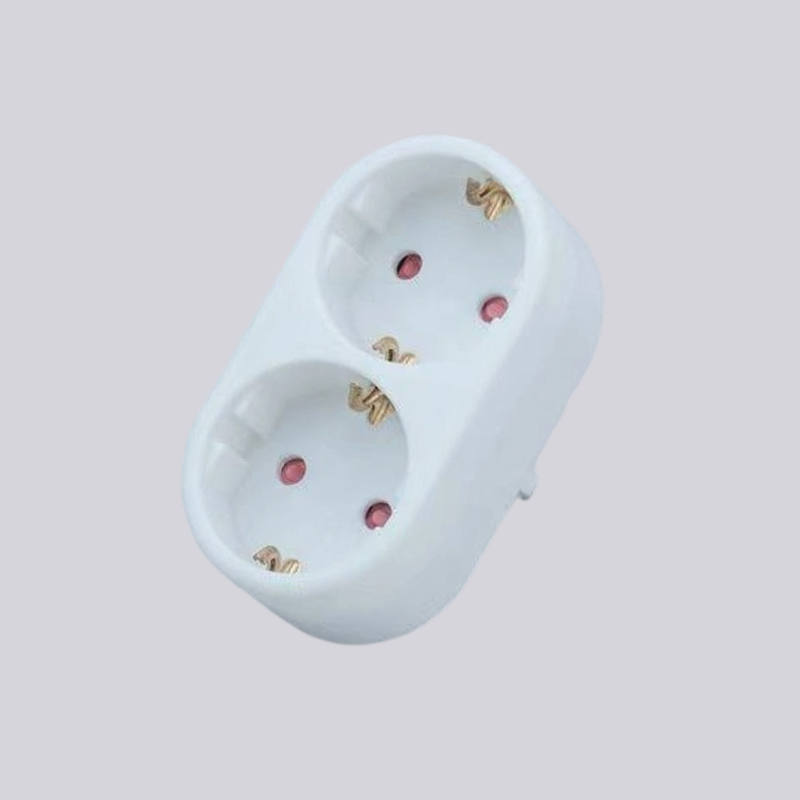
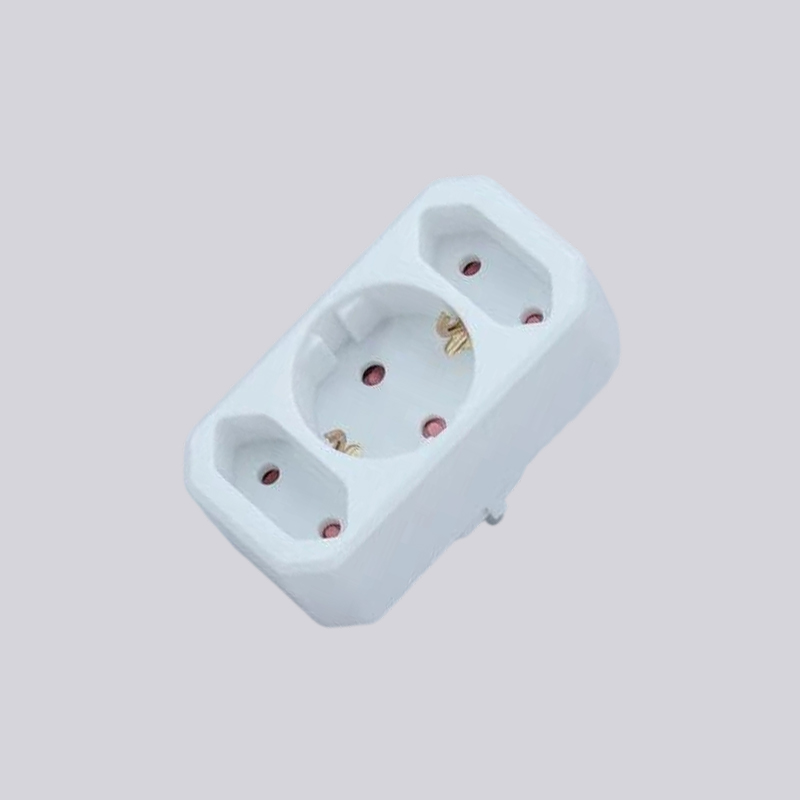

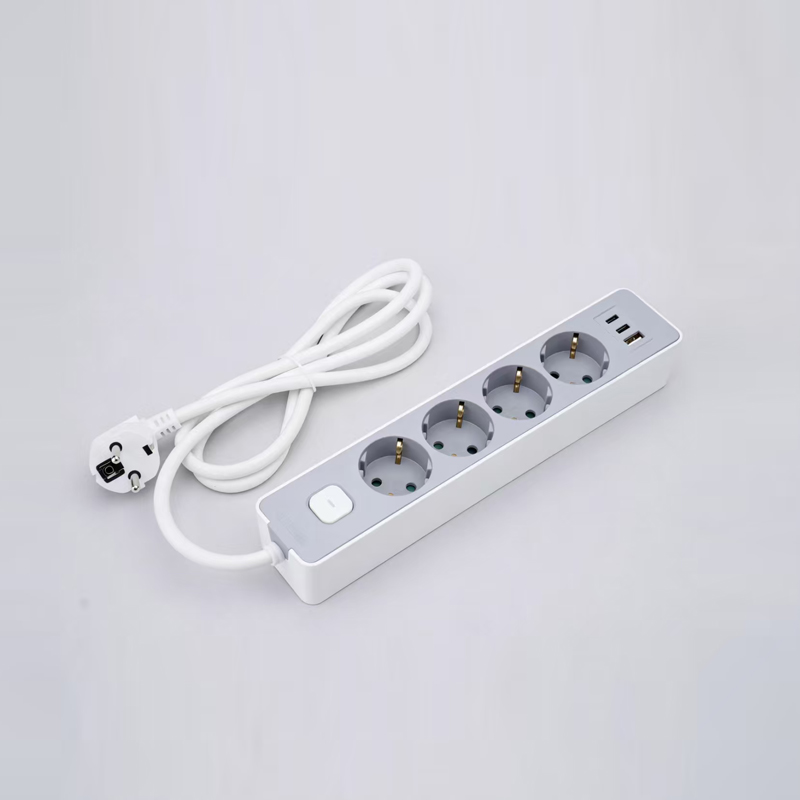

If you are interested in our products, please consult us
- CONTACT DETAILS
- Address : Guanhaiwei East Industrial Zone,Cixi, Ningbo,315314 Zhejiang, P.R.China.
- TEL: helen:+86-15867389889 Young:+86-15958216886 +86-0574-63666678
- Email:[email protected] [email protected]
- Fax:86-0574-63668558
- PRODUCTS
- Power Strip
- Extension Cord
- Cable Reel
- Adapter
- Plug
- QUICK LINK
- Company Profile
- company culture
- Plant equipment
- FAQ
- NEWS CENTER
- Company News
- Industry News
- MOBILE TERMINAL
-