

 English
  中文简体
中文简体 


No, you should not use a standard 125V (North American-rated) power strip directly on European power outlets, since most of Europe runs on 220–240V electrical systems, and a power strip rated only for 125V can overheat, melt, or pose a fire and electrical shock hazard when connected to a circuit nearly double its rated voltage — even with a simple plug adapter. A plug adapter only changes the physical shape of the plug to fit a different outlet; it does nothing to convert or step down the voltage itself, which is the critical distinction that catches many travelers off guard. This guide explains exactly why this matters, what you need instead, and how to safely power your devices while traveling in Europe.
Content
- Why Voltage Differences Make This a Safety Issue, Not Just a Plug Shape Problem
- Plug Adapter vs. Voltage Converter: Why the Difference Matters
- How to Tell If Your Power Strip Is Actually Dual-Voltage
- Which European Countries Use Which Plug Types?
- What Devices Actually Need a Voltage Converter, and Which Don't?
- Why a Dual-Voltage Travel Power Strip Is the Best Solution
- Understanding Wattage Limits When Using a Voltage Converter
- Why Electrical Frequency (Hz) Also Matters, Not Just Voltage
- Frequently Asked Questions About Using a 125V Power Strip in Europe
- Will a 125V power strip definitely break if plugged into 230V?
- Can I just buy a plug adapter instead of a voltage converter to save money?
- Does my phone charger need a voltage converter for Europe?
- What is the safest type of power strip to bring to Europe?
- Can I use a European dual-voltage power strip back home in North America?
- How do I find the voltage rating on a power strip I already own?
- Conclusion
Why Voltage Differences Make This a Safety Issue, Not Just a Plug Shape Problem
The core issue is that North America operates on a 120V (commonly labeled 125V on equipment) electrical standard, while most of Europe operates on 230V, and connecting a device rated for the lower voltage directly to the higher voltage roughly doubles the electrical stress placed on every internal component. This isn't a minor technical footnote — it's the central reason plug adapters and voltage converters are entirely different products serving entirely different purposes.
According to voltage standards documented by the International Electrotechnical Commission (IEC), which coordinates global electrical compatibility standards, most of Europe, along with large parts of Asia, Africa, and Australia, uses a nominal voltage in the 220–240V range, while North America, parts of Central America, and a handful of other countries use 100–127V systems. This split is one of the most consequential differences travelers encounter when bringing electronics between regions, since it affects far more than just whether a plug physically fits into an outlet.
What Actually Happens If You Plug In a 125V Strip on 230V Power
A power strip designed for 125V contains internal components — wiring, switches, surge protection circuitry, and indicator lights — all rated for that specific voltage range, and exposing them to roughly double that voltage can cause immediate overheating, component failure, melted plastic housing, or in worst cases, a fire. Even if the strip appears to "work" for a few minutes without obvious problems, the internal stress on components not designed for that voltage level can cause premature failure or a delayed safety incident rather than reliable, indefinite operation.
Plug Adapter vs. Voltage Converter: Why the Difference Matters
A plug adapter changes only the physical shape of the plug so it fits into a foreign outlet, while a voltage converter actually transforms the electrical voltage itself — and confusing the two is the single most common and potentially dangerous mistake travelers make when packing electronics for an international trip.
| Device Type | What It Changes | Fixes the Voltage Mismatch? | Safe for a 125V-Only Power Strip in Europe? |
| Plug adapter | Physical plug shape only | No | No — voltage mismatch remains |
| Step-down voltage converter | Converts 230V down to ~120V | Yes | Yes, if converter wattage matches the strip's load |
| Dual-voltage travel power strip | Built-in compatibility with both voltage ranges | Yes (no converter needed) | N/A — already designed for this use |
Caption: Comparison of plug adapters, voltage converters, and dual-voltage power strips by function and suitability for international travel.
How to Tell If Your Power Strip Is Actually Dual-Voltage
The fastest way to check is to look directly at the printed voltage rating on the power strip itself, typically found on a label near the plug or on the underside of the unit — if it lists a single voltage like "125V" or "120V" only, it is not safe for direct use in Europe; if it lists a range such as "100-240V," it is dual-voltage and can be used safely with only a plug adapter.
Many laptop chargers, phone chargers, and electric razors are already dual-voltage by default, since manufacturers frequently design these compact electronics to work globally without needing separate product versions for different markets. Power strips and surge protectors, however, are far more likely to be single-voltage only, particularly cheaper or older models, which is exactly why checking this specific label before a trip is such an important habit.
Which European Countries Use Which Plug Types?
Most of continental Europe uses the Type C or Type F plug (often called the "Europlug" or "Schuko" plug), while the United Kingdom and Ireland use the distinctly different Type G plug, meaning even your plug adapter needs to be matched to the specific country you're visiting, not just "Europe" as a whole.
| Region | Common Plug Type | Standard Voltage |
| France, Germany, Spain, most of Western Europe | Type C / Type F (Europlug/Schuko) | 230V |
| United Kingdom, Ireland | Type G | 230V |
| Italy | Type L (also accepts Type C/F in many sockets) | 230V |
| Switzerland | Type J | 230V |
| Denmark | Type K (also accepts Type C/F) | 230V |
Caption: Common plug types and standard voltage by European region, illustrating why a single universal adapter may not cover every country.
What Devices Actually Need a Voltage Converter, and Which Don't?
Most modern portable electronics with built-in AC adapters — laptops, phone chargers, and camera battery chargers — are dual-voltage and only need a plug adapter, while devices with simple internal heating elements or motors, such as hair dryers, curling irons, and some travel power strips, often are not dual-voltage and genuinely need a voltage converter or dual-voltage replacement.
| Device Type | Usually Dual-Voltage? | What You Likely Need |
| Laptop charger | Yes | Plug adapter only |
| Phone / tablet charger | Yes | Plug adapter only |
| Standard (non-dual-voltage) power strip | No | Voltage converter or dual-voltage replacement |
| Hair dryer / curling iron | Sometimes, check label | Voltage converter if not dual-voltage |
| Electric shaver | Usually yes | Plug adapter only |
| CPAP machine | Often yes, but always verify | Plug adapter if dual-voltage confirmed; otherwise converter |
Caption: Common travel electronics and whether they typically require only a plug adapter or a full voltage converter for use in Europe.
Why a Dual-Voltage Travel Power Strip Is the Best Solution
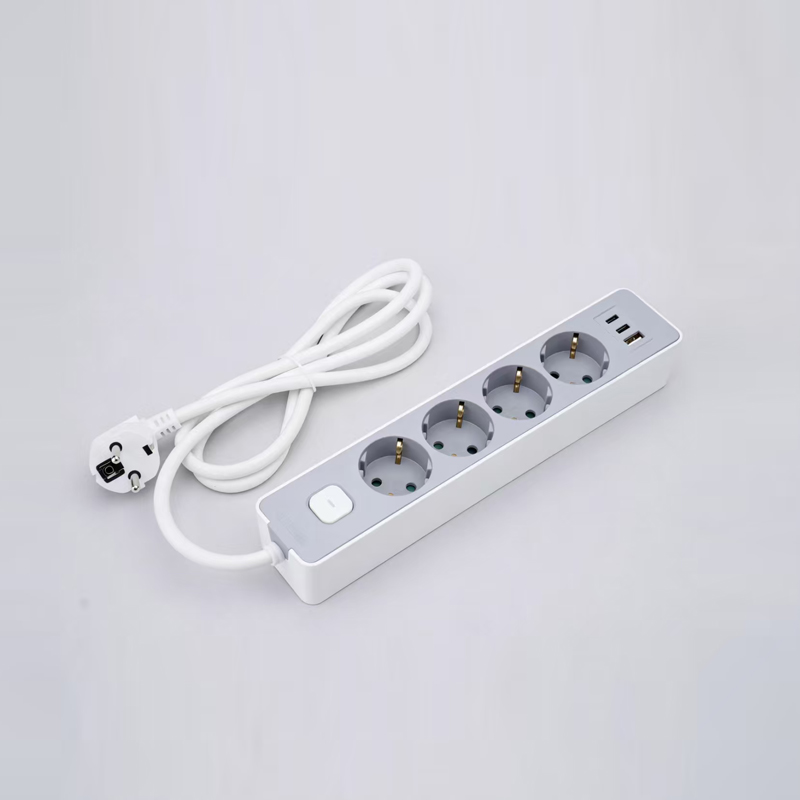
A purpose-built dual-voltage travel power strip, rated for 100–240V, eliminates the need for a separate voltage converter entirely, since the strip's internal components are already engineered to handle either electrical standard safely — making it the simplest and most reliable solution for travelers who need to power multiple devices from one outlet.
These travel-specific power strips typically include USB charging ports alongside standard AC outlets and are compact enough to pack easily, but the most important detail to verify before buying one is that voltage range printed directly on the product, since not every "travel" branded power strip is automatically dual-voltage despite being marketed for international use. Looking for the explicit 100–240V rating on the packaging or product label is the only way to be certain.
Understanding Wattage Limits When Using a Voltage Converter
Even when using a proper voltage converter, exceeding its rated wattage capacity by plugging in too many high-draw devices simultaneously can cause the converter to overheat or fail, so checking the combined wattage of everything you plan to connect against the converter's maximum rated output is an essential safety step.
High-wattage devices like hair dryers (often 1,000 to 1,800 watts) and curling irons draw significantly more power than charging a phone or laptop (typically under 100 watts), so a small, lightweight travel converter rated for low-wattage electronics will not safely handle a hair dryer or similar heating appliance, even though both appear to be solving the "same" voltage problem on paper. Always check the converter's maximum wattage rating against the actual power draw of your specific devices, which is usually printed on the device itself or its original charger.
Why Electrical Frequency (Hz) Also Matters, Not Just Voltage
Beyond voltage, North America runs on a 60Hz electrical frequency while most of Europe uses 50Hz, and while this difference matters less for simple electronics, it can affect devices with motors or precise timing components, such as certain clocks, audio equipment, and some kitchen appliances. Most modern dual-voltage electronics, particularly those with switching power supplies like laptop and phone chargers, are designed to handle both 50Hz and 60Hz without any issue, since their internal circuitry converts incoming AC power into stable DC power regardless of the original frequency.
Devices with simple AC motors, however — including some older clocks, record players, and certain kitchen gadgets — can run at a slightly different speed when the frequency changes, since motor speed in these simpler designs is directly tied to the electrical frequency itself rather than being electronically regulated. This is a more niche concern for most travelers, since the vast majority of personal electronics carried while traveling are unaffected, but it's worth knowing about if you're bringing along motor-driven devices rather than purely electronic equipment.
A Quick Pre-Trip Electronics Checklist
Before departing, it helps to lay out every electrical item you plan to bring and check each one's label for its voltage rating, separating items that are confirmed dual-voltage (needing only a plug adapter) from those that are single-voltage (needing a converter, or better yet, a dual-voltage replacement purchased specifically for travel). Taking just a few extra minutes on this simple sorting exercise before packing is far easier than discovering a voltage mismatch problem after you've already arrived at your destination.
Frequently Asked Questions About Using a 125V Power Strip in Europe
Will a 125V power strip definitely break if plugged into 230V?
Not necessarily immediately, but the risk is real and unpredictable — some components may fail instantly, while others might appear to function temporarily before overheating or failing later, sometimes accompanied by a burning smell, smoke, or in rare cases, fire. Because the outcome isn't reliably predictable, the safest approach is to never connect a 125V-only power strip directly to a 230V outlet under any circumstances, regardless of how it might seem to perform initially.
Can I just buy a plug adapter instead of a voltage converter to save money?
Only if your specific device is already confirmed to be dual-voltage (typically printed as "100-240V" on the device label) — in that case, yes, a plug adapter alone is sufficient and is indeed the cheaper, simpler solution. If your device is single-voltage (125V or 120V only), a plug adapter will let the plug physically connect to the European outlet but does nothing to address the underlying voltage mismatch, so it will not make the device safe to use.
Does my phone charger need a voltage converter for Europe?
Almost certainly not — the vast majority of modern phone and tablet chargers are manufactured as dual-voltage (100-240V) specifically because phone manufacturers sell the same charger design globally, making a simple plug adapter the only thing typically needed. It's still worth a quick check of the small print on your charger's housing to confirm the voltage range before traveling, just to be certain for your specific device.
What is the safest type of power strip to bring to Europe?
A power strip specifically labeled and rated for 100–240V dual-voltage operation, ideally one designed for international travel with the appropriate plug type for your destination already built in or easily adapted, is the safest and most convenient option. This avoids the need for a separate voltage converter altogether and removes the guesswork involved in matching converter wattage to your devices.
Can I use a European dual-voltage power strip back home in North America?
Yes — a genuinely dual-voltage power strip rated for 100–240V works safely on both North American (120V) and European (230V) electrical systems, making it a versatile option if you travel between regions frequently. You would still need the correct plug adapter or a strip with interchangeable plug prongs to physically fit the outlets in each specific region.
How do I find the voltage rating on a power strip I already own?
Check the small printed label typically located on the underside of the power strip, near the main plug, or sometimes on a sticker along one of the strip's longer edges — it will list either a single voltage value (such as "125V" or "120V," meaning it is not safe for direct use on 230V power) or a range (such as "100-240V," meaning it is dual-voltage and safe with just a plug adapter).
Conclusion
A standard 125V power strip should never be plugged directly into a European outlet, even with a plug adapter, since the adapter only solves the physical plug shape problem and does nothing about the underlying voltage mismatch that can damage the strip or create a genuine fire and shock hazard. The safest paths forward are checking whether your specific power strip is already rated for 100–240V dual-voltage use, investing in a properly wattage-matched voltage converter, or simply purchasing a dedicated dual-voltage travel power strip designed for exactly this situation.
Before any international trip, take a few minutes to check the voltage label on every electrical item you plan to pack, not just your power strip — this small habit is the most reliable way to avoid a damaged device, a tripped circuit, or a genuinely dangerous situation while you're away from home.