English
  中文简体
中文简体 
What Are the Standard Socket Types for a European Power Strip?
 2025.12.07
 Industry News
As global electronics usage continues to expand across homes, offices, and industrial environments, understanding power connectivity standards has become more important than ever. One of the most widely used electrical accessories across the continent is the European Power Strip. Its socket design directly affects safety, compatibility, performance, and user convenience. From residential applications to professional workspaces, knowing the standard plug and socket types is essential for choosing the right power strip.
Different European countries follow harmonized yet slightly varied electrical socket standards. These differences influence how a European Power Strip is designed and which international devices it can safely support.
Content
- Understanding European Electrical Socket Standards
- Primary Standard Socket Types Used in European Power Strips
- Voltage and Current Ratings for European Power Strips
- Grounding Systems in European Power Strips
- Popular Applications of European Power Strips
- Additional Features Found in Modern European Power Strips
- Material and Build Quality Considerations
- How to Choose the Right European Power Strip
- Manufacturing Standards and Certifications
- Market Trends for European Power Strips
- FAQ: European Power Strip Socket Types and Usage
- Which socket type is most common in a European Power Strip?
- Can a European Power Strip support Type C plugs?
- Is grounding mandatory for all European Power Strips?
- Can a European Power Strip be used outside of Europe?
- What is the maximum power load of a standard European Power Strip?
- Do European Power Strips support USB fast charging?
- Conclusion: Why Standard Socket Knowledge Matters
Understanding European Electrical Socket Standards
The Role of Standardization in Europe
Europe follows a coordinated electrical standard system governed largely by IEC (International Electrotechnical Commission) and CENELEC. While voltage and frequency are mostly unified at 230V / 50Hz, socket configurations vary slightly between regions.
A European Power Strip must be designed to accommodate these standardized socket types while ensuring electrical safety, stable contact, and overload protection.
Why Socket Type Matters for Power Strips
- Device Compatibility
- Electrical Safety
- Current Load Capacity
- Grounding Standards
- Travel and Cross-Border Use
Primary Standard Socket Types Used in European Power Strips
Type C (Europlug)
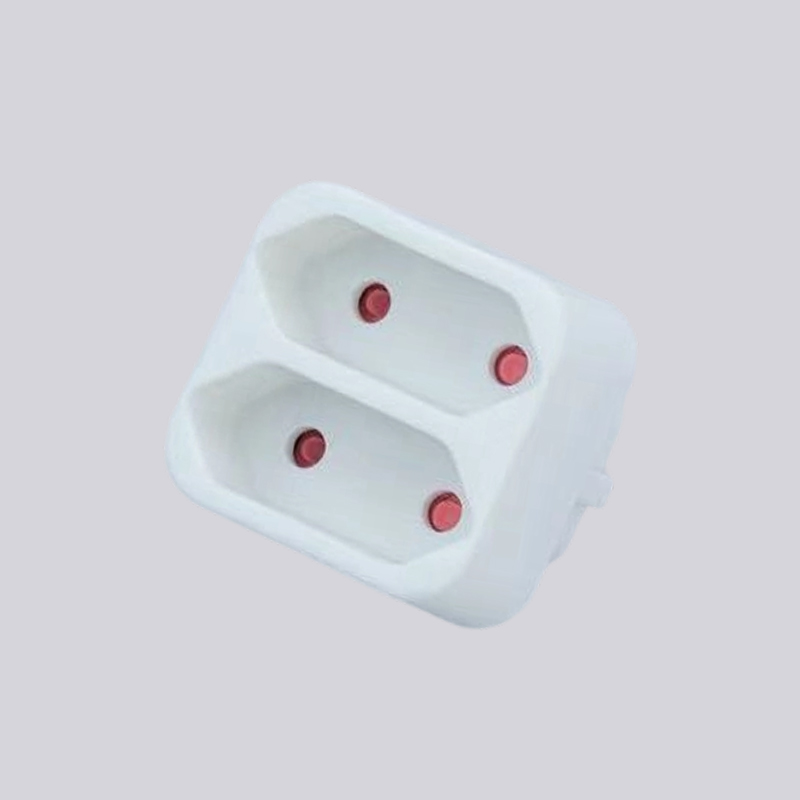
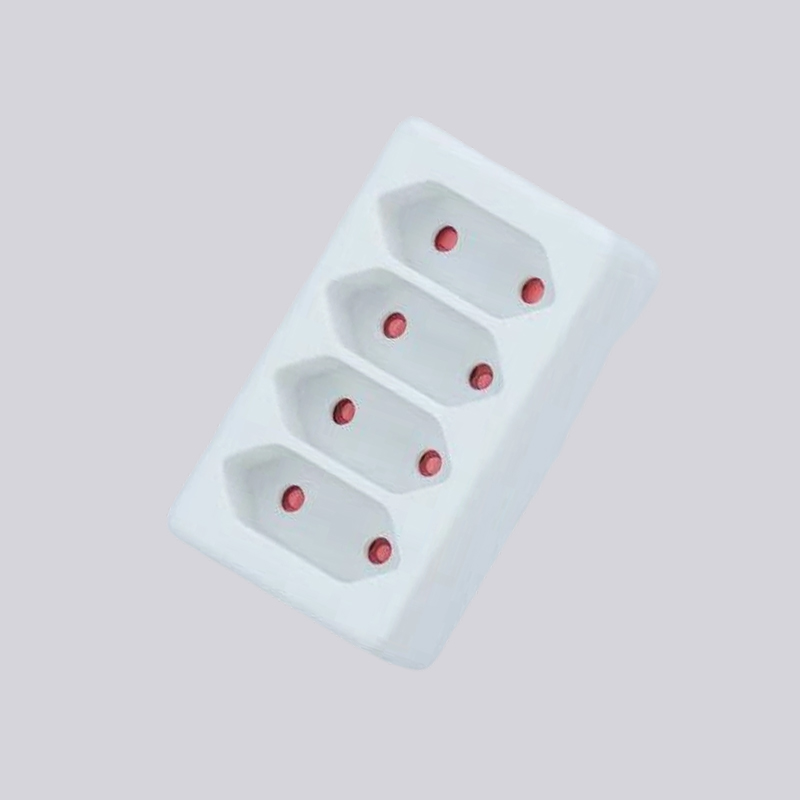
Type C is one of the most common plug formats in Europe. It features two round pins and no grounding mechanism.
- Used in low-power electronics
- Fits in Type E, F, J, and K sockets
- Common in phone chargers, radios, and small appliances
Many European Power Strip models include Type C-compatible sockets for lightweight devices.
Type E Socket (French Standard)
Type E sockets contain a grounding pin that protrudes from the socket itself rather than the plug.
- 240V / 16A capacity
- Original standard in France, Belgium, Poland
- Provides solid grounding contact
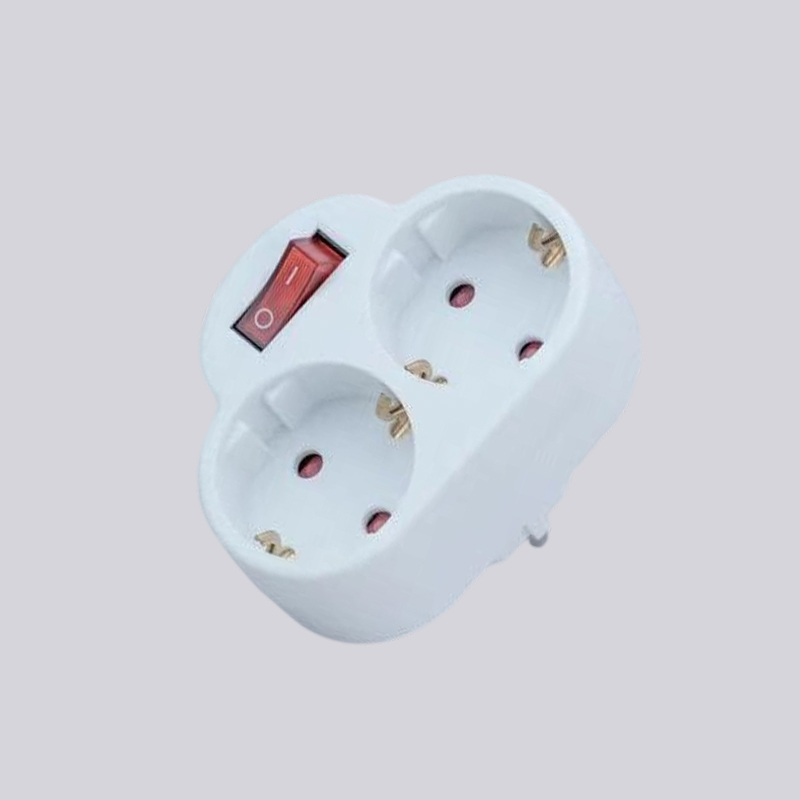
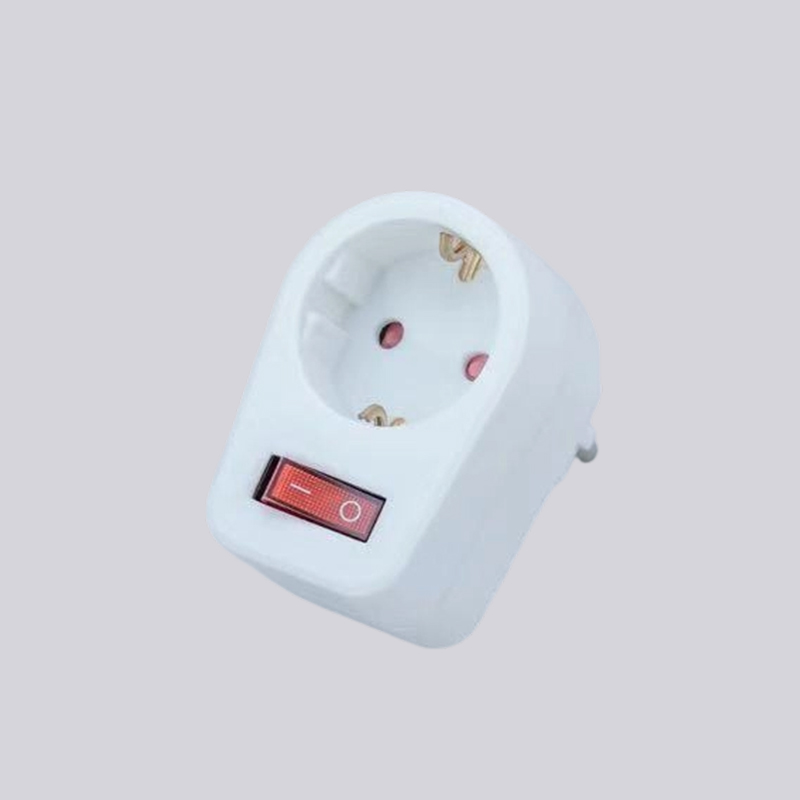
Type F Socket (Schuko Standard)
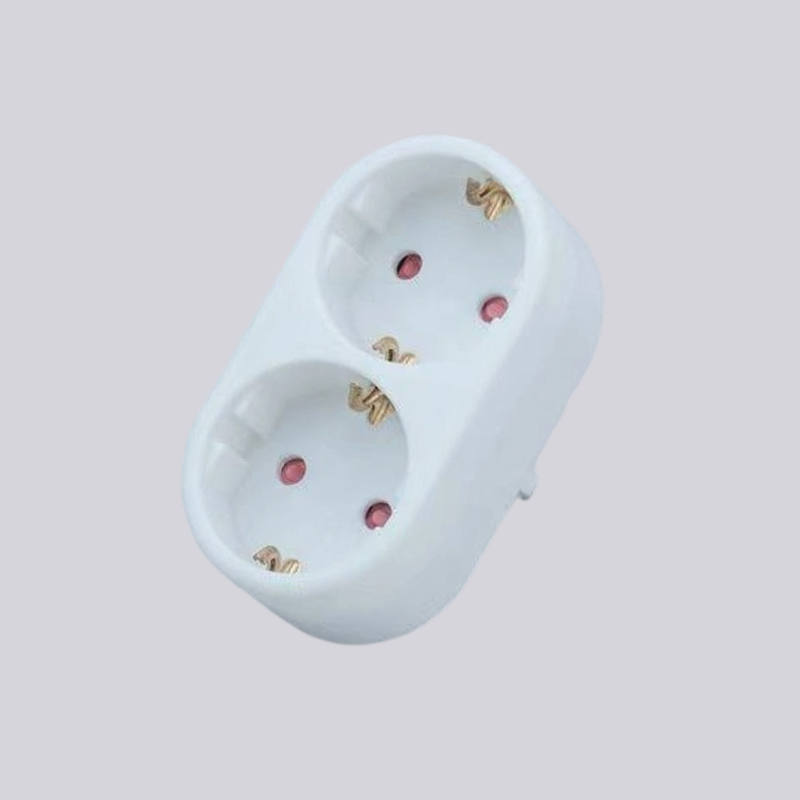
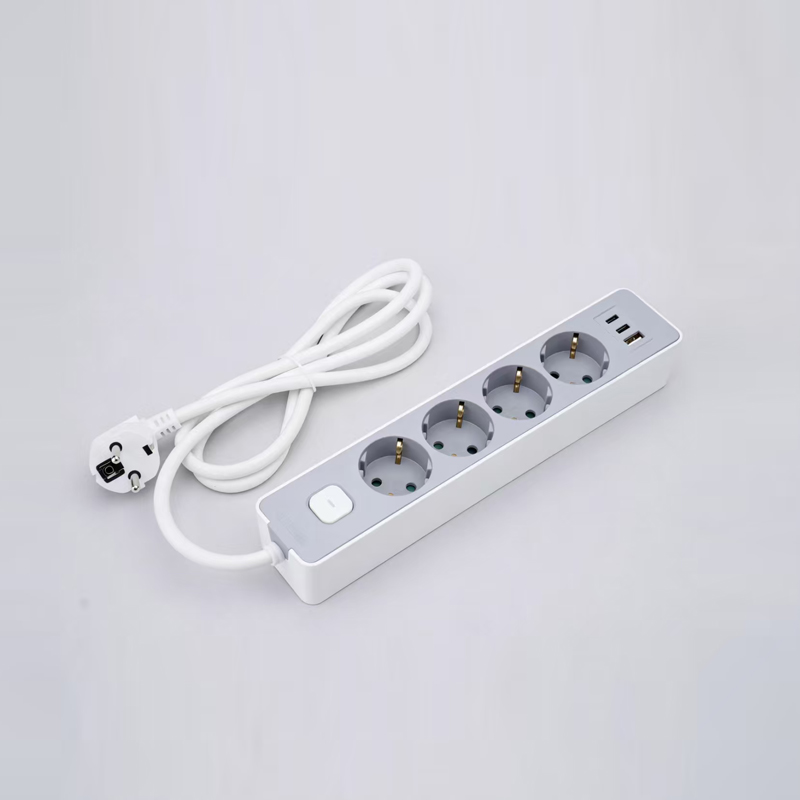
Type F is the most widespread socket used in Europe and the most common interface found in modern European Power Strip units.
- Side grounding clips
- 16A current rating
- Used in Germany, Spain, Netherlands, Austria, and more
Most premium European Power Strip products are based on the Type F (Schuko) configuration due to its strong grounding reliability.
Type E/F Hybrid Socket
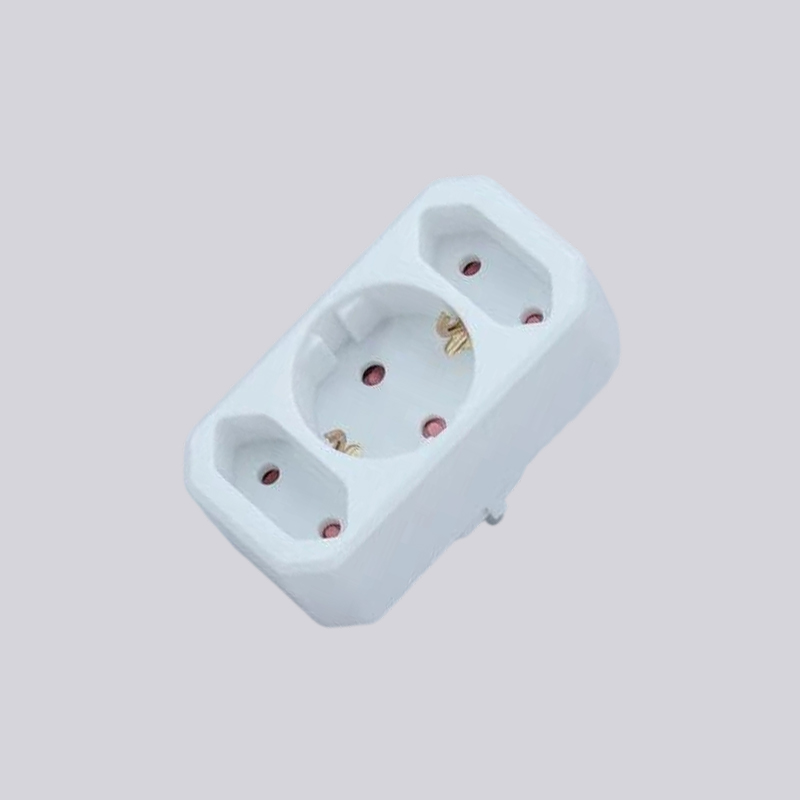
Many modern European Power Strip designs now integrate hybrid sockets that support both Type E and Type F plugs. This enhances compatibility across Western and Central Europe.
Voltage and Current Ratings for European Power Strips
Standard Electrical Ratings
- Voltage: 220V–240V
- Frequency: 50Hz
- Maximum Current: 10A or 16A
- Maximum Load: Up to 3680W
Why Load Capacity Matters
Overloading remains one of the most common causes of power strip failure. European Power Strip units are typically rated higher than many international equivalents, making them suitable for heavier appliances such as microwaves, heaters, and desktop servers.
Grounding Systems in European Power Strips
Side Contact vs Pin-Based Grounding
The European grounding system differs from North American designs. Type F sockets use side grounding clips, while Type E relies on a central pin. High-quality European Power Strip models often include both mechanisms for maximum safety compatibility.
Why Grounding Is Critical
- Prevents electric shock
- Protects sensitive electronics
- Improves power stability
- Reduces short circuit risks
Popular Applications of European Power Strips
Home Use
- Televisions and media centers
- Kitchen appliances
- Smart home devices
Office Environments
- Desktop computers
- Printers and scanners
- Servers and network devices
Industrial and Commercial Use
- Machinery control systems
- Laboratory equipment
- Factory automation terminals
Additional Features Found in Modern European Power Strips
Surge Protection
Many European Power Strip products now come equipped with integrated surge suppression to protect valuable electronics from voltage spikes caused by lightning or unstable grids.
USB Charging Ports
Built-in USB-A and USB-C ports allow direct charging of smart devices without requiring bulky adapters.
Smart Power Control
- Wi-Fi remote switching
- Mobile app control
- Energy monitoring
- Voice assistant support
Child Safety Shutters
Integrated safety shutters prevent accidental electric shock, especially important for households with children.
Material and Build Quality Considerations
Housing Materials
- Fire-retardant PC plastic
- ABS reinforced polymer
- Industrial-grade aluminum housing
Internal Wiring
Pure copper wiring with thick insulation ensures efficient energy transmission and heat resistance in high-load conditions.
How to Choose the Right European Power Strip
Key Selection Factors
- Socket standard (Type E, F, or hybrid)
- Maximum power rating
- Number of outlets
- Surge protection level
- USB charging requirements
- Cable length and thickness
For International Buyers
Buyers outside Europe must ensure that the European Power Strip matches both local voltage requirements and plug adapter compatibility for safe operation.
Manufacturing Standards and Certifications
Common Certifications
- CE Certification
- RoHS Compliance
- GS Safety Mark
- TUV Certification
Certified European Power Strip products undergo strict testing on temperature resistance, fire safety, and overload protection.
Market Trends for European Power Strips
Growing Demand for Smart Power Management
Smart European Power Strip solutions with energy tracking and mobile control are experiencing strong growth across residential and commercial sectors.
Sustainability and Green Manufacturing
Manufacturers increasingly focus on low-carbon materials, recyclable plastics, and energy-efficient power strip designs.
FAQ: European Power Strip Socket Types and Usage
Which socket type is most common in a European Power Strip?
Type F (Schuko) is the most widely used socket standard found in modern European Power Strip products.
Can a European Power Strip support Type C plugs?
Yes, most Type F and hybrid sockets are fully compatible with Type C Europlugs.
Is grounding mandatory for all European Power Strips?
Grounding is strongly recommended for medium and high-power devices and is legally required for many professional applications.
Can a European Power Strip be used outside of Europe?
Yes, provided the local voltage is 220–240V and proper plug adapters are used.
What is the maximum power load of a standard European Power Strip?
Most models safely support up to 3680 watts at 16A.
Do European Power Strips support USB fast charging?
Many premium models now include USB-C PD and QC fast charging technology.
Conclusion: Why Standard Socket Knowledge Matters
Understanding the standard socket types used in a European Power Strip is essential for safe, efficient, and universal power connectivity. Whether used in homes, offices, or industrial settings, selecting the right socket configuration ensures full device compatibility, electrical safety, and long-term performance.
With the continued growth of smart electronics and cross-border device usage, the European Power Strip remains one of the most critical supporting components in modern electrical systems.


If you are interested in our products, please consult us
- CONTACT DETAILS
- Address : Guanhaiwei East Industrial Zone,Cixi, Ningbo,315314 Zhejiang, P.R.China.
- TEL: helen:+86-15867389889 Young:+86-15958216886 +86-0574-63666678
- Email:[email protected] [email protected]
- Fax:86-0574-63668558
- PRODUCTS
- Power Strip
- Extension Cord
- Cable Reel
- Adapter
- Plug
- QUICK LINK
- Company Profile
- company culture
- Plant equipment
- FAQ
- NEWS CENTER
- Company News
- Industry News
- MOBILE TERMINAL
-