

 English
  中文简体
中文简体 


The short and direct answer: space heaters, air conditioners, microwave ovens, refrigerators, toasters, coffee makers, hair dryers, electric kettles, clothes irons, washing machines, portable air compressors, and any other power strip should never be plugged into a power strip. These devices draw massive electrical current that can overwhelm the strip's internal wiring, melt the insulation, and start a fire within minutes. According to the Electrical Safety Foundation International (ESFI), extension cords and power strips are involved in an estimated 3,300 home fires each year in the United States, causing approximately 50 deaths and 270 injuries annually. Understanding what belongs in a wall outlet versus a power strip is not just a matter of convenience. It is a matter of life safety.
Content
- What Exactly Is a Power Strip and How Does It Work?
- The 12 Appliances You Should Never Plug Into a Power Strip
- 1. Space Heaters — The Leading Cause of Power Strip Fires
- 2. Microwave Ovens — High Startup Surge Current
- 3. Air Conditioners — Compressor Loads Are Inductive
- 4. Refrigerators and Freezers — Continuous Duty Cycle
- 5. Toasters and Toaster Ovens — Resistive Heating at Full Load
- 6. Coffee Makers and Espresso Machines — Wattage That Adds Up Fast
- 7. Hair Dryers — Extreme Wattage in a Compact Form
- 8. Electric Kettles — Rapid Boiling, Rapid Heating
- 9. Clothes Irons — High Heat and Long Duration
- 10. Washing Machines — Motor Surge and Vibration
- 11. Portable Air Compressors and Power Tools — Garage Hazards
- 12. Another Power Strip — Daisy Chaining Is Never Safe
- Power Consumption Comparison: High-Risk Appliances vs. Safe Devices
- Visual Power Comparison: How Appliances Stack Up Against a Power Strip's Limit
- Why Daisy Chaining Power Strips Is Exceptionally Dangerous
- How to Use a Power Strip Safely: Practical Guidelines
- Safe vs. Unsafe: Quick Reference Decision Table
- Frequently Asked Questions About Power Strip Safety
- Can I plug a surge protector into a power strip?
- Is it safe to plug a refrigerator into a heavy-duty power strip rated for 20 amps?
- How can I tell if my power strip is overloaded?
- Can I use a power strip in the bathroom?
- Does a power strip with a built-in USB port handle high-wattage devices better?
- What should I do if I have already been daisy chaining power strips?
- The Bottom Line: Respect the Limits of Your Power Strip
What Exactly Is a Power Strip and How Does It Work?
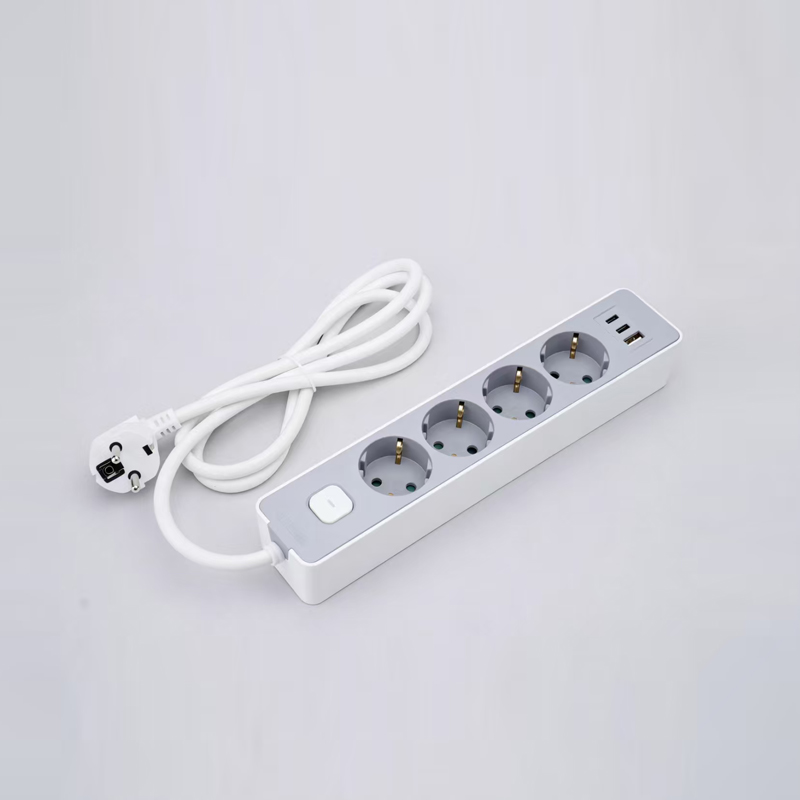
A power strip is a multi-outlet device that expands a single wall receptacle into several electrical sockets, often housed inside a plastic or metal enclosure with an integrated circuit breaker. The internal wiring of a typical power strip is designed to handle a total combined load of 15 amps at 120 volts, which translates to a maximum capacity of approximately 1,800 watts. However, many budget power strips use thinner internal conductors rated for only 10 amps or 1,200 watts. When the total wattage of all plugged-in devices exceeds this threshold, the strip's wiring heats up rapidly. The circuit breaker should trip, but degradation over time, corrosion, or manufacturing defects can prevent proper tripping. The result is resistive heating that can ignite the plastic housing or nearby combustible materials such as curtains, carpet, or paper.
It is important to distinguish a basic power strip from a surge protector. While many surge protectors look identical to power strips and offer multiple outlets, they contain additional components called metal oxide varistors that absorb voltage spikes. However, even a surge protector has the same current limitations as a standard power strip. Neither device is designed to handle the sustained high-current draw of major appliances. A surge protector protects against voltage; it does not increase the amperage capacity.
TYPICAL POWER STRIP CAPACITY
1,800 W
at 15 amps / 120 volts — maximum safe load
SPACE HEATER CONSUMPTION
1,500 W
a single heater nearly maxes out the entire strip
STANDARD WALL OUTLET
2,400 W
20-amp circuit — designed for heavy appliances
The 12 Appliances You Should Never Plug Into a Power Strip
Each of the following appliances carries a specific risk profile. The common thread is that they all draw high wattage, operate for extended periods, or produce heat as their primary function. Plugging any of these into a power strip creates a serious fire hazard that insurance investigators and fire marshals recognize immediately.
1. Space Heaters — The Leading Cause of Power Strip Fires
Portable space heaters are the single most dangerous device to connect to a power strip. A standard 1,500-watt space heater consumes 83% of a 15-amp power strip's total capacity all by itself. When the heater's internal thermostat cycles on, the initial current surge can briefly exceed the strip's rating. The National Fire Protection Association reports that space heaters account for 43% of home heating fires and 85% of associated deaths. These devices must always be plugged directly into a wall outlet, ideally on a dedicated circuit with no other loads sharing the same branch.
2. Microwave Ovens — High Startup Surge Current
A microwave oven rated at 1,000 watts of cooking power actually draws between 1,400 and 1,700 watts from the electrical supply due to efficiency losses in the magnetron. The startup inrush current can be two to three times higher than the running current for a fraction of a second, which stresses the power strip's internal connections and can cause micro-arcing at the contact points. Over time, this arcing carbonizes the plastic around the receptacle, creating a conductive path that leads to a short circuit and potential ignition.
3. Air Conditioners — Compressor Loads Are Inductive
Window and portable air conditioning units present a double hazard. First, their running wattage typically ranges from 900 to 1,500 watts, already near the limit of most power strips. Second, and more critically, the compressor motor is an inductive load that draws a massive inrush current at startup, often three to five times the rated running current. This instantaneous spike can weld the contacts of the power strip's switch closed, permanently bypassing the circuit breaker and leaving the strip unprotected for future overloads.
4. Refrigerators and Freezers — Continuous Duty Cycle
Although a modern refrigerator may only draw 150 to 400 watts while running, its compressor startup surge can briefly spike to 1,200 to 2,000 watts. Additionally, refrigerators operate on a continuous duty cycle, running intermittently 24 hours a day, seven days a week. Power strips are not designed for continuous, unattended loads. The constant thermal cycling of the strip's internal components accelerates metal fatigue and loosens internal screw terminals, gradually increasing electrical resistance and heat generation at connection points that are hidden from view.
5. Toasters and Toaster Ovens — Resistive Heating at Full Load
A toaster operates by passing electrical current through high-resistance nichrome wire until it glows red hot, drawing between 800 and 1,500 watts. Toaster ovens can draw even more, up to 1,800 watts, which equals the entire rated capacity of a 15-amp power strip. Using a toaster on a power strip leaves zero headroom for any other device. Even a brief simultaneous draw from a second appliance, such as a phone charger, can push the total load beyond the safe threshold and trigger an overheat condition that the circuit breaker may not catch in time.
6. Coffee Makers and Espresso Machines — Wattage That Adds Up Fast
A standard drip coffee maker consumes 750 to 1,200 watts during the brewing cycle. Espresso machines with thermoblock heating systems can draw 1,200 to 1,500 watts. The danger escalates when a coffee maker shares a power strip with other morning kitchen devices such as a toaster or an electric griddle. The combined load on a single strip can easily exceed 2,000 watts, more than the strip and possibly the wall circuit can handle. The ESFI notes that kitchen electrical fires peak between 8 a.m. and 11 a.m., correlating directly with breakfast cooking hours.
7. Hair Dryers — Extreme Wattage in a Compact Form
Handheld hair dryers are among the most power-hungry portable appliances in the home, with typical ratings between 1,200 and 1,875 watts. A high-wattage hair dryer running on the hottest setting with maximum fan speed can draw over 15 amps by itself, which exceeds the continuous rating of many power strips. The concentrated heat generated at the plug-to-receptacle interface, combined with the flexible cord's bending stress, accelerates insulation breakdown at the most vulnerable point: the connection between the appliance plug and the power strip socket.
8. Electric Kettles — Rapid Boiling, Rapid Heating
Electric kettles are designed for speed, and that speed comes at a cost. A typical 1.7-liter electric kettle draws 1,200 to 1,500 watts and can boil water in under four minutes. During those four minutes, the power strip's internal wiring is subjected to near-maximum current flow. If the kettle is plugged into a strip that is already powering other devices, the combined amperage can cause the copper conductors inside the strip to reach temperatures above 60 degrees Celsius (140 degrees Fahrenheit), which is sufficient to soften PVC insulation and initiate thermal runaway.
9. Clothes Irons — High Heat and Long Duration
A steam iron consumes between 1,000 and 1,800 watts and is often left on for extended periods during ironing sessions that can last 30 minutes or longer. This sustained high-current draw gives the power strip's internal connections ample time to heat up and reach thermal equilibrium at dangerous temperatures. Unlike a hair dryer that runs for only a few minutes, an iron's prolonged operation tests the endurance limits of every component in the current path, from the plug prongs to the internal bus bars.
10. Washing Machines — Motor Surge and Vibration
Washing machines draw 400 to 1,000 watts during the wash cycle, but the spin cycle's motor startup can momentarily pull 1,500 to 2,200 watts. Additionally, the vibration from a washing machine can physically loosen the friction-fit connections inside a power strip. Loose connections create high-resistance contact points that generate localized heat far exceeding the ambient temperature. This phenomenon, known as fretting corrosion, is a leading cause of electrical connection failures in environments subject to mechanical vibration.
11. Portable Air Compressors and Power Tools — Garage Hazards
Small portable air compressors and high-amperage power tools such as circular saws, miter saws, and welders often draw 1,200 to 2,000 watts under load. These devices are frequently used in garages or workshops where power strips are daisy-chained to reach distant corners. The combination of high current, long extension runs, and a dusty environment creates an especially dangerous scenario. Sawdust and other combustible debris can accumulate inside the power strip's ventilation slots, providing ready fuel if an electrical fault occurs.
12. Another Power Strip — Daisy Chaining Is Never Safe
Plugging one power strip into another, a practice known as daisy chaining, is explicitly prohibited by the National Electrical Code and by every recognized fire safety organization. When power strips are connected in series, the total available current at the end of the chain remains limited by the first strip's rating, but users tend to populate all available outlets, easily exceeding the safe load. Furthermore, each additional connection introduces more contact resistance. A daisy-chained setup can have five or more plug-to-receptacle interfaces, each contributing incremental resistance that compounds into significant heat generation. The U.S. Consumer Product Safety Commission has documented numerous fatalities resulting from daisy-chained power strip configurations.
Power Consumption Comparison: High-Risk Appliances vs. Safe Devices
The table below illustrates the stark difference in power demands between appliances that should never share a power strip and low-wattage devices that are safe to connect. Notice how a single space heater consumes nearly as much power as 25 LED light bulbs combined.
| Appliance | Typical Wattage | Amps at 120V | Safe on Power Strip? |
|---|---|---|---|
| Space Heater | 1,500 W | 12.5 A | No |
| Microwave Oven | 1,500 W | 12.5 A | No |
| Hair Dryer | 1,875 W | 15.6 A | No |
| Window AC Unit | 1,200 W | 10.0 A | No |
| Electric Kettle | 1,500 W | 12.5 A | No |
| Toaster Oven | 1,800 W | 15.0 A | No |
| LED Light Bulb (9W) | 9 W | 0.075 A | Yes |
| Laptop Charger | 45–65 W | 0.4–0.5 A | Yes |
| Smartphone Charger | 5–20 W | 0.04–0.17 A | Yes |
| Desk Fan | 30–50 W | 0.25–0.42 A | Yes |
| Router / Modem | 10–20 W | 0.08–0.17 A | Yes |
Comparison of high-risk appliances versus low-wattage devices that are safe for power strip use. Data reflects typical nameplate ratings; actual consumption may vary. Sources: U.S. Department of Energy appliance energy database and manufacturer specifications.
Visual Power Comparison: How Appliances Stack Up Against a Power Strip's Limit
The horizontal bars below show how close each high-risk appliance comes to the 1,800-watt safety ceiling of a standard 15-amp power strip. The red zone indicates dangerous territory where the appliance alone leaves almost no headroom for anything else.
Why Daisy Chaining Power Strips Is Exceptionally Dangerous
Daisy chaining is the practice of connecting multiple power strips in sequence by plugging one into another. This configuration is a leading cause of preventable electrical fires in both residential and office settings. The core problem is that every additional connection point introduces resistance. A single clean plug-to-receptacle connection may have a contact resistance of 0.01 to 0.05 ohms. When four or five connections are chained, the cumulative resistance can reach 0.2 ohms or higher. At a current draw of 12 amps, that resistance generates approximately 29 watts of heat distributed across the connection points — equivalent to the heat output of a small soldering iron, concentrated inside a plastic enclosure with limited ventilation.
Furthermore, daisy chaining often violates the listing requirements of Underwriters Laboratories (UL). Power strips are tested and certified for use as a single unit connected directly to a wall receptacle. When connected in series, the assembly is no longer operating within its tested parameters, and the UL listing becomes void. Insurance investigators routinely cite daisy-chained power strips as a basis for denying fire damage claims when the configuration is discovered during post-incident inspections.
Incorrect and Dangerous
Wall outlet → Power Strip A → Power Strip B → Power Strip C → multiple high-wattage devices. This configuration multiplies contact resistance and invites overload.
Correct and Safe
Wall outlet → single power strip with adequate rating → only low-wattage devices. High-wattage appliances each get their own dedicated wall outlet.
How to Use a Power Strip Safely: Practical Guidelines
Power strips are convenient and perfectly safe when used within their design limitations. Following these evidence-based guidelines will dramatically reduce your risk of electrical fire.
- Check the amperage rating printed on the power strip's label. If it is rated for 10 amps, do not exceed 1,200 total watts. If rated for 15 amps, stay below 1,800 total watts. Add up the wattage of every device connected to the strip and ensure the sum is at least 20% below the maximum rating to maintain a safety margin.
- Feel the strip's housing periodically during use. A power strip that feels warm to the touch is operating near or beyond its safe capacity. Disconnect devices immediately and redistribute the load. A hot power strip is a fire about to happen.
- Never cover a power strip with rugs, furniture, or clothing. Power strips rely on passive air convection to dissipate the heat generated by normal current flow. Covering them traps heat and can raise internal temperatures by 30 degrees Celsius or more within an hour of operation.
- Replace power strips that are more than five years old. Internal components degrade over time. The spring tension in receptacle contacts weakens, the circuit breaker mechanism can corrode, and the plastic housing becomes more brittle and susceptible to cracking. Older strips also lack modern safety features such as tamper-resistant shutters.
- Inspect the plug and cord regularly for signs of damage. Look for discoloration around the prongs, melted or deformed plastic near the plug face, frayed insulation, or exposed copper conductors. Any of these signs means the strip should be discarded immediately and replaced.
- Choose power strips with integrated overcurrent protection and a resettable circuit breaker. This single feature can prevent most overload-related fires by automatically disconnecting power when the current exceeds the safe threshold.
- Mount power strips securely if they have keyhole slots on the back for wall mounting. A strip lying loose on the floor is more susceptible to physical damage, liquid spills, and accidental covering by combustible materials.
Safe vs. Unsafe: Quick Reference Decision Table
Use this decision table to quickly determine whether a device belongs in a wall outlet or can safely share a power strip with other electronics.
| Device Category | Examples | Recommended Connection | Reason |
|---|---|---|---|
| Heating Appliances | Space heater, toaster, iron, kettle | Wall outlet only | Near-maximum continuous current draw |
| Motor-Driven Appliances | AC unit, fridge, washer, compressor | Wall outlet only | High startup inrush current and vibration |
| Kitchen Cooking Devices | Microwave, coffee maker, toaster oven | Wall outlet only | Combined loads easily exceed strip capacity |
| Consumer Electronics | Laptop, monitor, router, game console | Power strip OK | Low wattage, well within strip limits |
| Lighting and Small Devices | LED lamps, phone chargers, desk fans | Power strip OK | Minimal power consumption per device |
| Another Power Strip | Daisy chaining configuration | Never permitted | Cumulative resistance and code violation |
Quick-reference guide for determining whether a device should be connected to a power strip or a dedicated wall outlet. Always consult the device's nameplate for exact wattage before making a connection decision.
Frequently Asked Questions About Power Strip Safety
Can I plug a surge protector into a power strip?
No. While a surge protector and a power strip may look similar, plugging one into the other creates the same daisy-chaining hazard described above. The combined assembly is not UL-listed for series connection. If you need both surge protection and additional outlets, purchase a single device that combines both functions in one factory-assembled unit with an adequate joule rating for your equipment.
Is it safe to plug a refrigerator into a heavy-duty power strip rated for 20 amps?
Even a 20-amp-rated power strip is not recommended for a refrigerator. The issue is not only the running current but also the compressor's startup surge, which can momentarily draw two to three times the running amperage. Additionally, refrigerators are continuous-duty appliances that run unattended for years. Any degradation in the power strip's connections over that time creates a latent fire risk that may go unnoticed until a fault occurs. The safest practice is to plug refrigerators directly into a dedicated 20-amp wall circuit.
How can I tell if my power strip is overloaded?
There are four primary warning signs of an overloaded power strip. First, the housing feels warm or hot to the touch. Second, you notice a burning smell or a faint odor of hot plastic near the strip. Third, the circuit breaker on the strip trips frequently. Fourth, you see visible discoloration or scorch marks around the outlets. If you observe any of these indicators, unplug all devices immediately and replace the power strip. Do not attempt to repair a damaged strip; the cost of a new one is trivial compared to the potential cost of a fire.
Can I use a power strip in the bathroom?
Power strips should never be used in bathrooms, laundry rooms, or any location where they may be exposed to water or high humidity. Standard power strips lack ground-fault circuit interrupter protection, which is required by the National Electrical Code for all receptacles in bathrooms. If a hair dryer plugged into a bathroom power strip falls into a sink or bathtub, the resulting electric shock can be fatal. Bathroom outlets must be GFCI-protected wall receptacles installed by a qualified electrician.
Does a power strip with a built-in USB port handle high-wattage devices better?
No. The USB charging ports on a power strip are powered by a small internal transformer that converts 120-volt AC to low-voltage DC, typically 5 volts at 2 to 3 amps for a total of 10 to 15 watts per port. The presence of USB ports does not increase the strip's AC outlet capacity in any way. The AC outlets on a USB-equipped power strip are subject to the same amperage limitations as any other power strip. A space heater plugged into such a strip is just as dangerous as it would be on a strip without USB ports.
What should I do if I have already been daisy chaining power strips?
Disconnect the chain immediately. Assess your actual outlet needs and consider having a licensed electrician install additional wall receptacles in the locations where you need them. If new receptacles are not feasible, use a single heavy-duty power strip with a sufficient number of outlets and an appropriate amperage rating, plugged directly into the wall. Never connect power strips in series, regardless of how many open outlets you need.
The Bottom Line: Respect the Limits of Your Power Strip
Power strips are designed for convenience, not for distributing high-current loads throughout a home or office. Their internal wiring, receptacle contacts, and circuit breakers are engineered to handle 1,800 watts or less under ideal conditions. Any appliance that generates heat, drives a compressor, or draws more than 1,000 watts during normal operation belongs in a dedicated wall outlet. The data from fire safety organizations is unequivocal: the most common factor in power strip fires is user misuse, not product defects. By simply matching the device to the appropriate receptacle, you eliminate the vast majority of electrical fire risks in your living and working spaces. When in doubt, plug it directly into the wall.
If you notice that your home or office lacks sufficient wall outlets for your needs, the correct solution is to hire a licensed electrician to install additional receptacles on dedicated circuits. This is a permanent, code-compliant upgrade that costs far less than the potential aftermath of an electrical fire: property loss, injury, or worse. Electrical safety is not about convenience; it is about ensuring that every connection in your home operates well within its rated capacity, every time.