

 English
  中文简体
中文简体 


The short answer: a standard North American power strip will NOT work safely in Europe without a voltage converter. Europe operates on 220–240V AC at 50Hz, while North America runs on 110–120V at 60Hz. Plugging a non-dual-voltage power strip into a European outlet without proper conversion can destroy your devices — or worse, start a fire. This guide walks you through everything you need to know before you travel.
Content
- Europe vs. North America: The Voltage and Frequency Gap That Matters
- Which Types of Power Strips Actually Work in Europe
- What Plug Types Are Used Across Europe — And Why It Gets Complicated
- Why Using the Wrong Power Strip in Europe Is a Genuine Safety Risk
- Power Strip Options for Europe: A Side-by-Side Comparison
- How to Choose the Right Power Solution for Your European Trip
- FAQ: Do Power Strips Work in Europe?
- The Bottom Line: What You Should Pack for Europe
Europe vs. North America: The Voltage and Frequency Gap That Matters
The fundamental incompatibility between North American and European electricity is voltage — and it is a big deal. When you understand the numbers, the risk becomes obvious.
| Specification | North America | Europe |
| Voltage | 110–120V | 220–240V |
| Frequency | 60 Hz | 50 Hz |
| Standard Plug Type | Type A / Type B | Type C / E / F / G (UK) |
| Wall Outlet Shape | Flat parallel slots | Round pins (mostly) |
Table 1: Key electrical differences between North American and European standards.
Europe's voltage is roughly twice that of North America. A device rated only for 120V that receives 240V will instantly receive double its designed power load. This typically causes immediate failure — and can cause overheating, sparks, or fire within seconds.
The 10 Hz frequency difference (50Hz vs. 60Hz) is generally less critical for most modern electronics, but it can affect devices with motors, clocks, or older analog circuitry. Devices like hair dryers or older power tools rated for 60Hz may run hotter or less efficiently on 50Hz European current.
Which Types of Power Strips Actually Work in Europe
Only dual-voltage or universal-voltage power strips rated 100–240V will work safely in Europe. Here is a breakdown of the three main categories you will encounter:
1. Single-Voltage North American Power Strips (100–120V Only) — Do NOT Use in Europe
These are the most common power strips sold in the United States and Canada. They are rated for 110–120V only. Plugging them into a European 220–240V outlet — even with a plug adapter — will likely destroy the power strip immediately. The internal surge protection components, wiring insulation, and circuit breakers are simply not designed for double the voltage. A plug adapter changes the shape of the plug, not the voltage. This is one of the most misunderstood facts among travelers.
2. Dual-Voltage or Universal Power Strips (100–240V) — Safe to Use in Europe
Some power strips, especially those marketed for international or travel use, are rated for 100–240V at 50/60Hz. This designation means they can handle both North American and European current. You will still need a plug adapter to fit the European outlet shape, but no voltage converter is required. Check the label on the back or underside of the power strip — this rating must be explicitly printed there.
3. European Power Strips (220–240V) — Work Perfectly in Europe
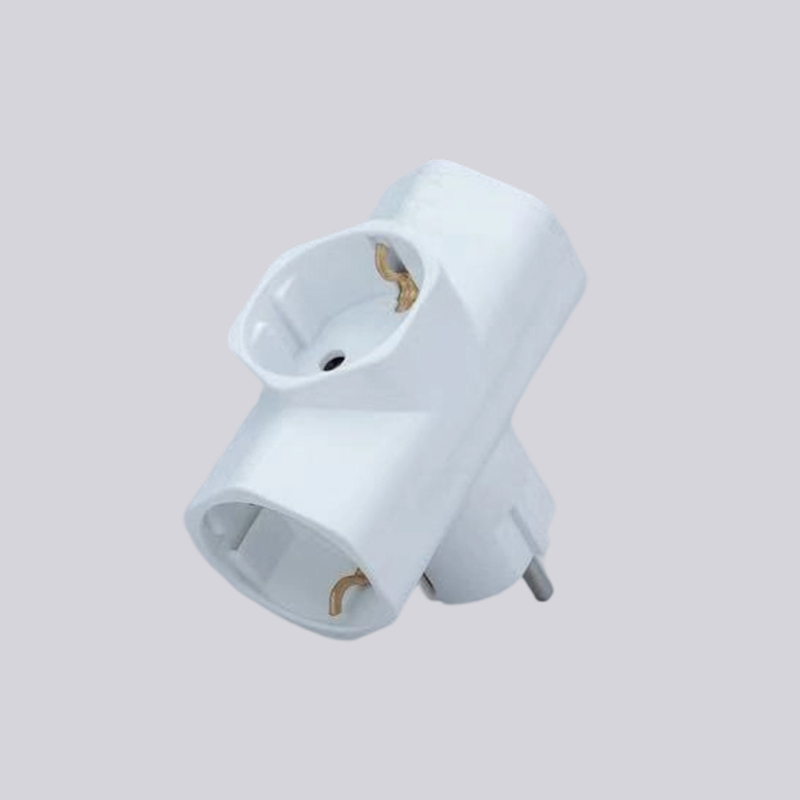
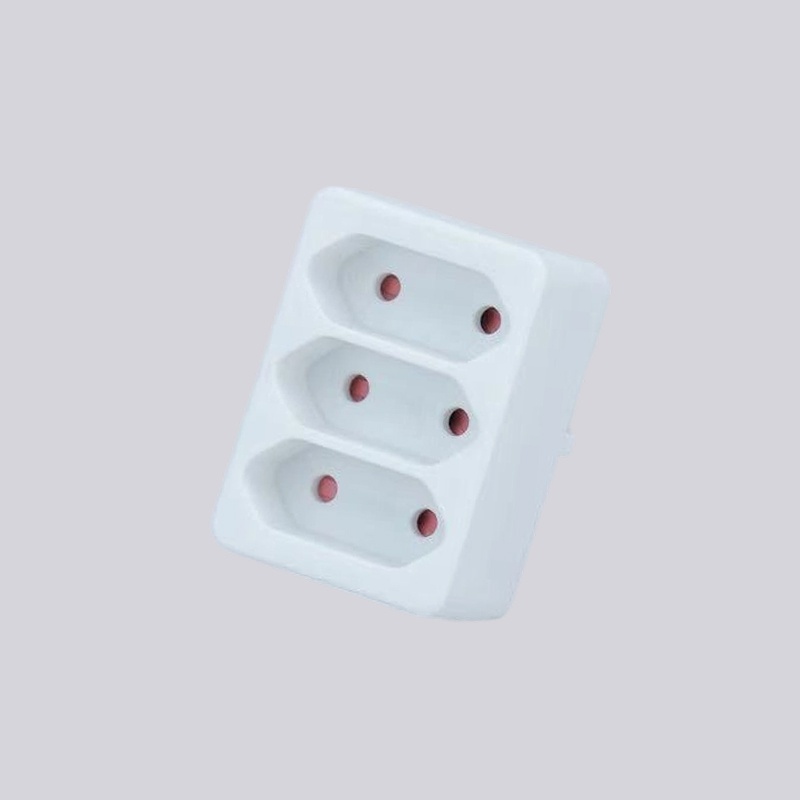
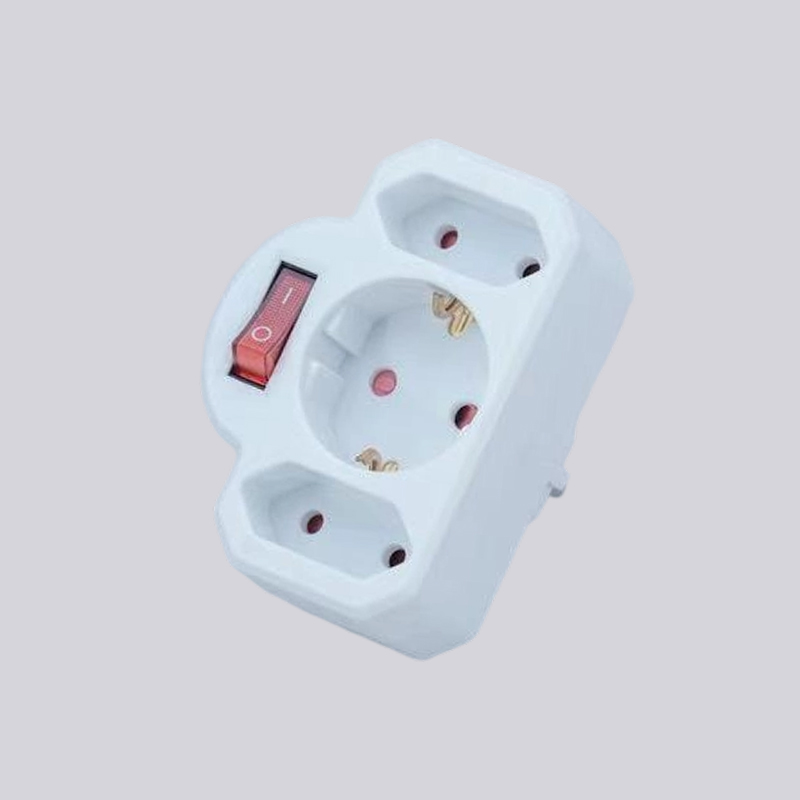
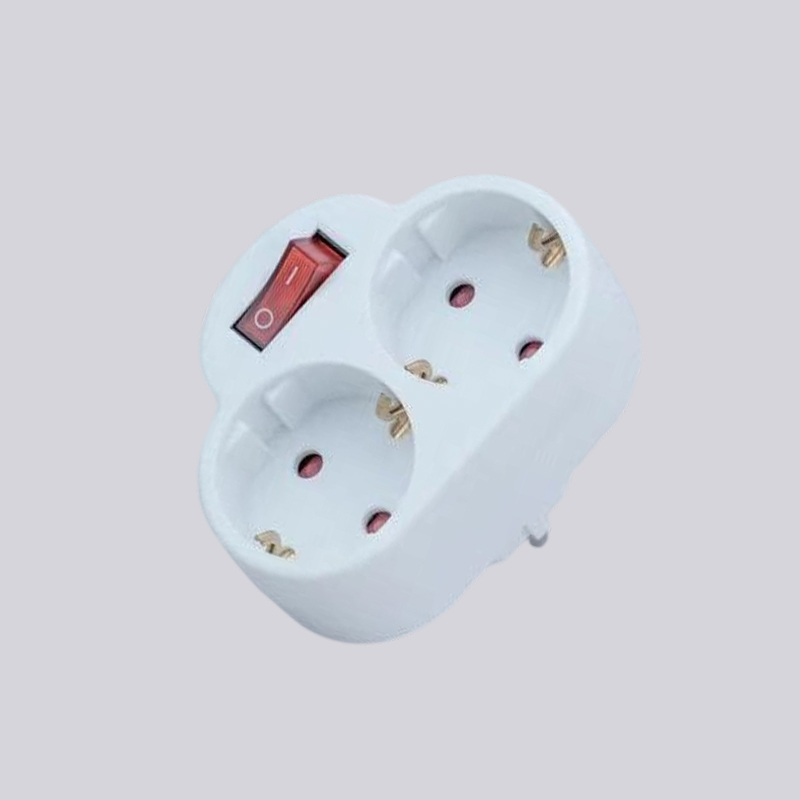
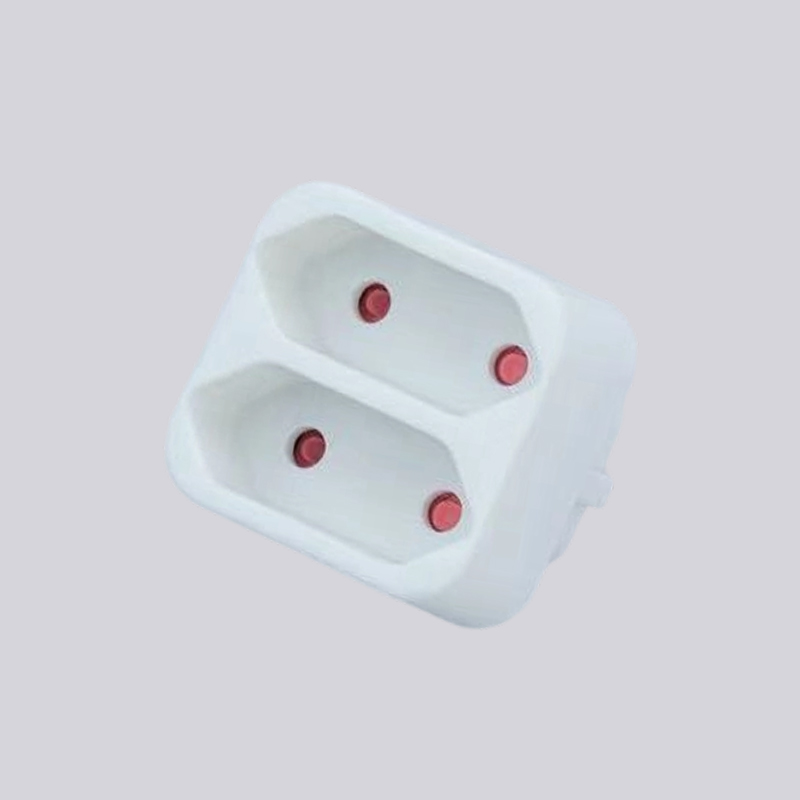
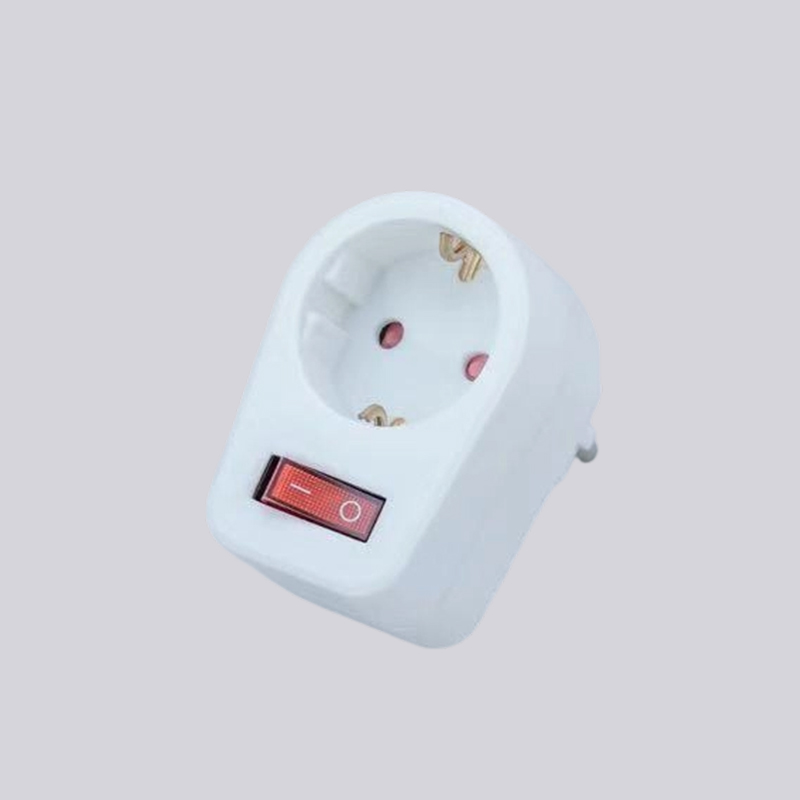
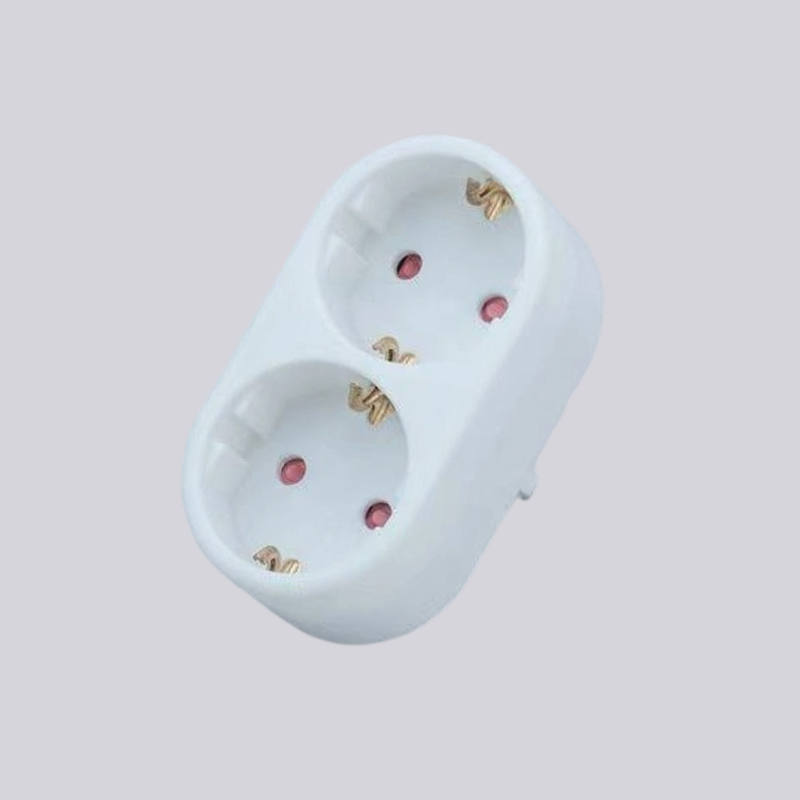
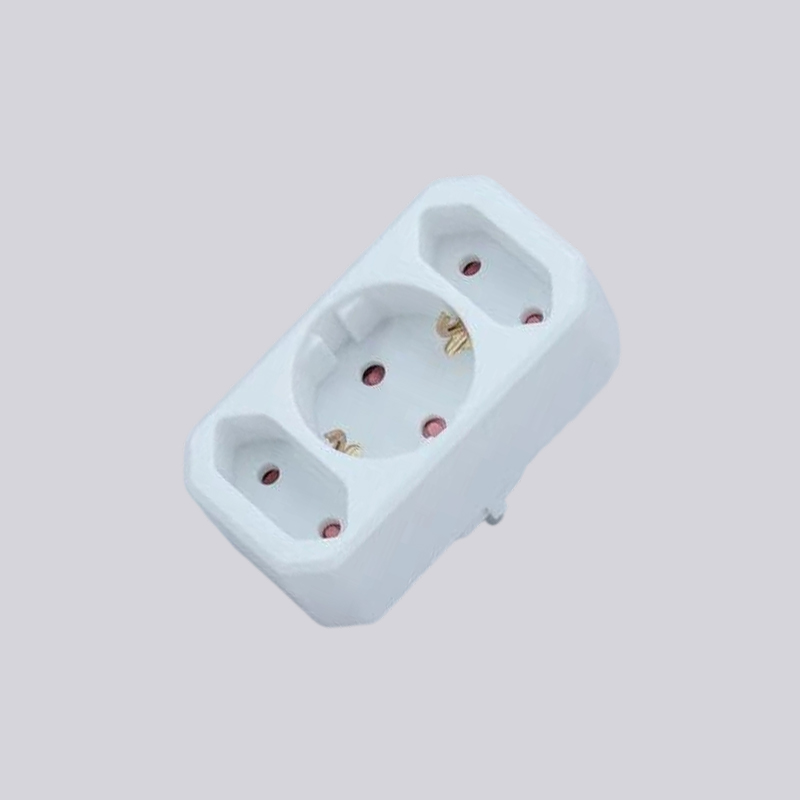
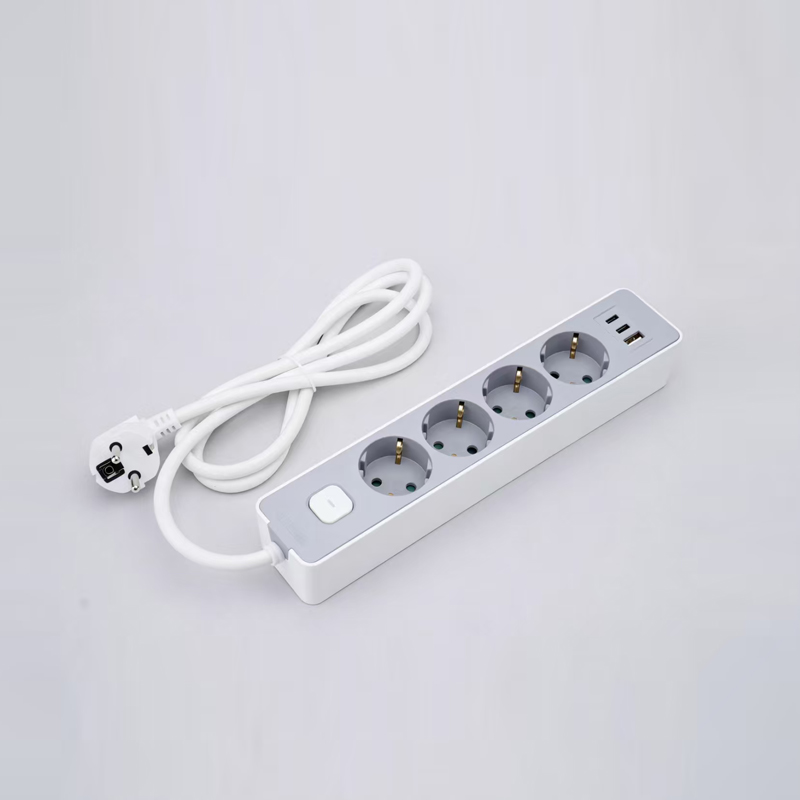
If you purchase a power strip locally in Europe — in Germany, France, Italy, Spain, or elsewhere on the continent — it will be rated for 220–240V and will work with European wall outlets without any adapters. These strips use European-style round-pin plugs and sockets. However, your North American devices with flat-pin plugs will need individual adapters to plug into these European strips.
What Plug Types Are Used Across Europe — And Why It Gets Complicated
Europe does not use a single universal plug standard — different countries use different outlet types, which adds another layer of planning for travelers. Here is a country-by-country overview of the most common types:
| Plug Type | Countries | Pin Shape | Grounded? |
| Type C | Most of continental Europe | 2 round pins | No |
| Type E | France, Belgium, Poland, Czech Republic | 2 round pins + hole | Yes |
| Type F | Germany, Austria, Netherlands, Spain, Portugal, Italy | 2 round pins + side clips | Yes |
| Type G | United Kingdom, Ireland, Malta, Cyprus | 3 rectangular pins | Yes |
| Type L | Italy (older installations) | 3 round pins in line | Yes |
Table 2: Plug types used across European countries and their key characteristics.
Note that the UK uses Type G, which is completely different from continental Europe — even a European-purchased power strip will not plug directly into a UK wall socket. If you are traveling across multiple European countries, a universal travel adapter that covers Type C, E, F, and G is the most practical solution.
Why Using the Wrong Power Strip in Europe Is a Genuine Safety Risk
The risk of using an incompatible power strip in Europe is not just device damage — it includes electrical fire and serious injury. Here are the specific dangers:
- Immediate burnout: A 120V-only power strip connected to 240V will experience twice its rated electrical load, causing internal components to fail within seconds. You may hear a pop, see a flash, or smell burning plastic.
- Fire hazard: Failed internal wiring insulation can ignite. Cheap or poorly made power strips are especially vulnerable. Hotel fires have been attributed to travelers using incompatible electrical equipment.
- Damage to connected devices: Any devices plugged into a failing power strip may also be damaged or destroyed by the voltage surge.
- Voided insurance and warranty: Using electrical equipment outside its rated voltage range typically voids manufacturer warranties. Travel insurance policies may also exclude claims resulting from improper use of electrical devices.
- Legal liability in hotels: Many hotels explicitly prohibit use of non-certified foreign electrical equipment. Damage caused by such equipment may result in charges to the guest.
Power Strip Options for Europe: A Side-by-Side Comparison
A universal travel power strip rated 100–240V with built-in USB ports is the best all-around solution for most travelers to Europe. Here is how the main options compare:
| Option | Voltage Range | Plug Adapter Needed? | Converter Needed? | Typical Cost | Best For |
| Standard US power strip (120V only) | 100–120V | Yes | Yes (mandatory) | $10–$30 | Home use only — not recommended for Europe |
| Universal travel power strip (100–240V) | 100–240V / 50–60Hz | Yes (for shape only) | No | $25–$60 | Travelers with multiple devices — best overall option |
| European power strip (bought locally) | 220–240V | No (for European devices) | No | €8–€25 | Long-term stays or expats with European devices |
| US power strip + voltage converter | 110–120V (strip) + converter | Yes | Yes (converter required) | $40–$120+ | Users who already own US strips and many 120V devices |
| Universal travel adapter (no power strip) | N/A (adapter only) | Built-in | No (for dual-voltage devices) | $15–$35 | Light packers with only 1–2 devices |
Table 3: Comparison of power strip and adapter options for use in Europe, including cost, requirements, and ideal use cases.
How to Choose the Right Power Solution for Your European Trip
The right solution depends on how many devices you carry, how long you are staying, and whether your devices are already dual-voltage. Follow these steps:
Step 1 — Check Your Devices First
Look at the label on each device's charger or power brick. If it reads "Input: 100–240V, 50/60Hz", the device itself is dual-voltage and safe to use in Europe with only a plug adapter. Most modern laptops, smartphones, tablets, and camera chargers fall into this category. Hair dryers, electric shavers with older motors, and kitchen appliances often do not.
Step 2 — Count Your Devices
If you are traveling with more than 2–3 devices (laptop, phone, camera, tablet, e-reader, wireless earbuds), a universal travel power strip with USB ports will save you considerable frustration. Most hotel rooms across Europe offer only 1–2 outlets, and they are rarely positioned conveniently. A travel power strip with 3–4 AC outlets and 2–4 USB-A/USB-C ports can charge everything simultaneously from a single adapter.
Step 3 — Confirm the Voltage Rating on Your Power Strip
Before packing any power strip, flip it over and read the label carefully. Look for the input voltage specification. Acceptable labels for European use include: "100–240V", "Input: 100V–240V ~ 50/60Hz", or "Universal Input". If you see only "120V" or "110–120V," do not use it in Europe under any circumstances.
Step 4 — Get the Right Plug Adapter for Your Destination
Even a dual-voltage power strip will have a North American flat-pin plug that physically cannot fit into a European round-pin socket. You need a plug adapter matched to your destination country. For maximum flexibility when visiting multiple countries, a multi-country universal adapter covering Type C, E, F, and G (UK) is the best investment — these typically cost $15–$35 and weigh under 100g.
Step 5 — Consider Surge Protection Compatibility
Many North American power strips include surge protection components rated for 120V only. Even if the main power circuitry is dual-voltage, surge protection may fail or not function correctly at 240V. Look for travel-specific power strips that explicitly state their surge protection is rated for 100–240V, or accept that surge protection may not be active at European voltages.
FAQ: Do Power Strips Work in Europe?
The Bottom Line: What You Should Pack for Europe
For most travelers, a compact universal travel power strip rated 100–240V paired with a plug adapter is the safest, most convenient, and most cost-effective solution. It eliminates the need for a bulky voltage converter, accommodates multiple devices simultaneously, and allows you to charge everything from a single European wall outlet. Prices typically range from $25 to $60, making it a modest investment for significant travel convenience.
If you are a light traveler carrying only one or two modern dual-voltage devices (most smartphones, laptops, and tablet chargers qualify), a simple plug adapter costing $15–$20 may be all you need. Always check each device's input label before deciding.
What you should never do is assume that any power strip from home will work in Europe automatically. The voltage difference between North America and Europe is too significant to ignore — it is not a minor inconvenience but a genuine safety issue. Check the label, pack the right adapter, and enjoy your European travels without worrying about your electronics.
- Check every device and charger label for "100–240V" rating
- Check your power strip label — single voltage only? Leave it at home
- Pack a universal plug adapter covering Type C, E, F, and G
- If you need a converter, size it for the wattage of your highest-draw device
- Consider buying a travel power strip rated 100–240V before departing
- Look for CE certification on any electrical accessories purchased in Europe