

 English
  中文简体
中文简体 


Content
- Quick Answer: What European Outlet Types Are Most Common?
- Understanding Type C Europlug: The Universal European Outlet
- Type E French Outlet: Distinctive Grounding Pin Design
- Type F Schuko Outlet: The German Standard Dominating Europe
- Comprehensive Comparison of European Outlet Types
- Regional Variations: European Outlet Types by Country
- Voltage and Frequency Standards Across Europe
- The CEE 7/7 Hybrid Plug: Universal Solution for European Outlet Types
- Safety Features and Standards for European Outlet Types
- Travel Adapter Recommendations for European Outlet Types
- Frequently Asked Questions About European Outlet Types
- Are Type C and Type F plugs interchangeable?
- Can I use a German appliance in France?
- Why does the UK use different outlets from continental Europe?
- Do I need a voltage converter for European travel?
- Are European outlet types safer than American outlets?
- What is the difference between Schuko and Europlug?
- Can I charge my laptop with a Type C adapter?
- Conclusion: Mastering European Outlet Types for Seamless Travel
Quick Answer: What European Outlet Types Are Most Common?
The three most common European outlet types are Type C (Europlug), Type E (French), and Type F (Schuko). Type C is the ungrounded two-pin plug used for low-power devices across continental Europe. Type E features a male grounding pin protruding from the socket and is standard in France, Belgium, and Poland. Type F, also known as Schuko, uses side grounding clips and dominates in Germany, Austria, the Netherlands, and Spain. Most modern European appliances use the hybrid CEE 7/7 plug that fits both Type E and Type F sockets, ensuring compatibility across the continent.
Understanding Type C Europlug: The Universal European Outlet
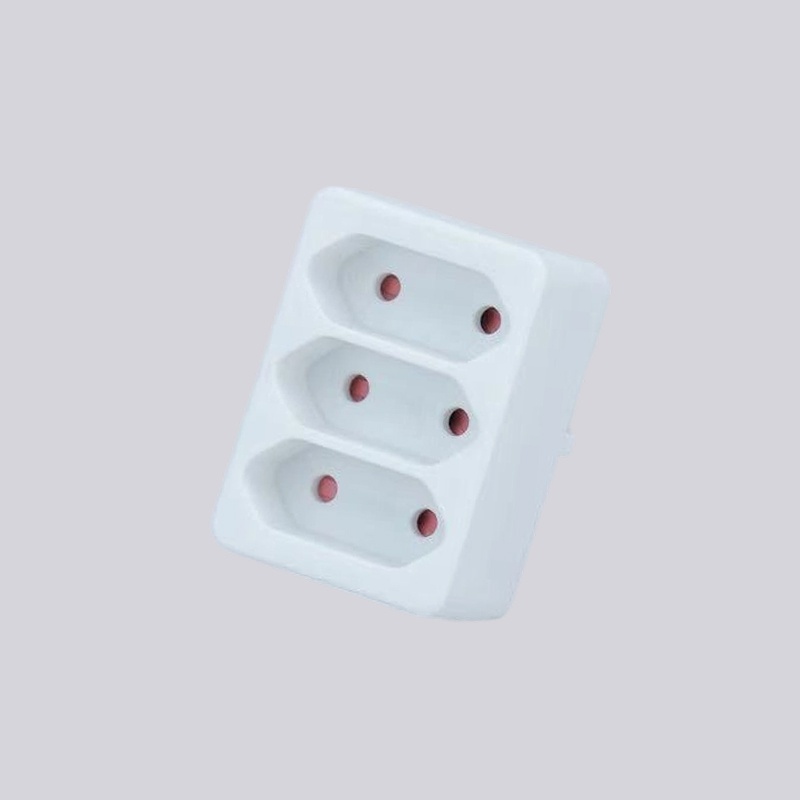
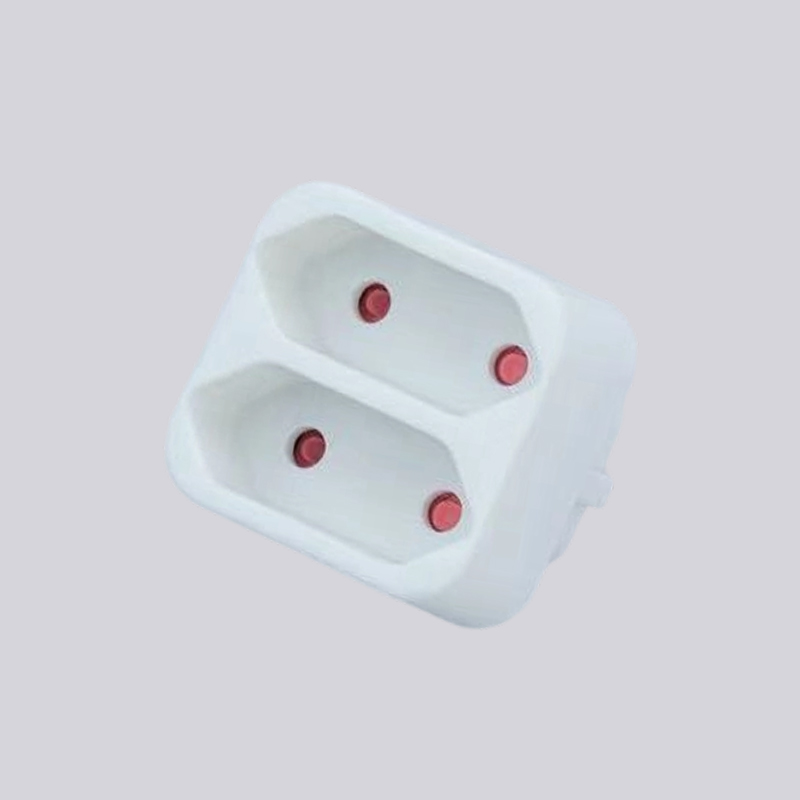
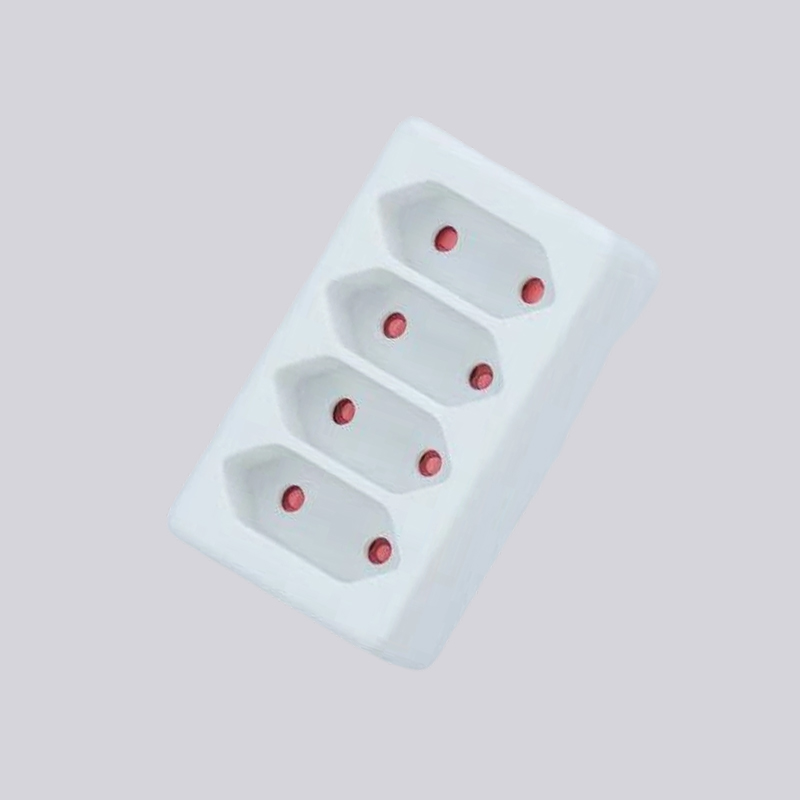
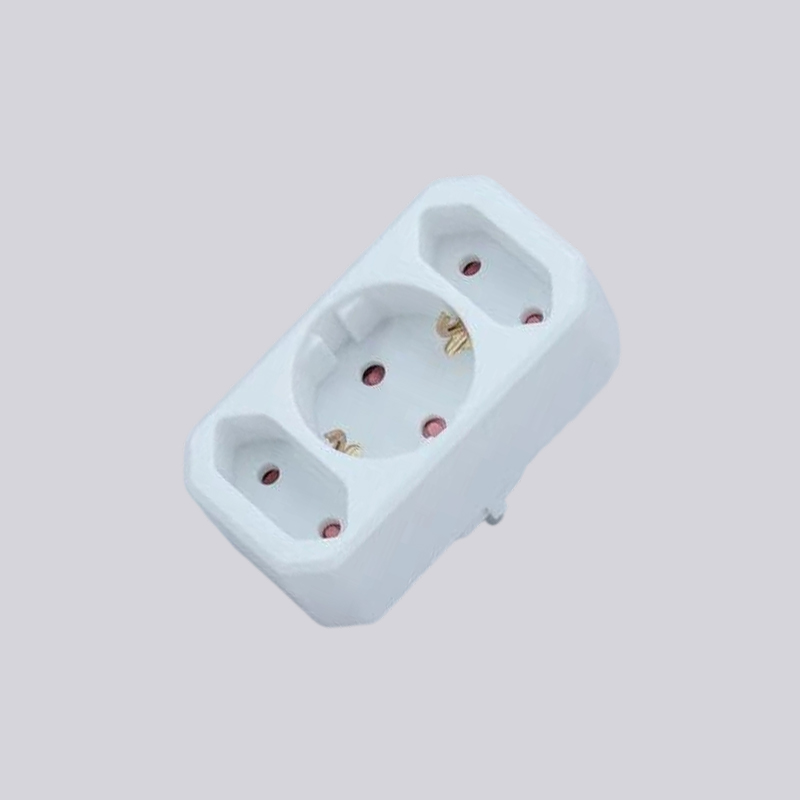
Type C outlets, commonly called Europlugs, represent the most basic and widely compatible European outlet type. These ungrounded sockets feature two round holes spaced 19mm apart, accommodating plugs with 4.0mm diameter pins. The CEE 7/16 standard defines Type C specifications, limiting current capacity to 2.5 amps for the standard Europlug and up to 10 amps for the CEE 7/17 variant.
Type C European outlet types serve as the foundation of continental European electrical infrastructure. Nearly every European country uses Type C sockets alongside their grounded alternatives. The plugs fit into Type E, Type F, and many other socket varieties, making them incredibly versatile for travelers. However, the lack of grounding means Type C should only be used with double-insulated devices or low-power electronics like phone chargers, cameras, and laptops.
The Europlug's design incorporates several safety features despite being ungrounded. The pins are partially insulated near the base, preventing electric shock if the plug is partially inserted. The plug's rounded shape and standardized dimensions ensure it cannot be inserted incorrectly, maintaining polarity consistency. While Type C European outlet types are gradually being replaced by grounded alternatives in new installations, they remain ubiquitous in older buildings and as secondary outlets throughout the continent.
Type E French Outlet: Distinctive Grounding Pin Design
Type E European outlet types feature a distinctive male grounding pin protruding from the socket center, positioned between the two power holes. This design, standardized as CEE 7/5 for sockets and CEE 7/6 for plugs, creates a secure grounding connection before the power pins make contact. The grounding pin measures 4.8mm in diameter and extends 14mm from the socket face, ensuring proper earth connection for safety.
France pioneered the Type E standard, and these European outlet types remain mandatory in French homes and businesses. Belgium, Luxembourg, Poland, the Czech Republic, and Slovakia also predominantly use Type E sockets. The design offers excellent safety characteristics because the grounding connection establishes before live contacts engage, and the socket's recessed design prevents finger contact with live parts.
One important consideration with Type E European outlet types involves plug compatibility. While Type C plugs fit Type E sockets, Type F plugs (Schuko) do not fit properly because the French grounding pin physically blocks the Schuko plug's entry. However, the hybrid CEE 7/7 plug solves this issue by incorporating both the side grounding clips of Type F and the central grounding hole needed for Type E, making it truly universal across continental Europe.
Type F Schuko Outlet: The German Standard Dominating Europe
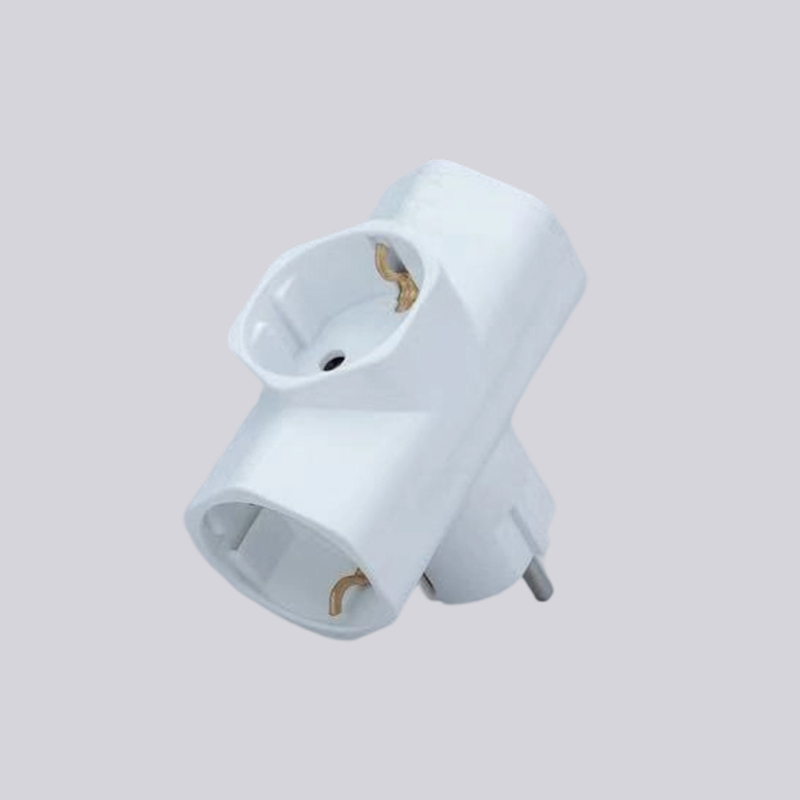
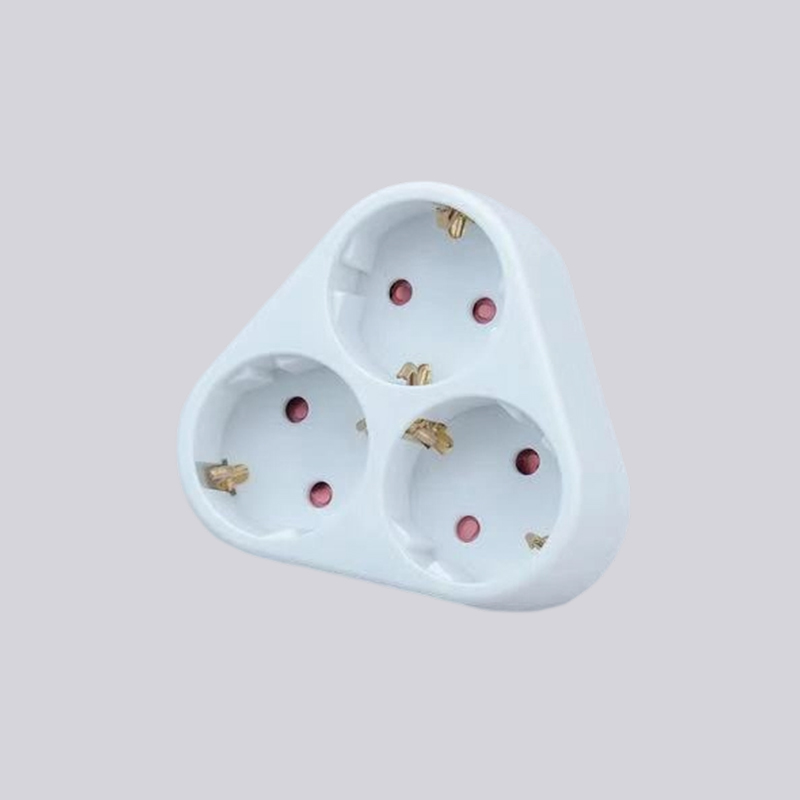
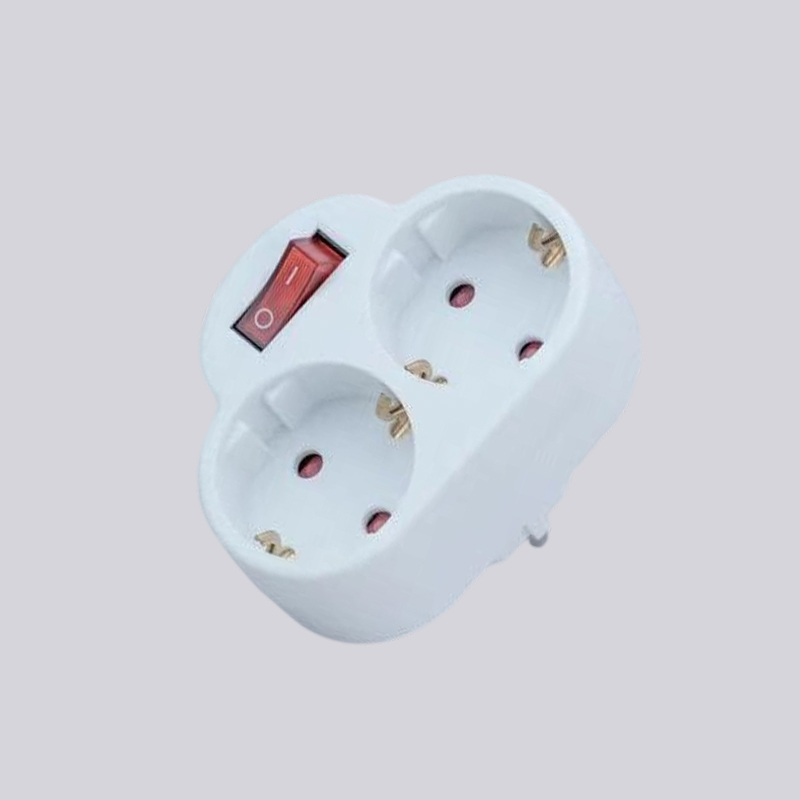
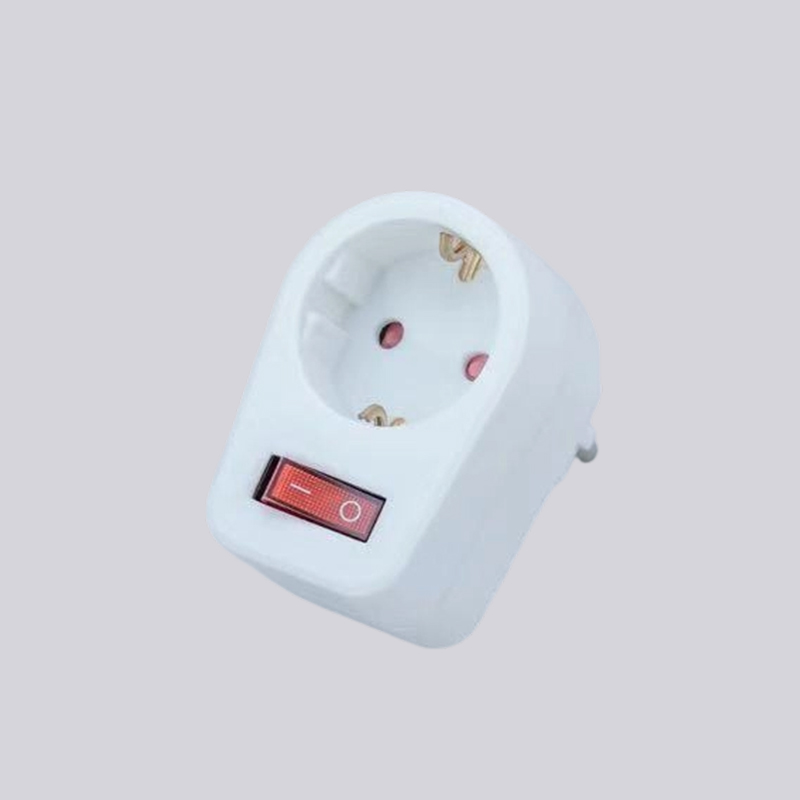
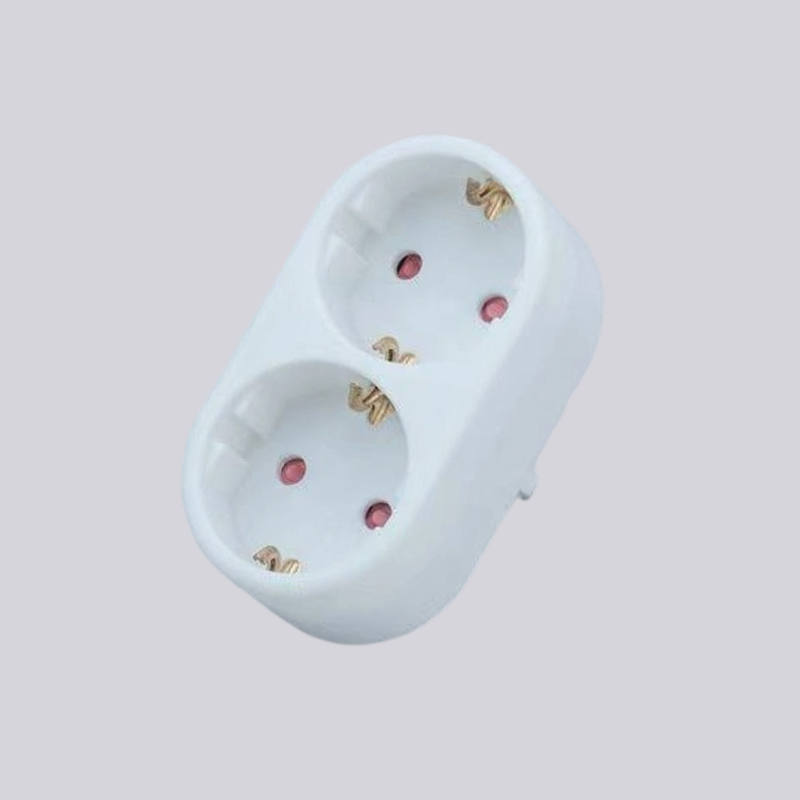
Type F Schuko outlets represent the most widely adopted grounded European outlet type, used in over 40 countries across Europe and beyond. The name "Schuko" derives from the German term "Schutzkontakt," meaning protective contact, referencing the two grounding clips on the socket sides. These clips mate with corresponding metal contacts on the plug, creating a secure earth connection.
Germany, Austria, the Netherlands, Spain, Portugal, Greece, and most of Scandinavia rely exclusively on Type F European outlet types. The CEE 7/3 socket standard and CEE 7/4 plug standard define Schuko specifications, rated for 16 amps at 230 volts. The system's robust design includes deep socket recesses that prevent contact with live pins during insertion or removal, significantly enhancing safety.
Type F European outlet types accept both Type C ungrounded plugs and CEE 7/7 hybrid grounded plugs. However, pure Type F plugs cannot connect to Type E French sockets due to the central grounding pin obstruction. This incompatibility historically created challenges for cross-border appliance use until the CEE 7/7 hybrid plug became standard for high-power devices. Modern Schuko outlets often feature enhanced safety mechanisms including child protection shutters that require simultaneous pressure on both power holes to open.
Comprehensive Comparison of European Outlet Types
Understanding the differences between European outlet types requires examining their technical specifications, safety features, and compatibility profiles. The following comparison table provides detailed information to help travelers and professionals select appropriate adapters and equipment.
| Feature | Type C (Europlug) | Type E (French) | Type F (Schuko) |
| Standard | CEE 7/16, CEE 7/17 | CEE 7/5 (socket), CEE 7/6 (plug) | CEE 7/3 (socket), CEE 7/4 (plug) |
| Grounding | None | Male pin (center) | Side clips (2) |
| Pin Diameter | 4.0mm | 4.8mm | 4.8mm |
| Current Rating | 2.5A / 10A | 16A | 16A |
| Voltage | 230V | 230V | 230V |
| Primary Countries | All Europe | France, Belgium, Poland, Czech Republic | Germany, Austria, Netherlands, Spain |
| Safety Features | Insulated pins | Recessed socket, grounding first | Recessed socket, side grounding |
| Plug Compatibility | Fits E, F, C | Accepts C, E, CEE 7/7 | Accepts C, F, CEE 7/7 |
Key Differences in European Outlet Types
The primary distinction between Type E and Type F European outlet types lies in their grounding methodology. Type E uses a protruding male pin that mates with a corresponding hole in the plug, while Type F employs two spring-loaded metal clips on the socket sides that grip metal contacts on the plug body. This fundamental difference means pure Type F plugs cannot physically enter Type E sockets, and vice versa, creating the need for hybrid solutions.
Pin diameter represents another crucial difference. Type C uses 4.0mm pins, while Type E and Type F use thicker 4.8mm pins rated for higher current. This means Type C plugs fit loosely in E and F sockets but should not be used for high-power applications. Conversely, E and F plugs cannot enter Type C sockets due to their larger pin diameter, preventing unsafe connections that could overheat the wiring.
Regional Variations: European Outlet Types by Country
Different European countries maintain distinct preferences for outlet types, creating a complex patchwork of standards across the continent. Understanding these regional variations helps travelers prepare appropriate adapters and avoids compatibility surprises.
Western Europe
Germany, Austria, and the Netherlands exclusively use Type F Schuko European outlet types. These countries standardized on the German system decades ago, and Type F sockets are the only legal option for new installations. Belgium and Luxembourg primarily use Type E, reflecting French influence, though Type F is also common in border regions.
France maintains strict adherence to Type E European outlet types, with the NF C 15-100 standard mandating the French system nationwide. Switzerland presents a unique case, using Type J outlets with three round pins in a triangular configuration, though Type C plugs remain compatible. Liechtenstein follows Swiss standards.
Southern Europe
Spain, Portugal, and Greece standardized on Type F Schuko European outlet types. Italy uses Type L sockets with three round pins in a line, alongside Type C for ungrounded connections. However, modern Italian installations increasingly incorporate Type F sockets for compatibility with continental European appliances.
Malta and Cyprus use Type G British-style outlets due to historical British influence, making them exceptions to continental European outlet types. Travelers visiting these islands need UK adapters rather than European ones.
Northern Europe
Scandinavian countries predominantly use Type F Schuko European outlet types. Sweden, Norway, and Finland standardized on the German system, making travel between these countries seamless for electrical devices. Denmark represents an exception, historically using Type K outlets with a third grounding pin, though recent regulations permit Type F installations and the country is gradually transitioning.
Iceland follows Scandinavian standards with Type F European outlet types. The United Kingdom and Ireland use Type G outlets exclusively, featuring three rectangular pins and built-in fuses, completely incompatible with continental European systems.
Eastern Europe
Poland, the Czech Republic, and Slovakia primarily use Type E French-style European outlet types. Hungary, Romania, and Bulgaria adopted Type F Schuko standards. The Baltic states (Estonia, Latvia, Lithuania) use Type F, reflecting historical German influence.
Russia and Ukraine use both Type C and Type F European outlet types, with Type F becoming increasingly common in modern buildings. Belarus follows similar patterns. The Balkan countries show mixed adoption, with Croatia, Serbia, and Slovenia using Type F, while some regions maintain older Type C installations.
| Country | Primary Outlet Types | Voltage | Notes |
| Germany | Type C, Type F | 230V/50Hz | Schuko standard |
| France | Type C, Type E | 230V/50Hz | Central grounding pin |
| Italy | Type C, Type F, Type L | 230V/50Hz | Type L is unique 3-pin |
| Spain | Type C, Type F | 230V/50Hz | Schuko standard |
| UK | Type G | 230V/50Hz | Not compatible with EU |
| Switzerland | Type C, Type J | 230V/50Hz | Type J is 3-pin triangular |
| Denmark | Type C, Type E, Type F, Type K | 230V/50Hz | Transitioning to Type F |
| Poland | Type C, Type E | 230V/50Hz | French standard |
Voltage and Frequency Standards Across Europe
European outlet types operate on standardized voltage and frequency parameters that differ significantly from North American standards. The European Union mandated 230V at 50Hz as the standard supply voltage, replacing previous national variations that ranged from 220V to 240V. This harmonization occurred gradually between 1995 and 2003, ensuring compatibility across member states.
The 230V standard provides nearly double the voltage of North American 120V systems, allowing thinner wires to deliver the same power while requiring better insulation and safety measures. All European outlet types are designed to handle this voltage safely, with grounded systems (Type E and F) providing additional protection against electric shock.
Frequency standards remain consistent at 50Hz across continental Europe, compared to 60Hz in North America. While most modern electronic devices with switching power supplies operate satisfactorily on either frequency, some appliances with AC motors (clocks, hair dryers, electric shavers) may experience performance issues when used at the wrong frequency. Travelers should verify their devices support 50/60Hz operation before plugging into European outlet types.
The CEE 7/7 Hybrid Plug: Universal Solution for European Outlet Types
The CEE 7/7 hybrid plug solves the compatibility challenge between Type E and Type F European outlet types by incorporating both grounding systems. This ingenious design features the two standard 4.8mm power pins plus both side grounding clips (for Type F) and a central grounding hole (for Type E). When inserted into a Type F socket, the side clips make contact with the grounding rails. When inserted into a Type E socket, the central male grounding pin enters the plug's grounding hole.
Modern appliances sold across Europe typically include CEE 7/7 plugs, ensuring seamless use from Portugal to Poland without adapter concerns. This hybrid approach has largely eliminated the historical incompatibility issues that once plagued cross-border electrical equipment use. The plug maintains the 16-amp rating necessary for high-power appliances like washing machines, dishwashers, and space heaters.
For travelers, understanding the CEE 7/7 standard helps when purchasing travel adapters. Quality universal adapters for European outlet types accommodate both Type E and Type F configurations, while basic adapters may only work with one system. When in doubt, adapters labeled for "continental Europe" or "Schuko/French" provide the broadest compatibility.
Safety Features and Standards for European Outlet Types
European outlet types incorporate multiple safety features designed to prevent electric shock, particularly for children. Modern Type E and Type F sockets include shutter mechanisms that block access to live contacts unless both power pins insert simultaneously. This prevents children from inserting objects into a single hole and receiving dangerous shocks.
Recessed socket designs represent another crucial safety feature across European outlet types. Both Type E and Type F sockets sit recessed within the wall plate, ensuring that plug pins cannot be touched while partially inserted. This design prevents accidental contact with live metal during connection or disconnection, significantly reducing electrocution risks.
Grounding systems provide essential protection for high-power appliances. Type E's grounding pin makes contact before power pins engage, while Type F's side clips maintain continuous grounding throughout use. Both systems ensure that if a fault occurs within an appliance, dangerous current flows safely to earth rather than through a person touching the device. These safety standards are mandated by European electrical codes and regularly tested for compliance.
Travel Adapter Recommendations for European Outlet Types
Selecting appropriate travel adapters for European outlet types depends on your destination countries and the devices you plan to use. For most continental European travel, a simple Type C adapter suffices for charging phones, cameras, and laptops. However, travelers with high-power appliances or those visiting France specifically should consider adapters compatible with Type E grounding systems.
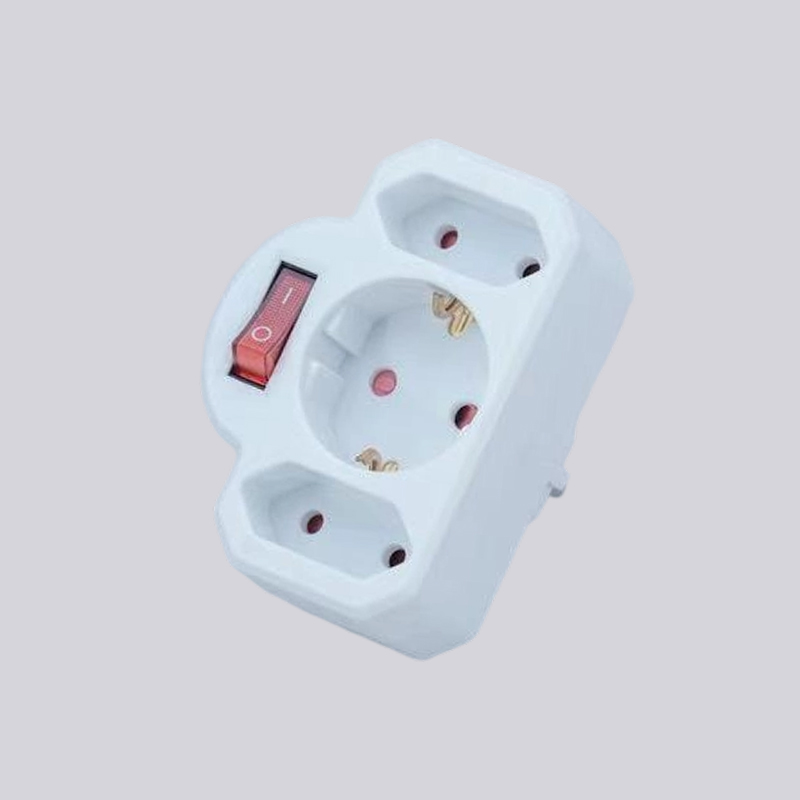
Universal adapters covering Type C, E, and F European outlet types offer the best value for multi-country itineraries. These adapters typically feature retractable prongs or modular designs that adjust to different socket configurations. Look for adapters with surge protection and safety certifications (CE marking) to protect valuable electronics from voltage fluctuations.
For travelers visiting the UK or Ireland alongside continental Europe, separate Type G adapters are essential, as British outlets are completely incompatible with European outlet types. Some travelers prefer all-in-one world adapters that include UK, European, and other international configurations, though these tend to be bulkier than dedicated European adapters.
Adapter Selection Checklist
- Verify destination countries: Research which European outlet types are used in your specific destinations
- Check device voltage compatibility: Ensure your devices support 230V/50Hz operation
- Consider grounding needs: High-power appliances require grounded adapters for Type E and F sockets
- Look for safety certifications: CE marking indicates compliance with European safety standards
- Pack multiple adapters: Bring several adapters to charge multiple devices simultaneously
Frequently Asked Questions About European Outlet Types
Are Type C and Type F plugs interchangeable?
Type C plugs fit into Type F sockets, but Type F plugs do not fit into Type C sockets. The 4.0mm pins of Type C are smaller than the 4.8mm holes in Type F sockets, allowing physical insertion. However, this connection lacks grounding and should only be used for low-power, double-insulated devices. Type F plugs have thicker 4.8mm pins that cannot enter the smaller Type C sockets, preventing unsafe high-power connections to ungrounded outlets.
Can I use a German appliance in France?
Pure Type F German plugs cannot directly connect to Type E French sockets due to the central grounding pin obstruction. However, most modern German appliances feature CEE 7/7 hybrid plugs that work in both countries. If your appliance has an older pure Schuko plug, you will need an adapter or must replace the plug with a hybrid version to use it safely in France.
Why does the UK use different outlets from continental Europe?
The UK developed its Type G outlet standard independently, prioritizing safety features that exceeded continental designs at the time. British sockets include built-in fuses in every plug, shuttered contacts, and a design that makes it impossible to touch live pins during insertion. While these features enhance safety, they render UK outlets completely incompatible with European outlet types, necessitating separate adapters for cross-channel travel.
Do I need a voltage converter for European travel?
Most modern electronics do not require voltage converters for European travel. Check your device labels for "100-240V" or "110-240V" markings, indicating compatibility with both North American and European voltages. Devices with AC motors (hair dryers, electric shavers, some clocks) may require converters if they lack dual-voltage capability. Using a 120V-only device on 230V will destroy the appliance and create fire hazards.
Are European outlet types safer than American outlets?
European outlet types incorporate several safety features absent in standard North American outlets. The recessed socket design prevents contact with partially exposed pins, while mandatory grounding on high-power sockets reduces electrocution risks. Child safety shutters are standard on modern European installations. However, American outlets feature polarized plugs that maintain consistent hot/neutral orientation, and GFCI protection is more commonly required in US bathrooms and kitchens. Both systems are safe when properly installed and used correctly.
What is the difference between Schuko and Europlug?
Schuko (Type F) and Europlug (Type C) represent different levels of European outlet types, with Schuko being grounded and Europlug ungrounded. Schuko features 4.8mm pins with side grounding clips, rated for 16 amps. Europlug uses smaller 4.0mm pins without grounding, limited to 2.5 amps. Schuko is used for high-power appliances requiring earth connection, while Europlug serves low-power electronics. The terms are not interchangeable, though Europlugs physically fit Schuko sockets.
Can I charge my laptop with a Type C adapter?
Yes, laptop chargers work safely with Type C adapters because they are low-power, double-insulated devices. Laptop power supplies typically draw less than 2 amps and include internal isolation transformers that eliminate grounding requirements. However, ensure your adapter is rated for the charger's wattage and that the charger itself supports 230V input. Using a Type C adapter in a Type E or F socket is perfectly safe for laptop charging.
Conclusion: Mastering European Outlet Types for Seamless Travel
Understanding European outlet types ensures your devices remain powered and safe throughout your continental travels. The three primary standards—Type C Europlug, Type E French, and Type F Schuko—cover virtually all continental European electrical installations. While regional variations exist, the widespread adoption of hybrid CEE 7/7 plugs has largely eliminated cross-border compatibility issues for modern appliances.
For travelers, packing universal adapters compatible with all European outlet types provides peace of mind when crossing between Germany, France, and other destinations. Remember that the UK and Ireland require separate Type G adapters, while Switzerland and Denmark may present unique considerations. Always verify your devices support 230V/50Hz operation before travel to avoid damage or safety hazards.
Whether you are a tourist exploring European capitals or a business traveler attending international meetings, familiarity with European outlet types prevents frustrating power compatibility issues. By understanding the distinctions between Type C, E, and F systems, you can select appropriate adapters, ensure device safety, and keep your electronics charged throughout your European journey.