

 English
  中文简体
中文简体 


A European adapter is a small plug-shaped device — typically round or compact rectangular — featuring two round metal pins spaced approximately 19mm apart, designed to convert a flat-pronged plug (such as those used in the US, UK, or Australia) into one that fits European wall sockets. Most European adapters are white or black, weigh under 50g, and are roughly the size of a large dice. This guide explains exactly what a European adapter looks like, how it differs from other travel adapters, and how to choose the right one for your destination.
Content
- What Does a European Adapter Look Like? A Detailed Visual Description
- European Plug Types: Type C, E, and F Explained
- European Plug Types at a Glance
- How a European Adapter Differs From Other Regional Adapters
- Regional Adapter Comparison: Visual Differences
- European Adapter vs. Voltage Converter: A Critical Difference
- Types of European Travel Adapters Available
- What to Look for When Buying a European Adapter
- Which Countries Require a European Adapter?
- Frequently Asked Questions About European Adapters
- Is a European adapter the same as a travel adapter?
- Can I use a European adapter in the UK?
- Will my US phone charger work with just a European adapter?
- What does a European adapter for a US plug look like specifically?
- Is it safe to buy cheap European adapters?
- Do I need a separate adapter for each European country?
- How do I know if my European adapter is grounded?
- Summary: Identifying a European Adapter at a Glance
What Does a European Adapter Look Like? A Detailed Visual Description
A standard European adapter has a distinctive appearance that sets it apart from adapters designed for other regions — its defining feature is always two round, cylindrical metal pins on the output face.
The Output Side (European Plug Face)
The output face — the side that inserts into the European wall socket — protrudes outward with two round metal pins. These pins are:
- Diameter: 4mm (Type C) or 4.8mm (Type E/F — the most common in continental Europe)
- Length: approximately 19mm, protruding clearly from the adapter body
- Spacing: 19mm centre-to-centre between the two pins
- Material: silver or nickel-plated brass — always metallic and cylindrical, never flat
- Arrangement: side by side in a horizontal or vertical pair, depending on the adapter's orientation
The Input Side (Your Device's Plug Face)
The input side varies depending on which country the adapter is designed for. This is the side into which you insert your own device's plug. Common configurations include:
- US/Canada adapter: two flat rectangular slots arranged in a V-shape (accepting the standard North American Type A or Type B plug)
- UK adapter: three rectangular slots in a triangular arrangement (accepting the UK's distinctive Type G three-pin plug)
- Australia/New Zealand adapter: two or three angled flat slots arranged in a V or triangular pattern (accepting Type I plugs)
- Universal adapter: a recessed opening accommodating multiple flat-pin configurations from different countries
Overall Body Shape and Size
The body of a European adapter is compact — typically 45–60mm tall, 35–45mm wide, and 25–35mm deep. The shape is usually:
- Rounded rectangular — the most common profile, with slightly curved corners for ergonomic handling
- Cylindrical or dome-shaped — seen on compact Type C adapters designed for minimal wall protrusion
- Flat slab with protruding pins — common on multi-region travel adapters with a universal input face
Colour is almost always neutral: white, black, or light grey. Some travel-specific versions use bright colours (red, blue, yellow) for easy identification in a bag.
European Plug Types: Type C, E, and F Explained
Europe uses three main plug types — Type C, Type E, and Type F — and a European adapter may be designed for any of these, so understanding the visual differences is important before purchasing.
Type C — The "Europlug"
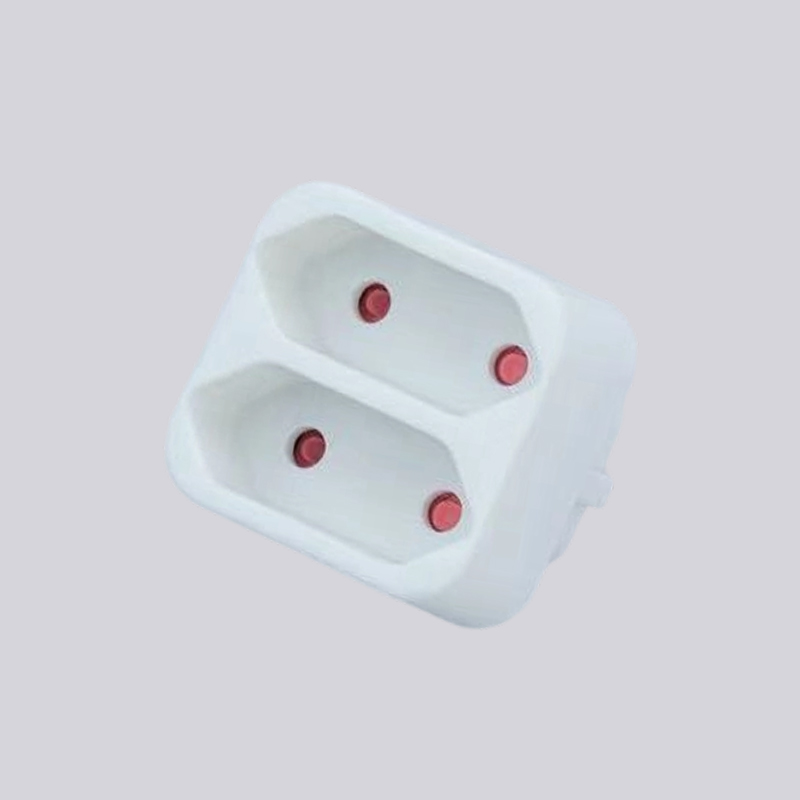
Type C is the most widely recognised European plug type and is sometimes called the "Europlug." It features two round 4mm pins and is ungrounded (two-pin only, no earth connection). It is used across most of continental Europe, including Germany, France, Spain, Italy, the Netherlands, and over 50 other countries. Visually, a Type C adapter output looks like two small round dots side by side, protruding from a flat or slightly curved face.
Type E — France, Belgium, Poland
Type E is used primarily in France, Belgium, Poland, Slovakia, and the Czech Republic. It has two round 4.8mm pins like Type F, but it also features a round hole (socket) on the plug face designed to receive a grounding pin from the wall socket. Visually, you can identify a Type E adapter by the presence of a small circular recess between or beside the two output pins — this is the earth socket.
Type F — Germany, Austria, the Netherlands, Most of Europe
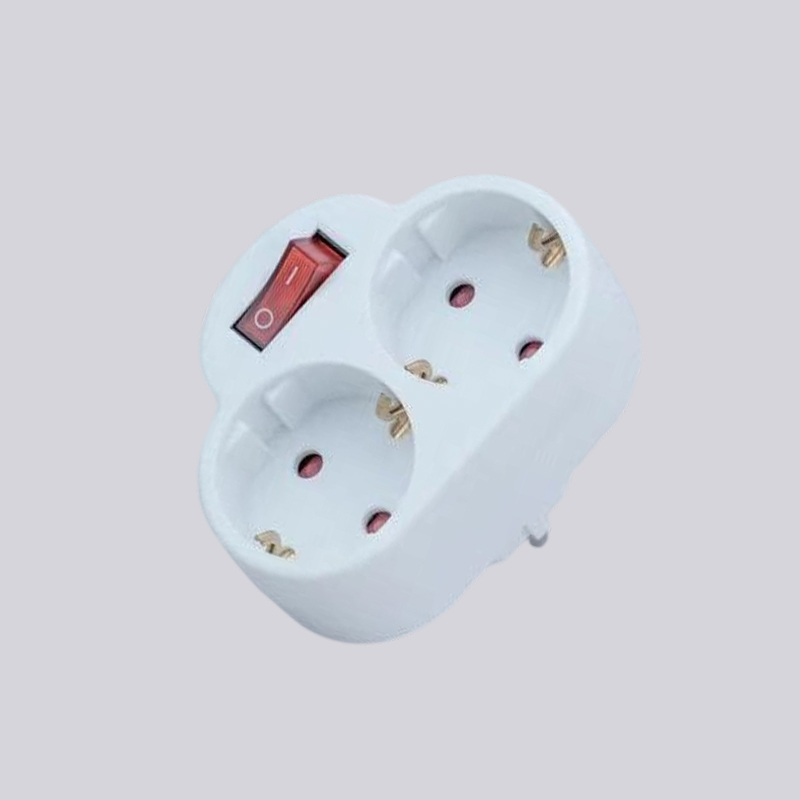
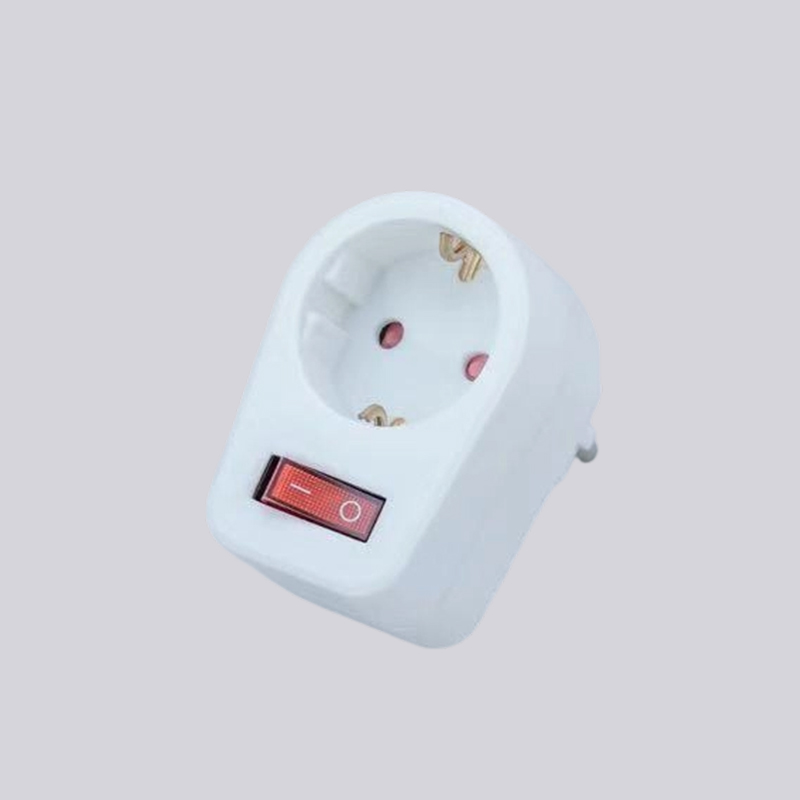
Type F (also called the "Schuko" plug) is the most common grounded European plug type. It has two round 4.8mm pins and two metal grounding clips on the top and bottom of the plug body — these clips are visible as two small metal strips on either side of the pin face. Type F is compatible with Type E sockets (and vice versa), making a Type E/F adapter the most versatile choice for travel across Europe. Most modern European travel adapters are designed as Type E/F.
European Plug Types at a Glance
| Plug Type | Pin Size | Grounded? | Visual Identifier | Key Countries |
| Type C | 4mm round pins | No | Two plain round pins, no clips or holes | Most of Europe (50+ countries) |
| Type E | 4.8mm round pins | Yes (socket hole) | Two pins + small round recess hole | France, Belgium, Poland |
| Type F | 4.8mm round pins | Yes (side clips) | Two pins + two metal clips on sides | Germany, Spain, Netherlands, most of EU |
| Type E/F | 4.8mm round pins | Yes | Two pins + clips + recess (hybrid) | Widest compatibility across Europe |
Visual and technical comparison of the three main European plug and adapter types used across continental Europe.
How a European Adapter Differs From Other Regional Adapters
The easiest way to identify a European adapter is by its two round pins — no other major regional adapter standard uses this combination of circular, closely spaced pins as its output.
European vs. US/Canada Adapter
A US/Canada (Type A or B) plug uses two flat, rectangular parallel blades — visually flat and blade-like rather than round and pin-like. A US-to-Europe adapter will show flat blade slots on one side and two round pins on the other. If you see two flat slots on the output face, it's a US-style plug, not a European adapter.
European vs. UK Adapter
A UK (Type G) plug is immediately distinguishable by its three large rectangular pins arranged in a triangle — it is considerably larger and heavier than any European plug type. UK wall sockets are also unique in that they are recessed (the socket face is set into the wall), while European sockets are typically flush with the wall surface. A UK adapter output has three flat rectangular pins; a European adapter output always has two round pins.
European vs. Australia/New Zealand Adapter
Australian and New Zealand plugs (Type I) use two or three flat, angled blades arranged in a V-shape — the angled orientation is the defining visual difference. An Australia-to-Europe adapter will have angled flat slots on the input side and two round pins on the output side.
Regional Adapter Comparison: Visual Differences
| Region | Plug Type | Pin Shape | Number of Pins | Voltage |
| Europe | C / E / F | Round cylindrical | 2 (+ earth clip) | 220–240V / 50Hz |
| USA / Canada | A / B | Flat rectangular blades | 2–3 | 110–120V / 60Hz |
| United Kingdom | G | Large flat rectangular (3-pin triangle) | 3 | 230V / 50Hz |
| Australia / NZ | I | Angled flat blades (V-shape) | 2–3 | 230V / 50Hz |
| China | I (variant) | Angled flat blades or round pins | 2–3 | 220V / 50Hz |
| India | D / M | Large round pins (triangle pattern) | 3 | 230V / 50Hz |
Comparison of plug types, pin shapes, and voltage standards across major world regions to help identify your European adapter at a glance.
European Adapter vs. Voltage Converter: A Critical Difference
A European adapter only changes the physical shape of the plug — it does not convert voltage, and this distinction is essential for safely using your devices abroad.
What a European Adapter Does
A European adapter is a passive device with no electronic components inside. It simply provides the correct physical interface — two round pins — so that your plug can connect to a European wall socket. It contains no circuitry, no transformer, and performs no electrical conversion. It weighs approximately 20–50g and costs between $5 and $20 depending on build quality and features.
What a European Adapter Does NOT Do
A European adapter does not change the voltage supplied to your device. European wall outlets supply 220–240V at 50Hz — roughly double the 110–120V at 60Hz used in North America. If you plug a device rated only for 110–120V into a 220–240V European socket using only an adapter (no converter), the device will likely be damaged or destroyed, and may create a fire or electric shock hazard. Always check your device's power label before using a European adapter alone.
Dual-Voltage Devices: When an Adapter Is All You Need
Most modern consumer electronics — laptops, smartphone chargers, camera battery chargers, and travel hair dryers — are dual-voltage or universal-voltage (100–240V), meaning they work safely on any electrical system worldwide. These devices need only a European adapter, not a converter. Check the small print on your device's power brick or charging cable: if it reads "Input: 100–240V, 50/60Hz," you only need a European adapter. Single-voltage appliances (hair dryers and straighteners rated 120V only, for example) require a voltage converter in addition to the adapter.
Types of European Travel Adapters Available
European adapters come in three main formats, each with distinct visual characteristics and ideal use cases.
1. Single-Region Adapter (Most Compact)
This is the smallest and simplest type — a compact plug with a fixed input for one specific country (e.g., US-to-Europe) and two round European pins on the output. It typically measures around 45mm × 35mm × 28mm and weighs as little as 20–30g. The body has no moving parts, no USB ports, and no switches. It looks like a small square or rectangular block with two round metal bumps on one side and flat rectangular or blade-shaped slots on the other. This type is the most portable and cheapest option, ideal for travellers carrying only dual-voltage devices.
2. Universal Travel Adapter (Most Versatile)
A universal travel adapter is larger — typically 70mm × 55mm × 40mm — and features a recessed universal socket on the input side that accepts plugs from multiple countries, plus a selection switch or rotating mechanism to choose the correct output configuration. When set to "Europe," two round pins extend from the output face. Many universal adapters also include 2–4 USB-A ports and one USB-C port on the body itself, making them visually bulkier but far more functional for multi-device travellers.
3. Grounded European Adapter (Type E/F)
A grounded European adapter is visually similar to the single-region type but slightly larger, with visible grounding elements: either two metal side clips on the output face (Type F/Schuko style) or a small circular recess hole between the pins (Type E style). This type provides an earth connection, which is important for grounded devices (those with a three-pin plug). It is an important safety distinction — ungrounded adapters (Type C only) cannot accept the earth pin from a grounded device's plug.
What to Look for When Buying a European Adapter
The right European adapter looks correct externally and meets important safety and functionality criteria internally — here is what to check before purchasing.
- Safety certification markings: Look for CE, RoHS, or UL markings stamped or printed on the adapter body. These indicate the product has passed recognised electrical safety testing. Uncertified adapters may look identical but present fire and shock risks.
- Maximum current/wattage rating: Check that the adapter is rated for at least 2.5A (for phone/laptop charging) or 10A+ if using high-power appliances. The rating is usually printed on the back or underside of the adapter body.
- Grounding (earth connection): If your device has a three-pin grounded plug, choose a Type E/F adapter, not a simple Type C — the grounding clip or socket provides the earth connection that Type C cannot.
- Build quality indicators: Quality adapters have firm, smooth pin surfaces with no rough edges or casting seams on the pins themselves. Pins should insert into a test socket without wobbling. The body should feel solid — not hollow or excessively lightweight.
- Surge protection: Some European adapters incorporate basic surge protection circuitry — these are slightly heavier (50–80g versus 20–30g) and visually may feature a small LED indicator light on the body. Surge protection is valuable for expensive electronics.
- USB ports: If you need to charge multiple devices simultaneously, look for a universal adapter with integrated USB-A and USB-C ports. Visually, these adapters are recognisable by rectangular port openings on the sides or top of the body alongside the standard plug output.
Which Countries Require a European Adapter?
A European adapter (Type C/E/F) is required in over 50 countries across Europe and beyond — making it the single most useful travel adapter type to own.
European Countries Using Type C/E/F Sockets
Germany, France, Spain, Italy, Portugal, the Netherlands, Belgium, Austria, Switzerland, Sweden, Norway, Denmark, Finland, Poland, Czech Republic, Hungary, Romania, Greece, Croatia, and most other EU/EEA nations all use Type C, Type E, or Type F sockets. Notable exceptions in Europe include the United Kingdom (Type G), Ireland (Type G), and Cyprus (Type G).
Non-European Countries Using European-Compatible Sockets
Many countries outside Europe also use Type C/E/F sockets, so a single European adapter covers a broad range of travel destinations. These include Morocco, Tunisia, Egypt, Turkey, Israel, Russia, most of South America (Brazil uses a hybrid Type N, but Type C devices often work), Indonesia, South Korea, and many others. In total, approximately 1.5 billion people live in countries that use European-compatible socket types.
Frequently Asked Questions About European Adapters
Is a European adapter the same as a travel adapter?
Not exactly. A European adapter is a specific type of travel adapter designed for use in European (Type C/E/F) sockets. The term "travel adapter" is broader and refers to any adapter designed for international use. A universal travel adapter typically includes European plug output as one of several switchable configurations, while a European adapter is dedicated solely to European socket compatibility.
Can I use a European adapter in the UK?
No. The United Kingdom uses Type G sockets, which are entirely different from European Type C/E/F sockets — UK sockets have three large rectangular holes in a triangular arrangement, and a European adapter's two round pins will not fit. You need a separate UK adapter if travelling to England, Scotland, Wales, or Northern Ireland.
Will my US phone charger work with just a European adapter?
Yes, in almost all cases. Modern smartphone chargers are universally rated 100–240V, 50/60Hz — you can verify this on the small text printed on the charger body. These chargers work safely on European 220–240V power with only an adapter. The adapter changes the plug shape; your charger handles the voltage difference internally. The only exception would be a very old charger rated 120V only, which would require a voltage converter as well.
What does a European adapter for a US plug look like specifically?
A US-to-European adapter has flat rectangular blade slots on one face (to accept the two flat blades of a US Type A plug) and two round metal pins on the opposite face (to insert into a European socket). The body is compact, typically white or black, approximately the size of a large sugar cube. Some versions include a small third slot to accept US Type B plugs (which have a round earth pin in addition to the two flat blades).
Is it safe to buy cheap European adapters?
It depends on the product's certification, not just its price. A low-cost adapter can be safe if it carries CE marking and is manufactured to IEC standards. However, very cheap, uncertified adapters (often sold without any safety markings) present real risks: substandard pin contacts can cause arcing, overheating, and in rare cases, fires. For travel with expensive electronics, invest in an adapter from a reputable source with clearly visible safety certifications. A reliable European adapter typically costs between $8 and $20.
Do I need a separate adapter for each European country?
No — a single Type E/F adapter covers the vast majority of continental Europe. Type E/F is a hybrid standard compatible with both Type E sockets (France, Belgium, Poland) and Type F sockets (Germany, Spain, Netherlands, Austria, and most of the rest of Europe). A Type C adapter also works in most European sockets when using small, ungrounded devices like phone chargers. One quality Type E/F adapter is sufficient for most European travel itineraries.
How do I know if my European adapter is grounded?
Look at the output face (the side with the round pins). If you see only two round pins and nothing else, it is an ungrounded Type C adapter. If you see two round pins plus two small metal clips on the upper and lower edges of the output face, it is a grounded Type F (Schuko) adapter. If you see two round pins plus a small circular hole between them, it is a grounded Type E adapter. Either Type E or Type F grounded formats are suitable for devices that require an earth connection.
Summary: Identifying a European Adapter at a Glance
A European adapter is unmistakable once you know what to look for: two round cylindrical metal pins on the output face, a compact and lightweight body in white or black, and either flat blade slots or a universal socket recess on the input face. The round-pin output is the definitive visual identifier — no other major world adapter standard uses this exact configuration. For most travellers heading to continental Europe, a Type E/F adapter costing $8–$20 and bearing CE safety certification is all that is needed to safely power dual-voltage devices from any country in the world. Check your device's voltage rating first, confirm your destination's socket type, and look for those two characteristic round pins — that's your European adapter.