English
  中文简体
中文简体 
What Makes a European Extension Cord Different from a US Extension Cord?
 2026.03.13
 Industry News
A European extension cord differs from a US extension cord primarily in plug and socket design, operating voltage, grounding system, safety certification standards, and wire gauge requirements. European cords are built for 220–240V/50Hz systems and use round-pin plugs (Types C, E, or F), while US cords run on 110–120V/60Hz and feature flat-blade plugs (Type A or B). These differences are not merely cosmetic—using the wrong cord in the wrong country can cause equipment damage, tripped breakers, or serious safety hazards.
Whether you are an importer, a traveler, or an engineer specifying electrical accessories, understanding what separates a European extension cord from its American counterpart is essential for safe and compliant use.
Content
- 1. Plug and Socket Configuration
- 2. Voltage and Frequency
- 3. Wire Gauge and Current Capacity
- 4. Safety Certifications and Standards
- 5. Grounding Systems
- 6. Cord Length, Reel Design, and IP Rating
- 7. Full Comparison: European Extension Cord vs US Extension Cord
- 8. Can You Use a European Extension Cord in the US (or Vice Versa)?
- 9. Choosing the Right European Extension Cord
- Frequently Asked Questions (FAQ)
- Q1: Is a European extension cord the same as a Schuko cord?
- Q2: Can I use a European extension cord to charge US devices while traveling in Europe?
- Q3: What does the CE mark on a European extension cord actually mean?
- Q4: Are UK extension cords the same as European extension cords?
- Q5: Why is a European extension cord typically rated for higher wattage?
- Q6: What happens if I use a US extension cord in Europe with just a plug adapter?
- Q7: What is the most common European extension cord format for international use?
- Conclusion
1. Plug and Socket Configuration
The most immediately visible difference between a European extension cord and a US model is the shape of the plug and socket.
European Plug Types
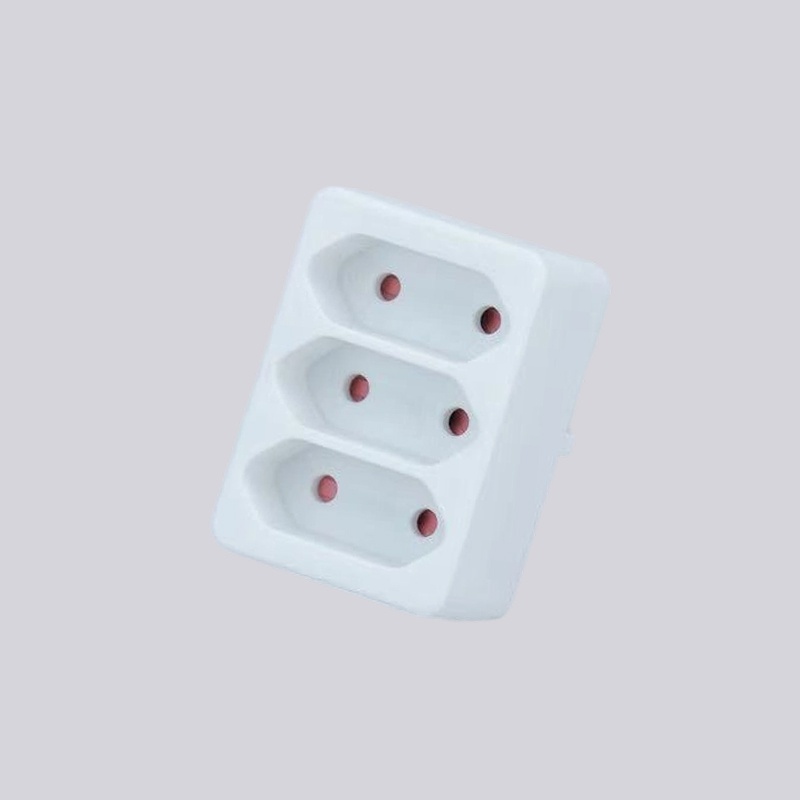
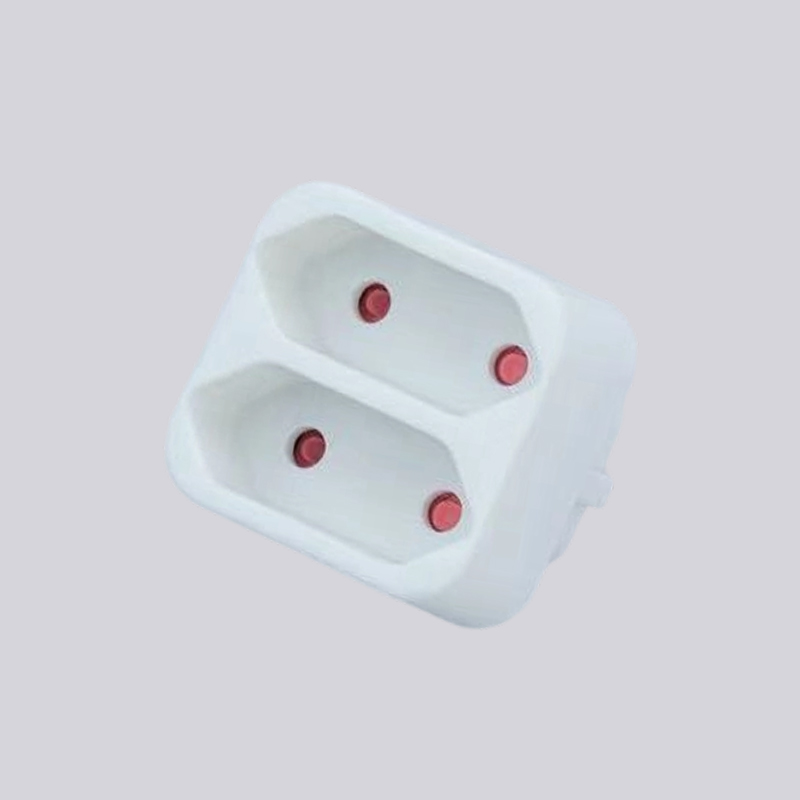
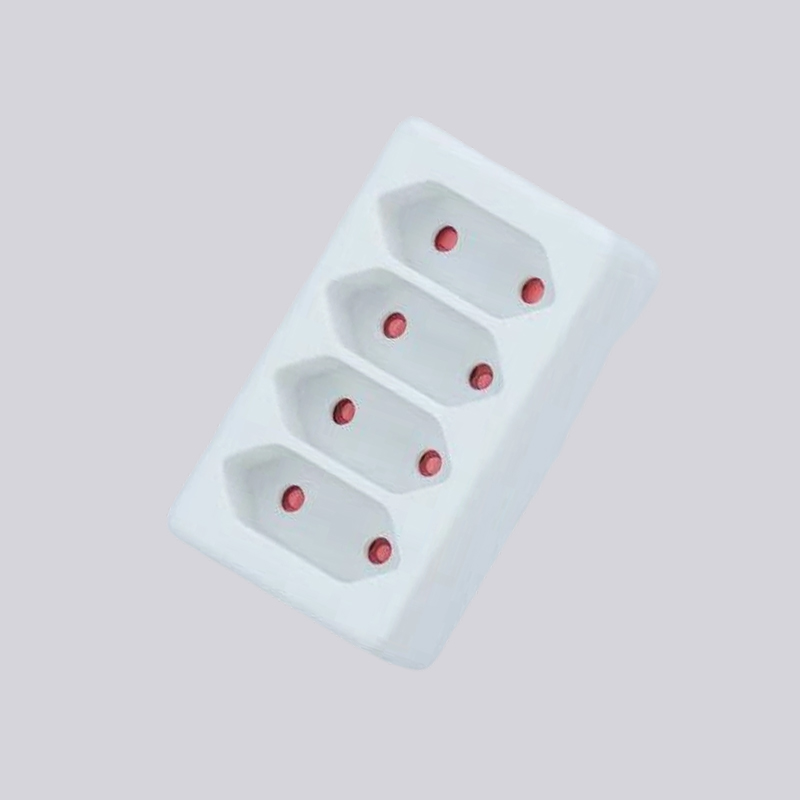
- Type C (Europlug): Two round pins, 4.8 mm diameter, ungrounded. Used across most of continental Europe for low-power appliances.
- Type E (French/Belgian): Two round pins plus a round grounding hole in the socket. The ground contact is a pin on the socket, not on the plug.
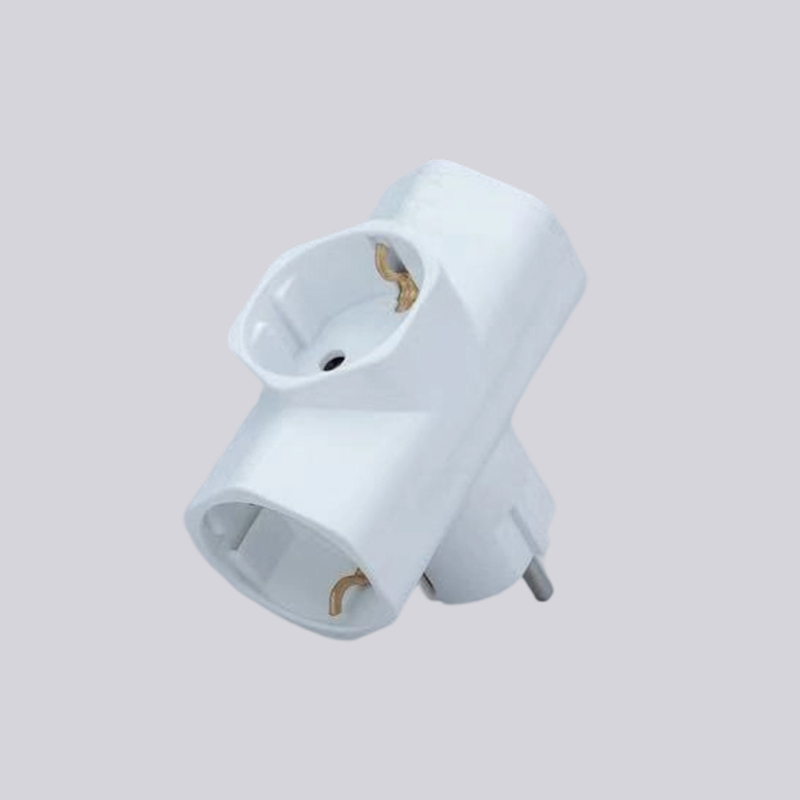
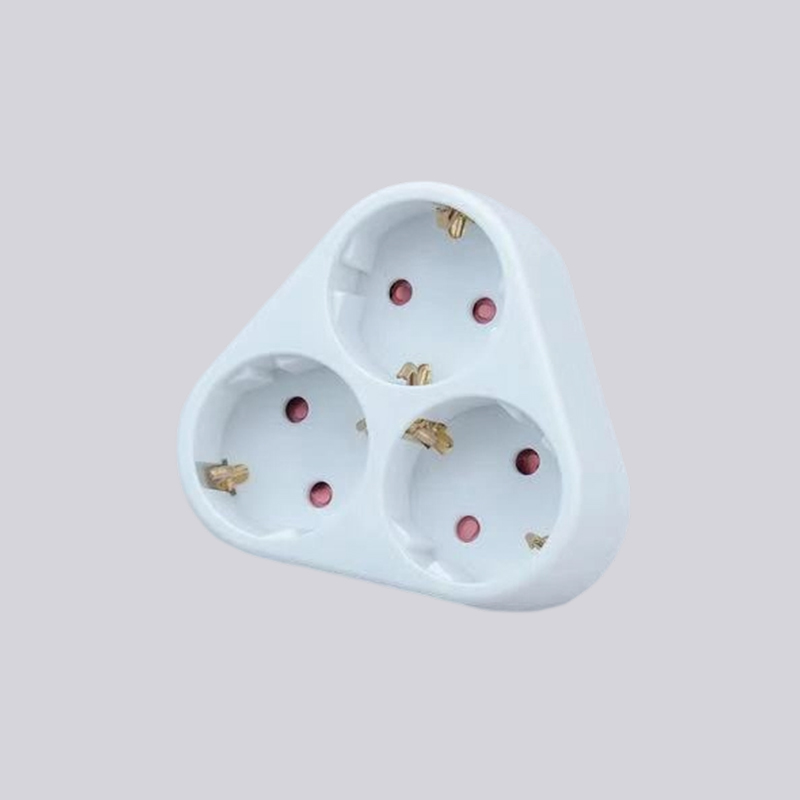
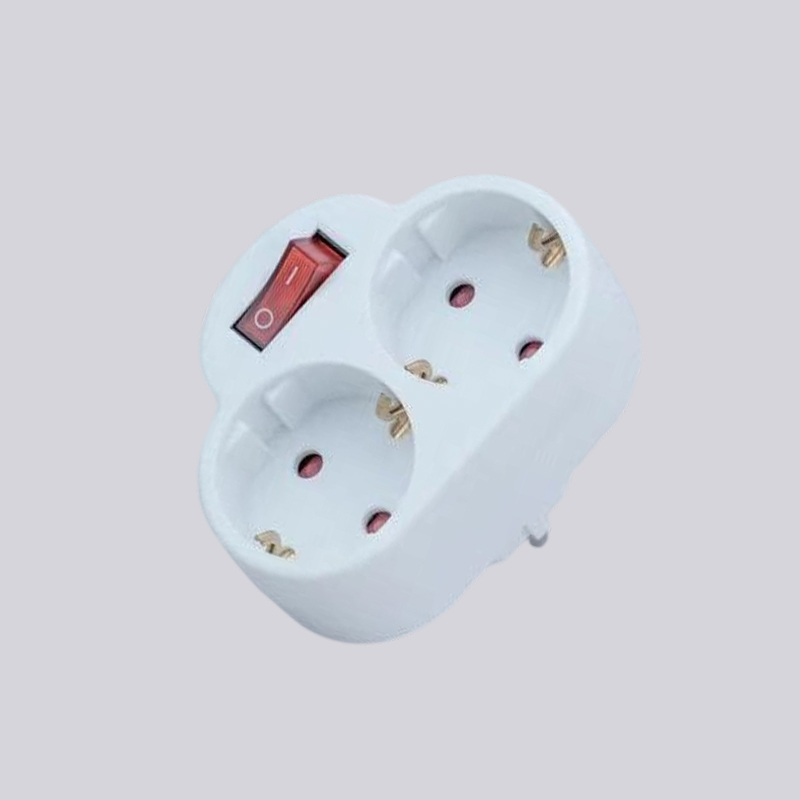
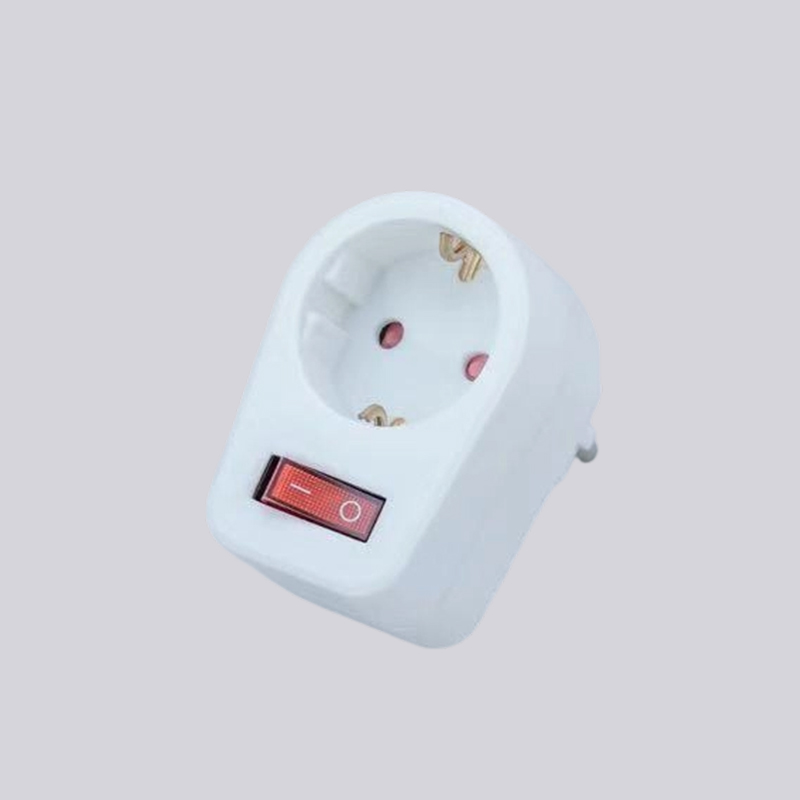
- Type F (Schuko): Two round pins with grounding clips on the side. Dominant in Germany, Austria, the Netherlands, Spain, and many Eastern European countries.
- Type G (UK/Ireland): Three rectangular flat pins in a triangular layout. Used in the United Kingdom, Ireland, and some former British territories—technically a British standard, not continental European.
US Plug Types
- Type A: Two flat parallel blades, ungrounded. Standard for most household appliances in the US and Canada.
- Type B: Two flat parallel blades plus a round grounding pin. Required for grounded appliances throughout North America.
Because the physical connectors are incompatible, a European extension cord cannot be plugged into a US wall outlet—and vice versa—without an adapter or rewiring. This incompatibility is intentional: it prevents accidental cross-voltage connection.
2. Voltage and Frequency
Voltage and frequency are arguably the most critical technical differences between European and US electrical systems.
| Specification | European Extension Cord | US Extension Cord |
| Standard Voltage | 220–240V | 110–120V |
| Frequency | 50 Hz | 60 Hz |
| Max Household Current | 16A (typical) | 15A or 20A |
| Power Delivery (single circuit) | Up to ~3,680W | Up to ~1,800W |
| Wire Insulation Rating | 300/500V or 450/750V | 300V typical |
Because the European grid runs at twice the voltage, a European extension cord must use wire insulation rated for higher voltages. Plugging a US extension cord into a European outlet—even with an adapter—can overheat the insulation and create a fire risk.
3. Wire Gauge and Current Capacity
Wire sizing conventions differ between Europe and the US, which affects how extension cord capacity is labeled and specified.
European Wire Sizing (Cross-Sectional Area)
Europe uses cross-sectional area in mm² to express conductor size. Common ratings for European extension cords include:
- 0.75 mm² — suitable for light-duty use up to 6A (e.g., phone chargers, lamps)
- 1.0 mm² — general household use, up to 10A
- 1.5 mm² — standard for most appliances, up to 16A
- 2.5 mm² — heavy-duty, used for power tools and high-draw equipment
US Wire Sizing (AWG – American Wire Gauge)
The US uses the AWG system, where a lower number indicates a thicker wire (opposite of metric intuition):
- 16 AWG — light duty, up to 13A for short runs
- 14 AWG — medium duty, up to 15A
- 12 AWG — heavy duty, up to 20A
These two systems are not directly interchangeable by name. When sourcing a European extension cord, always verify the mm² rating, not just the current rating, to ensure proper thermal safety.
4. Safety Certifications and Standards
Safety marks are one of the clearest ways to distinguish a compliant European extension cord from a non-compliant or region-inappropriate product.
| Certification | Region | What It Verifies |
| CE Mark | European Union | Compliance with EU directives (LVD, EMC, RoHS) |
| VDE (Germany) | Germany / Europe | Rigorous electrical safety testing by a notified body |
| TÜV | Germany / Europe | Independent testing for product safety and quality |
| NF Mark (France) | France | French standards for electrical products |
| UL Listed | USA / Canada | Underwriters Laboratories safety certification |
| ETL Listed | USA / Canada | Intertek safety and performance testing |
A genuine European extension cord sold within the EU must carry the CE mark as a minimum. High-quality products will also carry VDE or TÜV certification, which indicates independent third-party testing rather than manufacturer self-declaration.
5. Grounding Systems
Both European and US extension cords can be grounded, but the method of grounding differs significantly.
- Schuko (Type F) – Europe: Grounding is achieved through two metal clips on the sides of the plug that make contact with corresponding strips inside the socket. This design allows the plug to be inserted in either orientation (non-polarized).
- Type E – France/Belgium: The grounding pin is part of the socket (a protruding pin in the wall outlet), which inserts into a hole in the plug. This is polarized in some configurations.
- Type B – USA: A separate round grounding pin extends below the two flat blades. The socket has a D-shaped hole for this ground pin. US cords are fully polarized (one blade is wider than the other).
The non-polarized nature of Schuko plugs is one reason why a European extension cord is often more flexible in multi-outlet strips—the plug can be oriented either way without safety risk.
6. Cord Length, Reel Design, and IP Rating
Beyond electrical specifications, European extension cords often follow different design conventions:
- Standard lengths: European cords are typically sold in 1.5m, 3m, 5m, 10m, and 25m increments. US cords use 6ft, 15ft, 25ft, 50ft, and 100ft lengths.
- Outdoor IP ratings: Many European extension cords sold for outdoor use carry IP44 or IP55 ratings (dust and splash protection), a standard less commonly called out by name in US product listings.
- Cable reels: European drum-style cable reels (Kabeltrommel) must by law be fully unwound before use at full load, due to inductive heating. This requirement is enforced by safety markings on the drum itself.
- Multi-outlet strips: European power strips (Steckdosenleiste) must include a surge protector or overload circuit breaker in many EU member states for commercial use.
7. Full Comparison: European Extension Cord vs US Extension Cord
| Feature | European Extension Cord | US Extension Cord |
| Plug Type | Type C, E, F (round pins) | Type A, B (flat blades) |
| Voltage | 220–240V | 110–120V |
| Frequency | 50 Hz | 60 Hz |
| Wire Sizing System | mm² (cross-sectional area) | AWG (American Wire Gauge) |
| Insulation Voltage Rating | 300/500V – 450/750V | 300V typical |
| Safety Marks | CE, VDE, TÜV, NF | UL, ETL, CSA |
| Grounding Method | Side clips (Schuko) or socket pin (Type E) | Round grounding pin (Type B) |
| Polarization | Non-polarized (Schuko) | Polarized (one wider blade) |
| Length Units | Meters (m) | Feet (ft) |
| Outdoor Standard | IP44 / IP55 | Weather-resistant (SJTW jacket) |
| Physical Compatibility | Not compatible with US outlets | Not compatible with EU outlets |
8. Can You Use a European Extension Cord in the US (or Vice Versa)?
No—not safely, without additional equipment. Here is what happens in each scenario:
- European cord in a US outlet (with adapter only): The physical connection may work with a plug adapter, but the cord is rated for 220–240V and the appliances you plug in may be designed for 220–240V—meaning they will receive only 110–120V and may not function, or may be damaged over time.
- US cord in a European outlet (with adapter only): This is dangerous. The US cord's insulation is typically rated for 300V. Running 230V through it may work briefly, but the insulation, plug contacts, and wire gauge may not be adequate for sustained European loads, creating overheating and fire risks.
- With a step-down voltage converter: If you use a proper 230V→110V step-down transformer in addition to a plug adapter, US appliances can be powered from a US cord plugged into a European outlet—but you still need both devices to comply with local safety codes.
The safest and most compliant solution is always to use a European extension cord certified for European standards when operating in Europe, and a US-certified cord when operating in North America.
9. Choosing the Right European Extension Cord
When selecting a European extension cord, consider the following criteria:
- Country of use: Germany and most of Europe → Type F (Schuko). France and Belgium → Type E. Both countries have hybrid Type E/F sockets that accept Schuko plugs.
- Load requirement: Match the wire cross-section (mm²) to your intended load. For power tools or heaters, use at least 1.5mm²; for heavy equipment, use 2.5mm².
- Length: Remember that longer cords have higher resistance and greater voltage drop. For runs over 10m under heavy load, increase the wire cross-section accordingly.
- Indoor vs outdoor: For outdoor use, choose a cord with at least an IP44 rating. For construction sites, IP55 or higher is recommended.
- Safety certifications: Always verify the CE mark. For critical applications, look for VDE or TÜV certification on the product label or packaging.
- Overload protection: For multi-outlet strips, look for a built-in circuit breaker or thermal cut-off.
Frequently Asked Questions (FAQ)
Q1: Is a European extension cord the same as a Schuko cord?
Not always. "Schuko" refers specifically to the Type F plug standard, predominant in Germany, Austria, the Netherlands, and most of Eastern Europe. A European extension cord is a broader term that can refer to cords with Type C, E, or F plugs. In practice, Schuko (Type F) is the most widely used format for extension cords in continental Europe.
Q2: Can I use a European extension cord to charge US devices while traveling in Europe?
Yes, provided your US device uses a universal power supply (input labeled 100–240V, 50/60Hz—common on laptops, phone chargers, and camera chargers). You would need a plug adapter from Type A/B to the appropriate European type. You would not need a voltage converter for dual-voltage devices. However, you should plug your US device's own cable into a wall outlet or European multi-plug strip rather than using a US extension cord in Europe.
Q3: What does the CE mark on a European extension cord actually mean?
The CE (Conformité Européenne) mark indicates that the manufacturer declares the product complies with applicable EU directives, including the Low Voltage Directive (LVD) and the Electromagnetic Compatibility (EMC) Directive. Unlike VDE or TÜV marks, CE can be self-declared by the manufacturer and does not necessarily mean the product has been independently tested by a third-party laboratory.
Q4: Are UK extension cords the same as European extension cords?
No. The UK uses Type G plugs with three large rectangular pins and operates at 230V/50Hz. While the voltage is the same as continental Europe, the plug is physically incompatible with Schuko, Type E, and Type C sockets. After Brexit, the UK no longer requires CE marking; products sold in Great Britain now use the UKCA mark instead.
Q5: Why is a European extension cord typically rated for higher wattage?
Because wattage = voltage × current (W = V × A). At 230V and 16A, a single European circuit can deliver up to approximately 3,680 watts. At 120V and 15A, a US circuit delivers about 1,800 watts. This means high-power appliances—electric ovens, kettles, washing machines—can operate on a single standard circuit in Europe, while they may require dedicated high-voltage (240V) circuits in the US.
Q6: What happens if I use a US extension cord in Europe with just a plug adapter?
Using a plug adapter alone converts only the physical shape of the connection—it does not change the voltage. If the appliance connected to the US cord is rated for 110–120V, it will receive 230V from the European outlet and will likely fail immediately or be permanently damaged. Additionally, the US cord's insulation and wire gauge may be undersized for the higher-voltage European system, creating a fire and shock hazard.
Q7: What is the most common European extension cord format for international use?
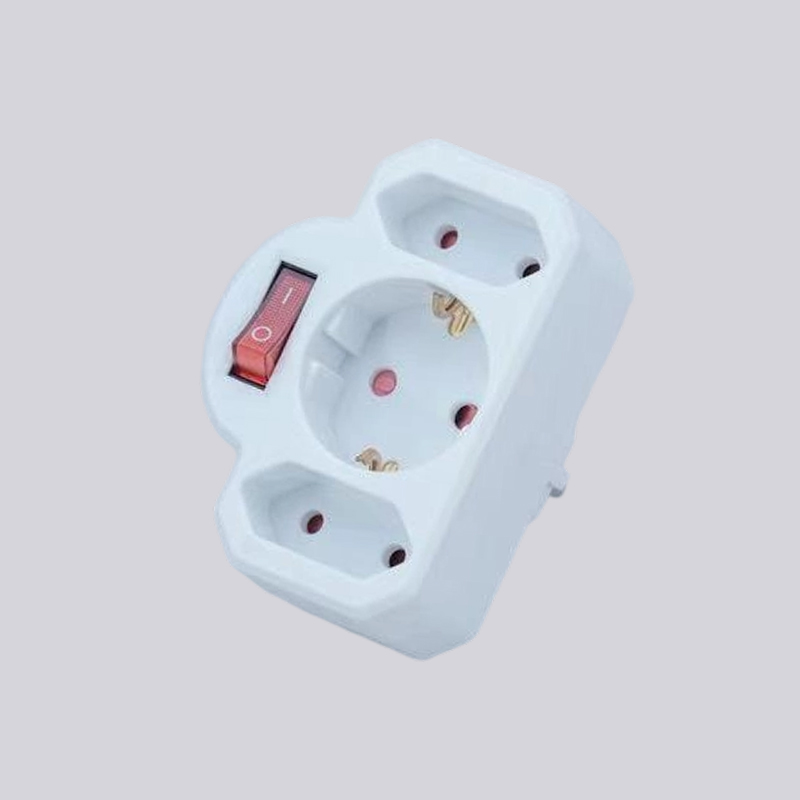
The most internationally flexible format is a Schuko-to-multi-socket strip with overload protection and a universal socket format that accepts Type C, E, and F plugs. These are widely available and work throughout most of continental Europe. For travel to multiple countries, a travel adapter kit is still needed for UK, Switzerland, Italy, and Denmark, which have their own socket types.
Conclusion
A European extension cord is not simply a US cord with a different plug attached. It is an entirely distinct product engineered for a higher-voltage, lower-frequency electrical system, governed by different safety certifications, manufactured to metric wire standards, and designed with grounding mechanisms that differ fundamentally from their North American counterparts.
The differences span every layer of the product: the physical connector geometry, the insulation voltage rating, the wire cross-section, the safety marks required for legal sale, the IP protection for outdoor use, and even the reel-use regulations for cable drums.
For anyone sourcing, specifying, or using extension cords across different regions, the key takeaway is clear: always match the extension cord to the local electrical standard. Using a properly certified European extension cord in Europe—and a properly certified US cord in North America—is the only safe, compliant, and reliable approach.


If you are interested in our products, please consult us
- CONTACT DETAILS
- Address : Guanhaiwei East Industrial Zone,Cixi, Ningbo,315314 Zhejiang, P.R.China.
- TEL: helen:+86-15867389889 Young:+86-15958216886 +86-0574-63666678
- Email:[email protected] [email protected]
- Fax:86-0574-63668558
- PRODUCTS
- Power Strip
- Extension Cord
- Cable Reel
- Adapter
- Plug
- QUICK LINK
- Company Profile
- company culture
- Plant equipment
- FAQ
- NEWS CENTER
- Company News
- Industry News
- MOBILE TERMINAL
-