English
  中文简体
中文简体 
What Plug Types Does a Universal European Adapter Support for Travel?
 2025.10.24
 Industry News
A universal European travel adapter is designed to bridge the gap between your device’s plug and Europe’s diverse electrical outlets, which vary by country and region. Its core value lies in supporting the most common European plug standards while often including compatibility for global plugs (e.g., US, UK) to charge devices abroad. Below is a detailed breakdown of supported plug types, regional coverage, and critical features.
Content
- Core European Plug Types Supported by Universal Adapters
- Regional Specialized Plug Types (For Niche Destinations)
- Global Plug Compatibility (For Multi-Continent Travelers)
- USB & USB-C Ports (Aligned with EU Universal Charger Rules)
- Key Considerations for Choosing a Universal European Adapter
- Summary of Supported Plug Types
Core European Plug Types Supported by Universal Adapters
Universal European adapters prioritize compatibility with the 4 most prevalent plug standards across the continent, accounting for ~95% of European outlets. These are defined by the International Electrotechnical Commission (IEC) and regional standards bodies:
Type C (Most Widely Used: "Europlug")
- Design: Two round pins (4.0–4.8mm diameter) spaced 19mm apart, no earth pin.
- Voltage/Current: Rated for 250V, 2.5A (suitable for small electronics like phones, cameras, and laptops).
- Coverage: Dominant in 70+ countries, including France, Germany, Italy, Spain, Netherlands, Belgium, and most EU nations .
- Key Note: The Europlug is "semi-universal" itself—its flexible pin design fits into Type E, F, and K outlets (see below) without adapters, but universal adapters include it as a base standard.
Type E (France, Belgium, Poland)
- Design: Two round pins (same as Type C) plus a grounding pin (male) protruding from the side of the plug.
- Compatibility: Works with Type C outlets (ground pin is inactive) and dedicated Type E outlets (common in France and Belgium).
- Why Universal Adapters Include It: Prevents damage to grounded devices (e.g., hair dryers, travel irons) in regions requiring earth protection.
Type F (Germany, Austria, Netherlands: "Schuko")
- Design: Two round pins (same as Type C) with two grounding clips (metal strips) on the sides of the plug.
- Coverage: Primary standard in Germany, Austria, Switzerland, Denmark, and Eastern Europe (Hungary, Czech Republic).
- Universal Adapter Feature: Most models have retractable grounding clips that align with Type F outlets, ensuring compatibility with both grounded and ungrounded devices.
Type G (UK, Ireland, Malta: "BS 1363")
- Design: Three rectangular pins (5.1mm wide) in a triangular configuration, with a fuse (3A/13A) for safety.
- Voltage: 230V (same as most Europe, but plug shape is unique).
- Critical Inclusion: While the UK is no longer in the EU, universal European adapters almost always include Type G—essential for travelers visiting the UK, Ireland, Cyprus, or Malta .
Regional Specialized Plug Types (For Niche Destinations)
Some universal adapters extend support to less common European plug standards for comprehensive coverage, ideal for multi-country trips:
Type K (Denmark, Greenland)
- Design: Two round pins (4.8mm) plus a grounding pin between them, spaced 19mm apart.
- Compatibility: Type C plugs fit into Type K outlets, but grounded devices (e.g., laptops) require a Type K adapter.
- Premium Adapter Feature: Mid-to-high-end universal adapters include a Type K setting (via retractable pins) for Denmark-specific travel.
Type L (Italy, Chile, Uruguay)
- Design: Two round pins (5mm) with two grounding pins (either side) or a single central grounding pin.
- Variations: Italy uses two sub-types (L14 for 10A, L15 for 16A), but universal adapters typically support both with adjustable pin spacing.
- Why It Matters: Italy’s unique outlets (common in Rome, Florence) will not accept standard Type C plugs for high-power devices—so Type L support is non-negotiable for Italian travel.
Type J (Switzerland, Liechtenstein)
- Design: Two round pins (4.0mm) plus a grounding pin below them, spaced 19mm apart.
- Note: Switzerland does not use Schuko (Type F) outlets—universal adapters with Type J support are required for devices like cameras or portable chargers.
Global Plug Compatibility (For Multi-Continent Travelers)
Most "universal European" adapters are bi-directional, meaning they accept plugs from non-European countries and convert them to fit European outlets. This is critical for travelers bringing devices from:
- North America (Type A/B): Two flat pins (Type A) or two flat pins + grounding pin (Type B)—common for US/Canadian phones, tablets, and laptops .
- Australia/New Zealand (Type I): Two angled flat pins (figure eight)—for Australian cameras, power banks, or hair tools.
- Asia (Type A/C): Combines support for US-style Type A and European Type C plugs (e.g., for Japanese phones or Chinese laptops).
Example: A traveler from the US can plug their Type B laptop charger into a universal adapter, which then fits into a Type F (Germany) or Type G (UK) outlet.
USB & USB-C Ports (Aligned with EU Universal Charger Rules)
Since 2024, the EU has mandated USB-C as the standard charging port for smartphones, tablets, cameras, and headphones . Modern universal European adapters integrate this requirement with:
- USB-A Ports: 2–4 ports (2.4A max per port) for legacy devices (e.g., Micro-USB headphones, older phones) .
- USB-C Ports: 1–2 ports (3A–60W max) for fast-charging USB-C devices (iPhone 15+, Samsung Galaxy, MacBooks, and EU-compliant electronics) .
- Combined Output: Total power up to 65W, allowing simultaneous charging of a laptop + phone + tablet—no need for separate chargers.
This aligns with the EU’s goal to reduce electronic waste and simplifies travel by eliminating the need for device-specific chargers .
Key Considerations for Choosing a Universal European Adapter
To ensure your adapter supports the right plugs for your trip, verify these factors:
Voltage Compatibility
All European countries use 220–240V (vs. 100–120V in the US). Choose an adapter with 100V–240V wide-voltage support—critical for devices like laptops (which are dual-voltage) to avoid burnout .
Retractable/Modular Pins
Look for adapters with sliding or folding pins (e.g., Benks "Little Magic Box") that switch between Type C/E/F/G/I—compact and easy to pack . Avoid fixed-pin models, which limit flexibility.
Safety Certifications
Opt for adapters with CE (European Conformity) or UKCA (UK Conformity Assessed) marks, plus built-in protections (overheat, overcurrent, short-circuit) to safeguard devices.
Regional Trip Focus
- Western Europe (France/Germany): Prioritize Type C/F.
- UK/Ireland: Must include Type G.
- Southern Europe (Italy/Greece): Add Type L support.
- Multi-Country Trips: Choose an adapter with 4+ plug types (C/E/F/G) and USB-C.
Summary of Supported Plug Types
|
Plug Type |
Design |
Key Countries |
Universal Adapter Support |
|
Type C |
2 round pins |
EU, Turkey, Russia |
Standard (all models) |
|
Type E |
2 pins + side ground |
France, Belgium |
Most mid-range models |
|
Type F |
2 pins + side clips |
Germany, Austria |
Standard (all models) |
|
Type G |
3 rectangular pins |
UK, Ireland |
Almost all models |
|
Type L |
2 pins + side/central ground |
Italy, San Marino |
Premium models |
|
Type J |
2 pins + bottom ground |
Switzerland |
Premium models |
|
Type A/B |
Flat pins (US) |
N/A (input only) |
All bi-directional models |
In short, a quality universal European adapter supports the "big 4" plug types (C/E/F/G) for 90% of travel needs, with USB-C ports for EU-compliant devices. For niche destinations (Italy, Switzerland), upgrade to a model with Type L/J support—ensuring you stay powered anywhere in Europe.
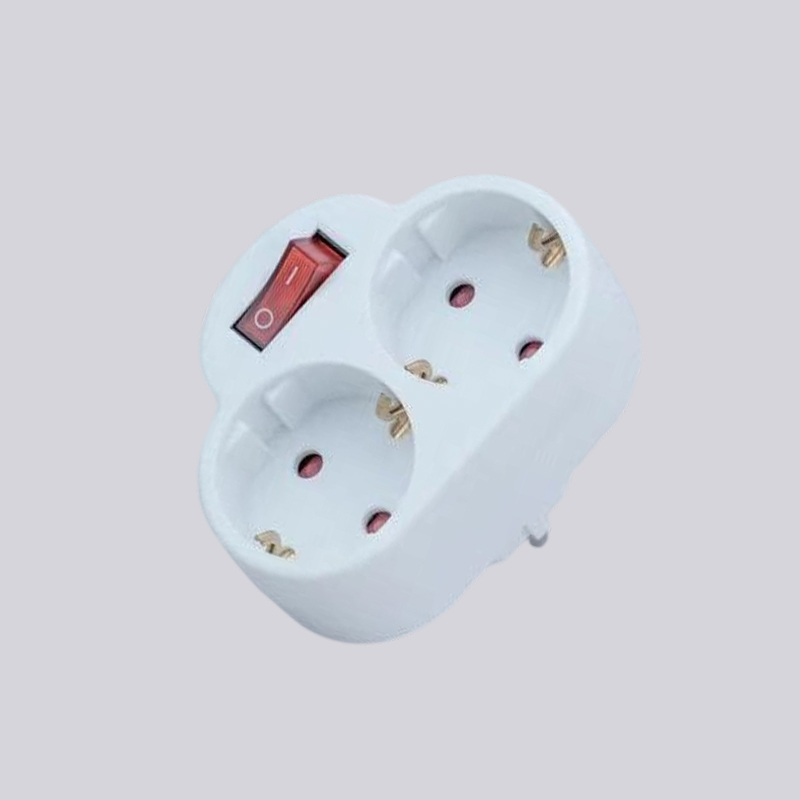
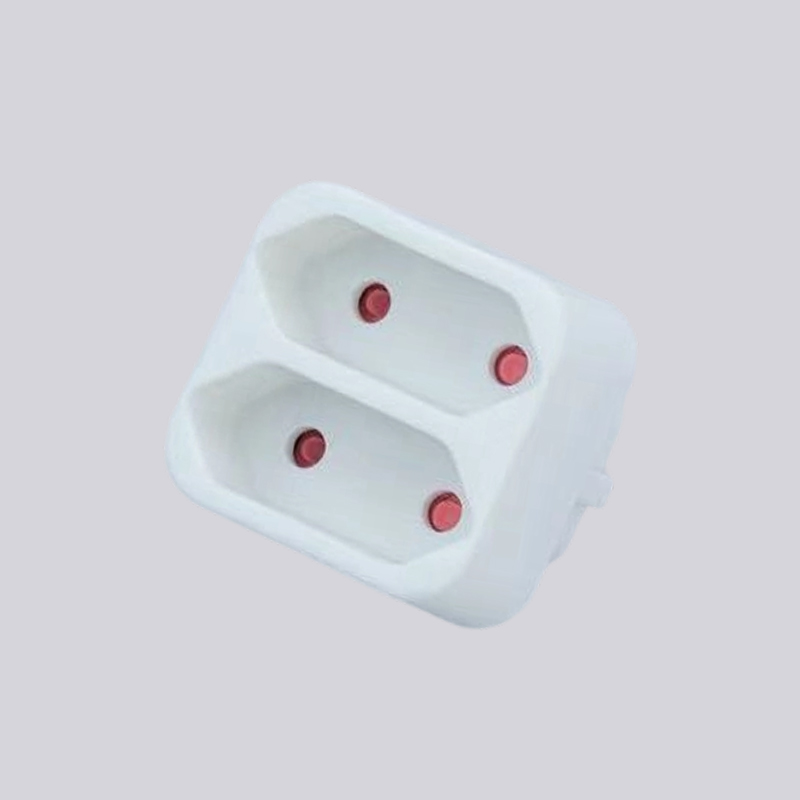
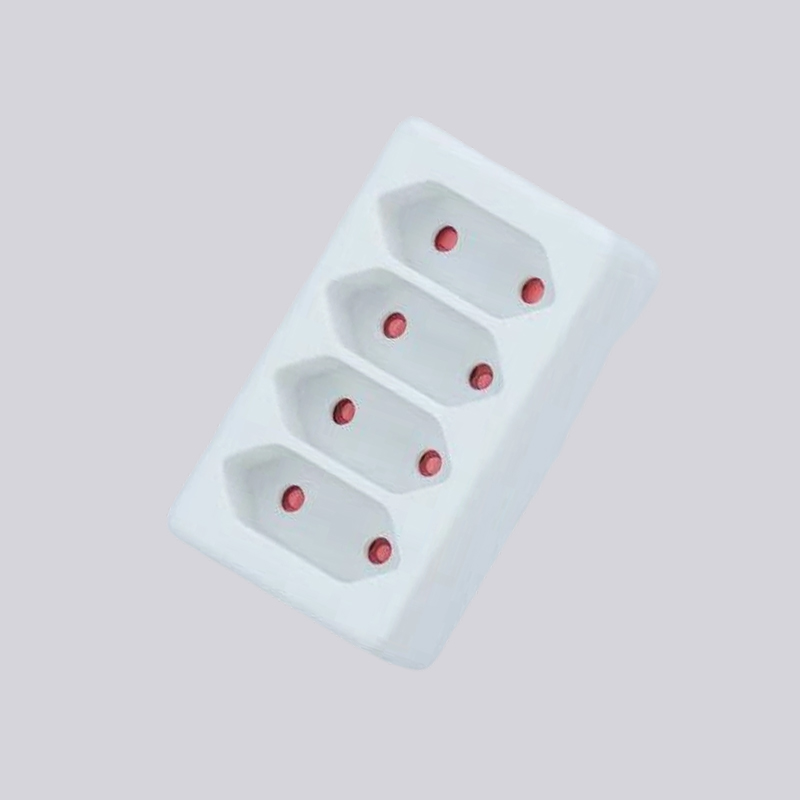
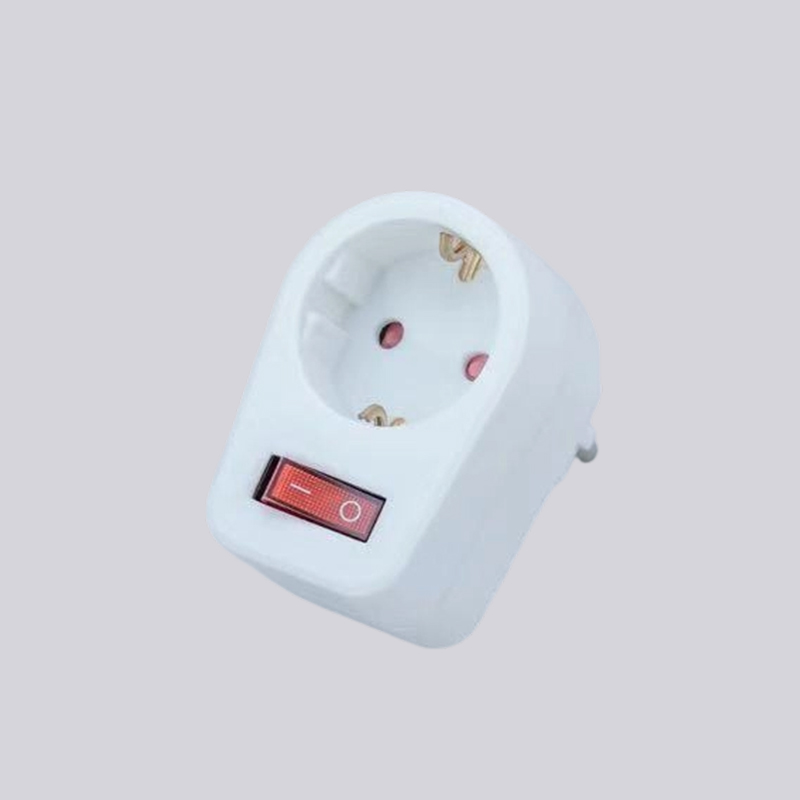
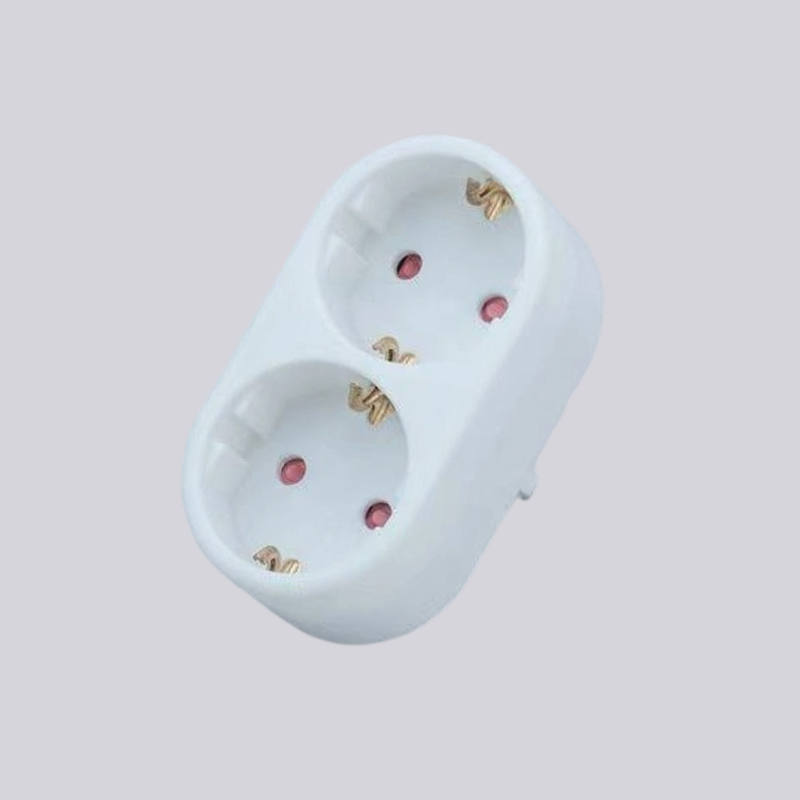
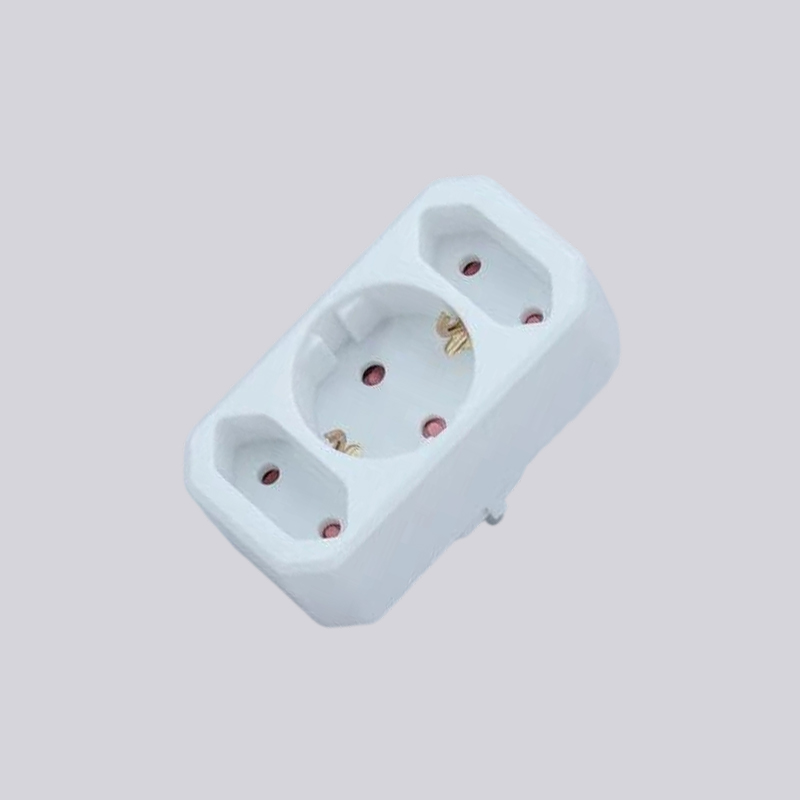

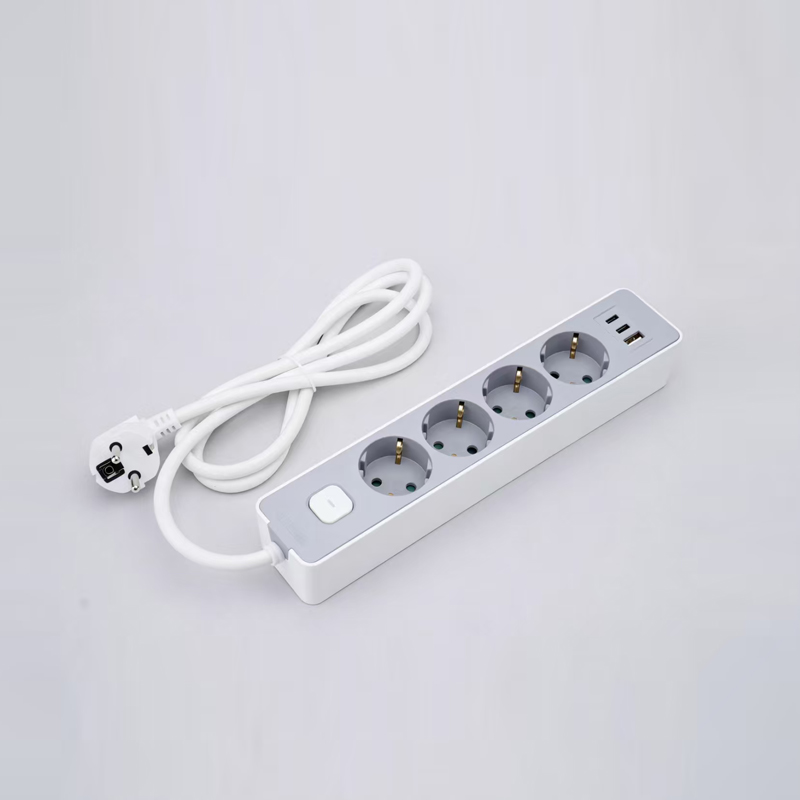

If you are interested in our products, please consult us
- CONTACT DETAILS
- Address : Guanhaiwei East Industrial Zone,Cixi, Ningbo,315314 Zhejiang, P.R.China.
- TEL: helen:+86-15867389889 Young:+86-15958216886 +86-0574-63666678
- Email:[email protected] [email protected]
- Fax:86-0574-63668558
- PRODUCTS
- Power Strip
- Extension Cord
- Cable Reel
- Adapter
- Plug
- QUICK LINK
- Company Profile
- company culture
- Plant equipment
- FAQ
- NEWS CENTER
- Company News
- Industry News
- MOBILE TERMINAL
-